

The world took note this week when the Bank of Japan (BOJ) raised its key short-term interest rate by 25 basis points to 0.75%, a level last seen in 1995. The Bank of Japan added that further rate hikes remained on the table if economic and price developments were in line with its forecast.
Interest rate determination: The pillar of global finance begins to change
The Bank of Japan’s interest rate hike is important for global markets because it shakes up one of the financial world’s long-standing challenges: Japan being the cheapest source of capital on the planet. The unanimous decision to raise interest rates signals a clear break from decades of ultra-low negative settings, as central banks inch closer to the foundations of a more normal monetary policy.
Japan has struggled with deflation and low growth for more than two decades, moving from zero interest rates in the late 1990s to quantitative easing, yield curve control, and finally negative interest rates to get here. The strategy was aimed at stimulating demand and stabilizing inflation, but even after other central banks turned the page, policy remained accommodative as prices remained flat.
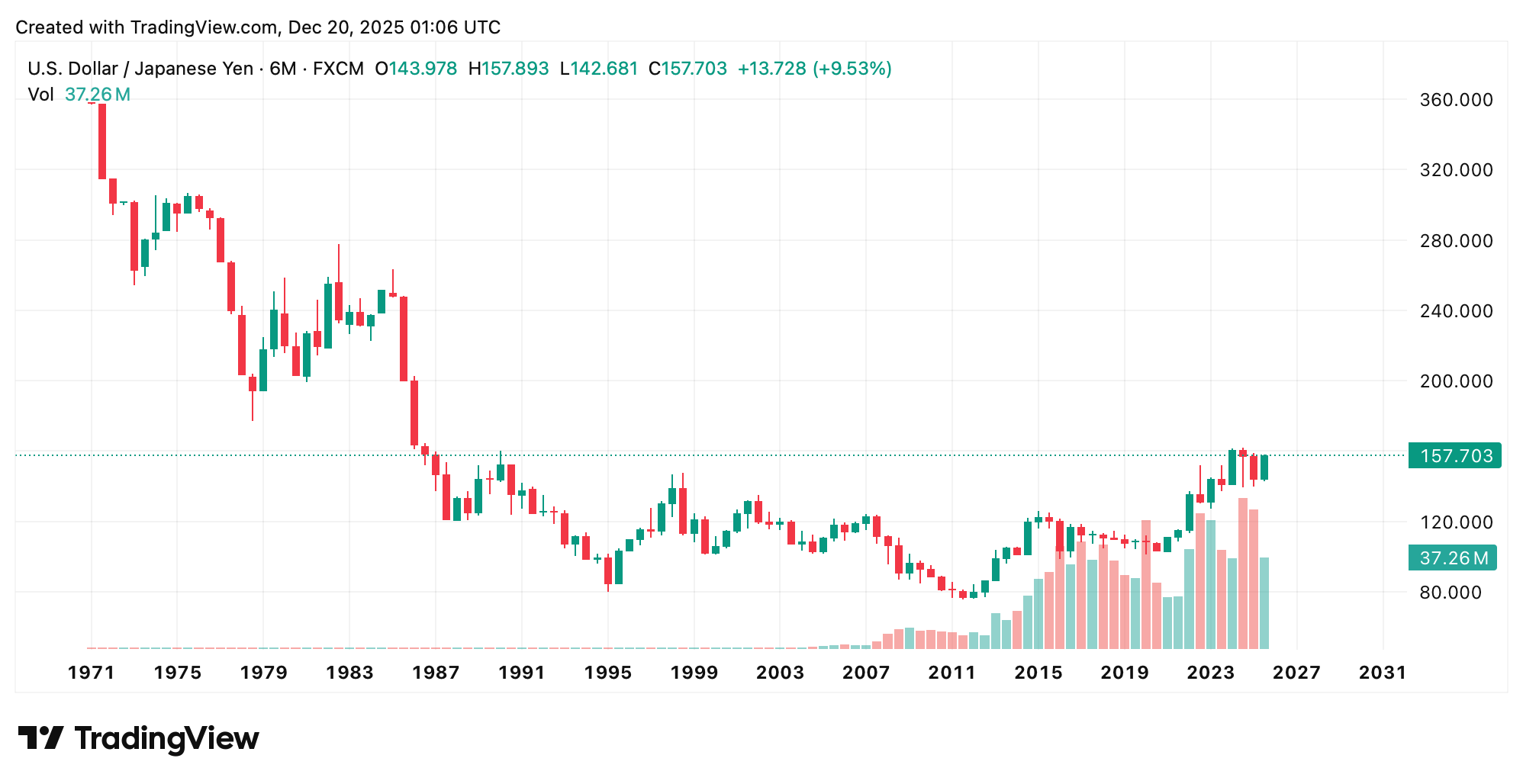
This shift took shape after the pandemic. A weaker yen, higher import bills and steadily rising wages kept inflation above the Bank of Japan’s 2% target long enough to convince policymakers that it was more than a blip, paving the way for a retreat from emergency monetary settings.
A cautious retreat from Kuroda’s strategy
The push for reform came from within the Bank of Japan under Governor Kazuo Ueda, who took office in 2023 and gradually weaned the bank from the ultra-easy policies left behind by Haruhiko Kuroda. Ueda, an academic economist by training, emphasized restoring policy flexibility and easing long-term distortions from yield curve control and negative interest rates once inflation and wage growth prove sustainable.
So far, the Bank of Japan has raised interest rates four times under Governor Kazuo Ueda’s normalization cycle, culminating in a rate hike to 0.75% on December 19, 2025. Traders typically wince at the Bank of Japan’s interest rate hikes because they threaten the yen carry trade, one of the market’s favorite cash machines.
Rising interest rates in Japan will raise funding costs, shake up currency markets and increase the risk of forced unwinding across stocks, bonds and derivatives. Even modest tightening by Japan could weigh on leverage and undermine a strategy built on years of a weak yen, but U.S. stocks are largely undaunted, at least for now.
No shock or panic
The Bank of Japan’s move was widely telegraphed, without any surprises or hard talk, and was interpreted by traders as a neat overseas adjustment rather than a blow to U.S. liquidity. Strong domestic momentum, expectations for a US interest rate cut next year, and year-end positioning weighed heavily, and stock prices continued to creep up despite Japan’s policy shift.
Cryptocurrencies also largely ignored the Bank of Japan’s moves, as the interest rate hike was fully priced in and caused little change in the near-term global liquidity situation. According to the data, the crypto economy rose 3.7% in the past 24 hours, with Bitcoin (BTC) gaining 3.2% on Friday. Altcoins outperformed major crypto assets with ETH up 5.5%, XRP up 6.6%, and SOL up 6%, with DOGE leading the top 10 pack with an 8% gain.
Financial chapter slowly closes
For now, the message is simple and clear. Japan is emerging from a decades-long policy era, and markets haven’t lost any sleep over it yet. This contrasts sharply with the doom and gloom that had built up ahead of the decision, and perhaps some traders used that fear as an excuse to sell panic rather than policy. With the Bank of Japan’s deliberate moves and investors well-prepared, the shift looks more like a controlled adjustment than a liquidity scare.
That tranquility is marked with an asterisk. As Japan continues to shrink its ultra-cheap money supply, pressure will increase on the trade that has survived on easy yen financing. The yen has fallen about 1 percentage point against the dollar over the past five days and about 7.4% against the dollar over the past six months, and government bond yields have risen to record highs.
The Bank of Japan may be treading cautiously, but Japan’s long standing as the world’s easiest source of free capital is coming to an end, and markets won’t be able to ignore it forever.
Frequently asked questions ❓
- Why did the Bank of Japan raise interest rates?The Bank of Japan was able to continue moving away from emergency policy by raising interest rates after inflation rose above its 2% target along with stable wage growth.
- Why is the Bank of Japan’s interest rate hike important for global markets?Rising interest rates in Japan will make funding in yen more expensive, impacting carry trades and global liquidity conditions.
- How did the US market react to the Bank of Japan’s decision?This move was well anticipated and there was no policy shock, so US stocks largely ignored it.
- How did the cryptocurrency market react to the Bank of Japan’s interest rate hike? Bitcoin and major altcoins continued to rise as price increases were fully priced in and short-term liquidity remained unchanged.


