


Credit rating agency Fitch Ratings has warned of a high degree of risk associated with bitcoin-backed securities, which could make it difficult to expand crypto-linked credit products among institutional investors.
Fitch said in a Monday review that Bitcoin-backed securities, or financial products, are typically structured by pooling Bitcoins (BTC) or issuing debt against Bitcoin-linked assets and their collateral involves a “high risk” that is “consistent with a speculative-grade credit profile.”
The agency said these characteristics could place the product in the realm of speculative grade, a designation associated with poor credit quality and a high probability of loss.
As one of the three largest credit rating agencies in the United States, Fitch’s ratings influence how banks, asset managers, and other institutions evaluate emerging financial products, especially those related to volatile asset classes.
Fitch pointed to Bitcoin’s “inherent” price volatility and the counterparty risk built into these structures.
The agency also cited a wave of cryptocurrency lender failures during the 2022-2023 recession, likely a reference to BlockFi and Celsius, as a cautionary example of how quickly collateral-backed models can collapse during market stress.

sauce: Dusty BC Crypto
“Bitcoin price volatility is a key risk consideration,” Fitch said, warning that a breach of coverage levels could quickly erode collateral value and materialize losses.
Coverage level refers to the ratio of Bitcoin collateral to the amount of debt issued against it. A sudden drop in price could cause the ratio to drop below the required threshold, triggering a margin call or forced liquidation.
The latest assessment follows an earlier warning by Fitch last month to U.S. banks about the increased risks associated with significant digital asset exposures. At the time, Fitch cited potential reputational, liquidity, and compliance risks for banks actively engaging in crypto-related activities.
Bitcoin’s growing role in corporate credit and Fitch drawing the line
Bitcoin has become a central part of the credit profile of publicly traded companies with large digital asset holdings, particularly those issuing convertible and collateralized debt.
A notable example is Strategy, led by Michael Saylor, which has amassed approximately 688,000 Bitcoins.
The company has funded this strategy through multiple financings, including convertible debt, collateralized debt, and equity issuances, to expand its exposure to Bitcoin. As a result, Strategy’s balance sheet and credit profile are now correlated with Bitcoin market price movements.
However, Fitch’s warning appears to be more narrowly focused on credit and securitized products where repayment is directly dependent on the value of the underlying collateral. This assessment does not mention the Spot Bitcoin Exchange Traded Fund, which is structured as a stock-like investment vehicle rather than a credit product.
In fact, Fitch noted that the introduction of ETFs could contribute to a “more diverse holder base,” which could “potentially dampen” Bitcoin’s price volatility during times of market stress.
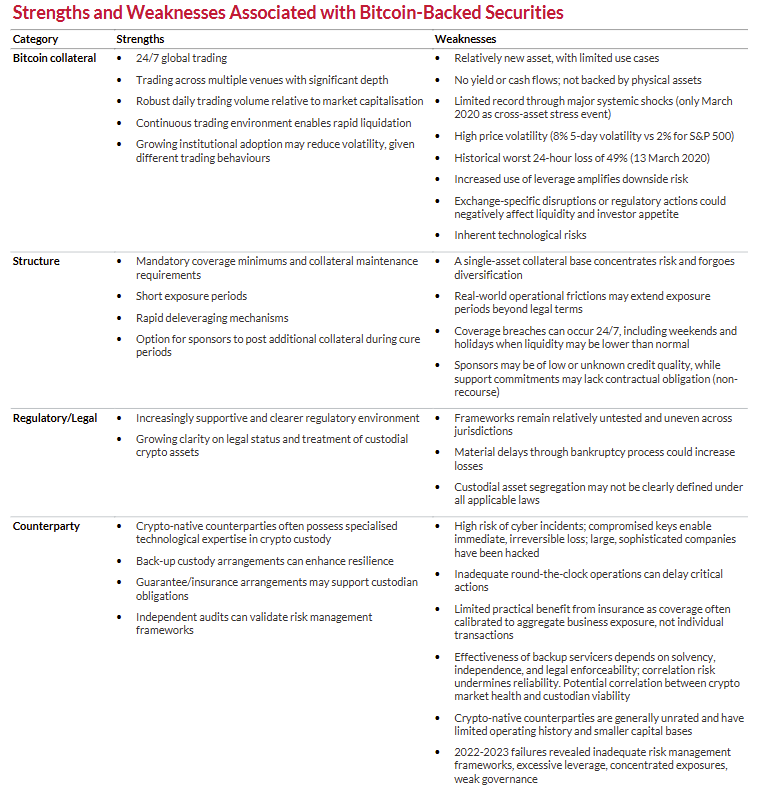
Advantages and disadvantages BTC-Collateral securities. sauce: Fitch rating


