

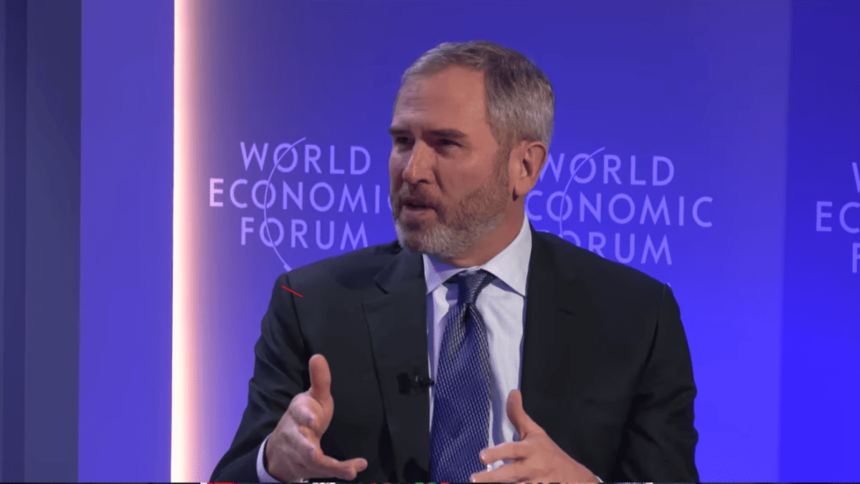
At the World Economic Forum in Davos, Switzerland, on January 24, Ripple CEO Brad Garlinghouse shared his vision for intergovernmental relations and money management during a panel discussion titled “Is Tokenization the Future?”
Garlinghouse explained that Ripple, which specializes in digital asset payments and remittances, aims to work within the existing financial system rather than replacing it, as the introduction of a cryptocurrency does not mean an immediate transfer of monetary sovereignty.
“I have often said that governments will put tanks on the street before they give up control of the money supply, so I think any crypto project that wants to replace the primary unit of account with the dollar or yen is fighting a losing battle against the guys who have tanks,” Garlinghouse said.
He added: “Ripple’s vision is different. We are focused on building traditional financial bridges, and we want to work with many banks around the world to build those bridges. We don’t want to overturn the existing system, we want to make it more efficient.”
These statements made Mr. Garlinghouse believe that the government They don’t want to lose control of their money And in his opinion, it is unrealistic to think that cryptocurrencies will fully replace fiat currencies.
From that perspective, Ripple, which is also the issuer of the cryptocurrency XRP, is not trying to conflict with nations or central banks. Its strategy is to use the technology provided by cryptocurrency networks to operate within the current financial system and make it faster and more efficient. Without doubting each country’s monetary sovereignty.
“I think there’s a huge opportunity to work within the system. We have to be realistic about how the world works. We’re not trying to replace the banking system, we’re trying to provide a ‘conduit’ that will make the banking system work 10 times better,” he said.
Along these lines, Ripple’s stablecoin Ripple USD (RLUSD) is presented as a concrete example of this strategy.
As reported by CriptoNoticias, RLUSD is designed to facilitate payments and transfers between financial institutions and users. It acts as a bridge between traditional systems and the digital asset ecosystem.
Its goals are to provide stability and regulatory compliance, allow banks and businesses to safely and efficiently experiment with cryptocurrencies, and accelerate the movement of funds within the existing financial system.
Garlinghouse’s statement at Davos echoes that of Ripple Labs President Monica Long. He said: “We aim to be the connective tissue that traditional banking needs to make cryptocurrencies, stablecoins, and other tokenized assets truly useful and applicable in the real world.”
Taken together, these words reflect Ripple’s clear strategy to integrate with the financial system, rather than challenge it.
(Tag translation) Altcoin


