

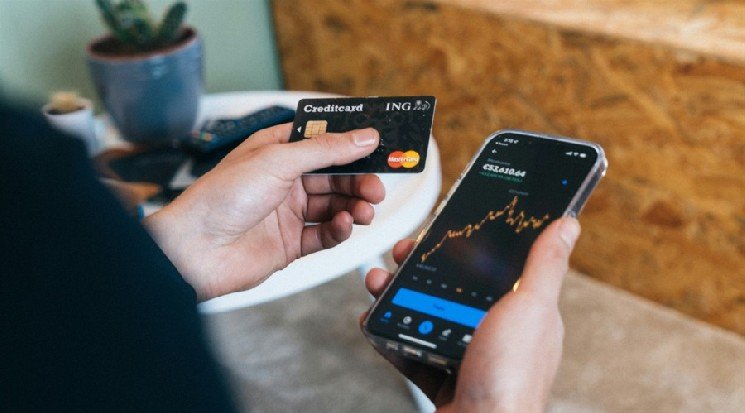
Santander Bank and Mastercard have completed end-to-end payments using artificial intelligence agents. This live trial involved an AI system that completed transactions within the framework of a regulated bank. We also tested the technology’s security and operational controls in real-world conditions.
Agent AI in payments refers to autonomous software agents that can initiate and complete transactions on behalf of users, under explicit controls such as spending limits, preset rules, and strong authentication, but are cryptographically identified as separate actors in the payment flow.
(#Highlighted link#)
In frameworks such as Mastercard Agent Pay, these AI agents are registered and verified, receive a dedicated “agent” payment token in place of raw card data, and operate within tokenization.
Santander and Mastercard complete Europe’s first live end-to-end payment executed by an AI agent https://t.co/MIW6TZ6uEH#Payments
— PaymentsNews.com (@paymentsnews) March 2, 2026
The transaction was completed using Mastercard Agent Pay in Santander’s supervised environment, according to an announcement from the companies on Monday. It ran the bank’s live payments infrastructure to ensure that AI agents could initiate, approve, and complete transactions while meeting compliance and security requirements.
You may also be interested in: Robots are trading – but who is watching them?
“Agent Payments represents a major shift in how commerce is initiated and executed. With Mastercard Agent Pay, we are applying the same principles that have defined our network for decades – security, trust, interoperability and global scale – to a new era of AI-enabled commerce,” said Kelly Devine, President, Europe, Mastercard.
Kelly Devine, Source: LinkedIn
The pilot demonstrated how AI can process customer payments with predefined limits and permissions, maintaining transparency and consumer protection.
Mastercard evolves its agent payments model
Mastercard’s Agent Pay system integrates AI agents directly into payment flows, enabling interactions between banks, merchants, and acquirers under a visible governance structure. PayOS technology supported transaction orchestration.
Beyond payments, AI is now deeply embedded in trading, helping companies sift through vast data sets, automate order execution, and refine strategies at scale.
Read more: AI is at the center of the broker layoff story
But as these systems become more autonomous, brokers and traders are being forced to face a different set of problems. The question is not whether AI will reshape markets, but how far that change should go and where human oversight should draw the line.
In reality, current AI tools are best understood as co-pilots, rather than replacements for human traders. Systems like Capitalise.ai can automate repetitive tasks, enforce risk rules, and surface trading signals that are difficult for individuals to spot in real-time.
But these models still wobble when markets are hit by sudden regime changes, geopolitical shocks, or rare “black swan” events that deviate from training data, leaving humans with the responsibility to interpret new stories and make decisions when past conditions break down.


