

In a situation marked by instability in the Middle East and a rebound in energy prices, investors are assessing whether Bitcoin (BTC) can establish itself as an alternative value haven.
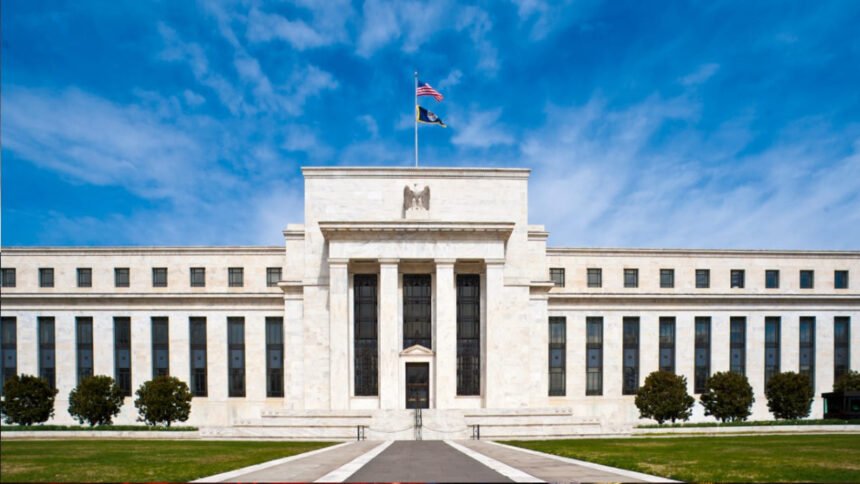
A decision on interest rates by the US Federal Reserve (FED) marks Wednesday, March 18, 2026, as an important macroeconomic day for the Bitcoin market, and expectations remain high.
It is worth clarifying that the relationship between interest rates and Bitcoin price acts as a seesaw of liquidity. When interest rates fall, credit becomes cheaper and investors have more incentive to borrow. Allocate that capital to riskier assets like BTC for better returns.
On the contrary, high interest rates act as a money vacuum, making credit more expensive, shrinking the liquidity available in the economy, and causing investors to prioritize capital preservation and debt payments over investing in crypto assets, which typically puts downward pressure on prices.
The market has already discounted the probability of the Fed keeping interest rates unchanged in March 2026 by 99%, according to CME Group’s FedWatch Index. reflects near-universal expectations for the continuation of current restrictive monetary policy. The current interest rate is 3.75% compared to the previous year.
In any case, what could move Bitcoin is not so much an announcement on interest rates, but rather a speech by the Fed chief. His words could signal what the next few months might look like in terms of monetary policy.
Intensification of Middle East conflict
All this happened in the midst of a change in the global economic panorama after the escalation of the conflict started by the US and Israel against Iran on February 28th.
In response, Iran closed the Strait of Hormuz. carried out attacks on ships and oil facilities According to a report by CriptoNoticias, it has also occurred in the United Arab Emirates, Bahrain, and Qatar.
Jasper de Meere, a strategist at Wintermute, explains that concerns in the oil market “are not limited to the closure of the Strait of Hormuz.”
According to the analyst, “This is a cumulative risk: the longer the conflict lasts, the more likely it is that critical energy infrastructure will be attacked, changing repair times and establishing a structurally high floor for supply disruptions.”
The effect of this pressure on hydrocarbons is Crude oil price exceeds $100 per barrel for the first time in five yearscomplicating the FED’s roadmap (as this would mean higher industrial production costs, higher transportation costs, etc., which could lead to higher inflation rates around the world).
Stagflation scenario and the FED dilemma
Demere said the crisis situation has established a “stagflation scenario” (a combination of high inflation, economic stagnation and weak employment), and the Fed finds itself in “an impossible position: it cannot cut rates aggressively in a weakening labor market without risking a reacceleration of already persistent inflation.”
February data reflects this paralysis, with core inflation at 2.5% and 92,000 nonfarm jobs lost in the United States.
The relationship between monetary policy and digital assets is direct; Because if inflation doesn’t come down because of energy costs, the Fed will keep interest rates high..
“For now, U.S. producers have little incentive to add additional supply before restrictions become more structured,” the expert said. Capital flows into digital assets often rely on cheap money. Conversely, if interest rates remain high, capital will flow into safer assets, causing the price of Bitcoin and other digital assets to fall.
Strengths of Bitcoin as an alternative haven
Despite this restrictive environment, Bitcoin is showing strength. De Meere argues that “sometimes the simplest answer is the right answer. All traditional safe havens are currently struggling.”
In his vision, Bitcoin is winning the race against gold not necessarily because it is technologically superior, but because it is economically superior. It was cheaper when the market panicked..
This hard-asset story has driven capital inflows into Bitcoin exchange-traded funds (ETFs), adding $966 million over the past six days.
“As buyers returned for physical assets that had not yet appreciated in value, Bitcoin became the natural destination,” said the Wintermute operator.
Is it a recovery outlook or a bullish trap?
Investor attention is currently focused on Bitcoin’s ability to overcome technical resistance. For Demere, $74,000 and $80,000 are “key resistance levels to watch.” In fact, the asset tested the $75,000 level but fell to $74,187 during the current session. The currency has appreciated 17% since the Middle East wars began.
The strategist believes that the adoption of stablecoins and institutional infrastructure will make this bear market “shallower than previous cycles,” but cautions that “we still need to be realistic about the pace of recovery.”
As for stablecoins, although the analyst did not explicitly say so, we can assume that he is referring to the fact that these instruments keep capital within the crypto ecosystem rather than moving it to the traditional banking system in case of fear. This will help you recover faster.
But other experts remain wary. Analyst Willy Wu took a less complacent view, suggesting the current move could be a “bull trap.”
Experts say that although fundamentals remain “locally strong” based on various on-chain and crypto exchange metrics, The nature of the buyer suggests vulnerability..
“The liquidity outlook shows that we are still in the early stages of a major correction cycle,” Wu argued, and future market movements and the macroeconomic environment need to be closely monitored.
(Tag Translate) Bitcoin (BTC)


