

TL;DR:
- Miners’ daily revenue plummeted to $29.9 million, representing a drop of more than 50% from historic highs.
- The network’s hash rate has begun to decline after peaking at 120,000 TH/s in October, reflecting inefficient hardware disconnections.
- Bitcoin is trading near $69,944 and is facing increasing selling pressure due to the mining sector’s need for operational liquidity.
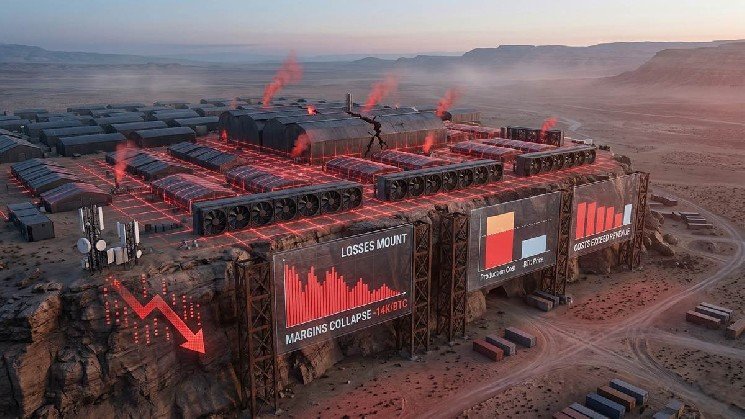
a Cryptocurrency warning As signs of Bitcoin miner capitulation emerge, it is being triggered across the digital ecosystem. After a highly volatile 2025, on-chain data confirms that mining operations are now operating on razor-thin profit margins.
Are Bitcoin miners on vacation?
Back in January, I pointed out that Bitcoin mining is not yet over.
Shortly after, the price dropped from about $96,000 to nearly $60,000.
Hashrate has recovered a bit, but is now weakening again.In other words, the mining sector is losing momentum and… https://t.co/DYE0DqR22k pic.twitter.com/udVcxYb4So
— Joanne Wedson (@joao_wedson) March 20, 2026
As of March 2026, Bitcoin’s market capitalization remains just under $1.4 trillion, while the network difficulty remains at 145 trillion. This technical scenario, when combined with the RSI indicating recovery fatigue, suggests that miners are disposing of reserves to cover rising energy costs.

Integrating structural challenges and hashrate
This is not a small variation. Rather, it is a profitability crisis that forces companies to choose between hardware innovation or permanent shutdown. Most of the ASIC investments were made between 2023 and 2024, making new upgrades financially unfeasible for midsize companies.
Additionally, increased concentration raises concerns about the dispersion of computing power.. Currently, nearly 57% of blocks are handled by “unknown” pools, raising questions about transparency and resistance to censorship amid heightened macroeconomic tensions.
Miners are traditionally resilient actors, but the current market doesn’t like risky assets due to ongoing inflation. Selling pressure is real and constant, keeping BTC prices in the stagnation zone while the Bitcoin sector waits for institutional investment to return.
In summary, the purge currently sweeping the mining industry is a necessary evolution. Only operations with the highest energy efficiency and proven reserves will be able to survive this capitulation cycle that will define the first quarter of 2026.


