

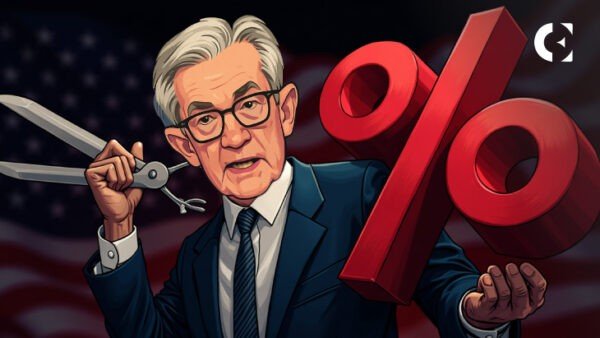
Trader Crypto Rover reported on X that the likelihood of the Federal Reserve raising interest rates in 2026 has risen to 46.9%. At the same time, expectations for interest rate cuts fell to zero. Traders now expect the Fed to take a “wait-and-see” stance before taking any major policy action.
Interest rates are likely to remain between 3.50% and 3.75% through mid-2026, according to the CME FedWatch tool. In the market, there is a 96% probability that interest rates will remain unchanged in April. Confidence declined slightly in June and July, but traders still see little chance of a rate cut.
The FOMC recently said, “The Committee will carefully evaluate future data, the evolving outlook, and the balance of risks.”
Gradual changes in interest rate expectations
As 2026 progresses, it starts to become more likely that interest rates will rise slightly. The market sees a slight risk of interest rates reaching 3.75-4.00% by September and October. Still, in the most likely scenario, interest rates will remain in the mid-3% range. Experts expect the Fed to keep policy tight but steady given ongoing inflation and a resilient economy.
Polymarket data supports this view. The majority of results are “0 cuts,” but the chance of 1 cut is only 25%. Two cuts will reach 18%, three cuts will reach 10%, and four cuts will finally reach 4%. As a result, investors are expecting a slow, gradual approach rather than aggressive monetary easing.
Chloe, a researcher at HTX Research, said, “The market environment is shifting from “risk appetite based on exchange rates and expectations” to “burdens caused by prolonged long-term interest rates, energy shocks, and shrinking liquidity.”
Market spillover and global factors
U.S. Treasury yields rose to 4.972% for the 30-year bond and 4.458% for the 10-year bond. Rising yields point to a decline in bonds as traders consider the Fed’s cautious signals. Oil prices also rose after President Trump extended a moratorium on attacks on energy facilities. Brent crude oil rose 2.56% to $110.65 a barrel, while WTI crude oil rose 2.8% to $100.20 a barrel.
Currently, financial conditions are putting pressure on risk assets. “Projects with high-risk assets or lacking meaningful cash flows may face relatively greater pressure,” Chloe said. While Bitcoin has remained stable, Ethereum has struggled to attract capital and most altcoins continue to decline.
The market is closely monitoring U.S. economic indicators and signals to determine the Bank of Japan’s next move.
Related: Fed confirms CBDC suspension while expanding oversight of digital assets


