




Bitcoin prices fell during Asian trading hours after diplomatic talks between Washington and the Iranian government broke down over the weekend and the new U.S. maritime order raised fresh concerns about energy flows from the Middle East.
This caused top cryptocurrencies to fall along with stocks, reinforcing the market’s sensitivity to oil, inflation, and broader risk sentiment.
According to crypto slate The biggest digital asset fell to a low of $70,540 from a weekend high of more than $74,000 after Vice President J.D. Vance said talks in Islamabad had ended without a deal, data showed.
At the time of writing, Bitcoin has recovered slightly to $70,877, well below the level reached after last week’s ceasefire announcement briefly boosted risk assets.
Meanwhile, the decline also spread to other major digital assets, with Ethereum, XRP, and Solana all falling more than 3% during the reporting period.
The move reflects a broader setback in traditional markets as investors reassess the chances of a short-term abatement in a dispute that has already rattled shipping lanes, oil markets and global expectations for growth and inflation.
As a result, the US stock market, including the S&P 500 and Dow, fell by about 1%. Additionally, the Nasdaq 100 market fell 1.3%. Notably, this coincides with the asset’s struggles during periods of macroeconomic stress.
At the same time, oil prices soared as traders reacted to new prospects for prolonged disruption to one of the world’s most important energy corridors.
Notably, the reversal followed a week in which risk assets rose on hopes that President Donald Trump’s two-week cease-fire plan would create room for broader reconciliation.
That optimism began to wane over the weekend after negotiators failed to bridge their differences despite nearly a full day of talks. Vance said Iranian officials were reluctant to accept U.S. terms, while Iranian state media denounced what they called unreasonable U.S. demands.
The ceasefire will last until April 22, but the breakdown in talks has left markets facing the possibility of it ending without a path to a more permanent agreement in sight.
Markets remain reeling even as US lockdown narrows
Based on a presidential proclamation, U.S. Central Command announced that it will begin enforcing new restrictions on maritime traffic to and from Iranian ports starting April 13 at 10 a.m. ET.
The order targets vessels operating in Iranian coastal waters, including port areas along the Arabian Gulf and the Gulf of Oman, regardless of nationality or ownership.
At the same time, CENTCOM said the measure will continue to allow ships bound for destinations other than Iran to pass through the Strait of Hormuz, preserving navigation in the corridor for broader regional trade.
Merchant mariners have been instructed to monitor maritime advisories, stay in contact with the U.S. Navy, and be on the lookout for further instructions via Official Sailor Notifications.
Even with those restrictions, traders saw the move as another escalation in Washington’s new efforts to increase pressure on Iran.
Brent crude oil prices rose more than 8% to over $103 per barrel, rising again above the $100 level after falling below $92 last week as hopes of a ceasefire returned, according to data from Oilprices.com. US crude oil prices officially rose by 10% to over $105 per barrel.
The speed of the move reflected how fragile energy markets had become after weeks of war and turmoil.
The Strait of Hormuz remains one of the world’s most important oil and gas chokepoints, carrying about a fifth of global supplies. Since the beginning of the war between the United States and Iran, traffic through the waterway has plummeted.
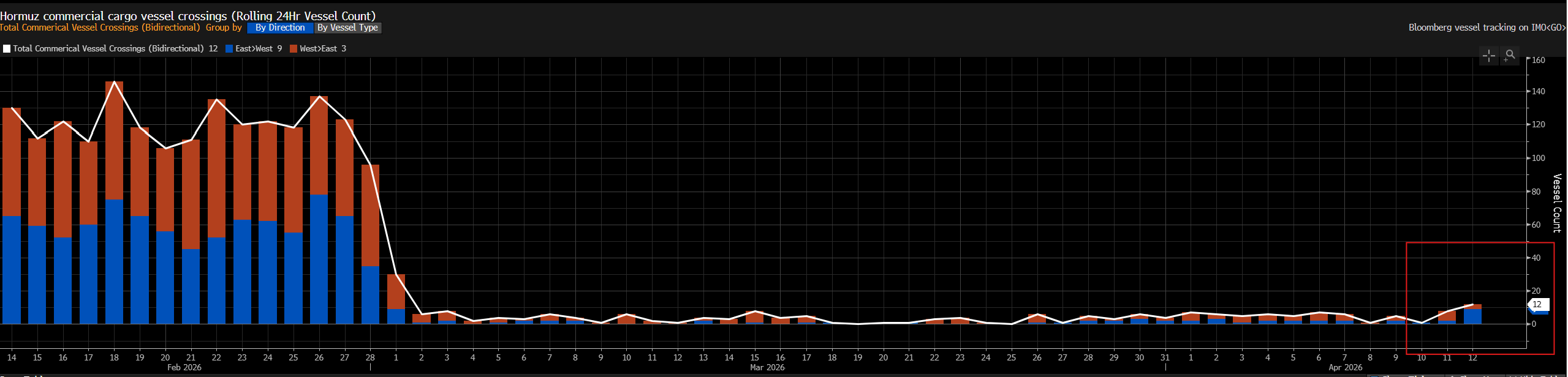
This background exposed Bitcoin to a familiar macro chain reaction. Rising oil prices are raising concerns that inflation may remain high, which could lead to a prolonged tightening of financial conditions.
For a market that had just rallied on hopes of easing tensions, the failure of diplomacy and the return of oil prices above $100 has forced a rapid re-pricing.
Bitcoin trades like a macro asset as liquidity dwindles
The magnitude of Monday’s decline also reflects a market structure that was already fragile long before talks broke down over the weekend.
According to data from Glassnode, the number of addresses experiencing losses reached around 13.5 million when the price of Bitcoin was around $70,800, indicating that a significant proportion of holders have acquired the coin beyond the current level.
This causes large cohorts to enter drawdown conditions, increasing the likelihood that a pullback to the previous entry point will encounter selling pressure.
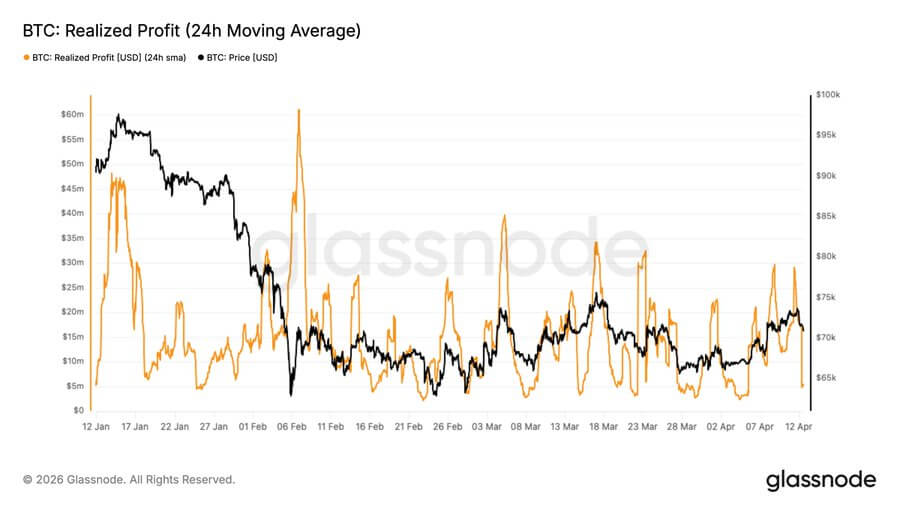
The company also said the $70,000 to $80,000 range is characterized by thin liquidity and repeated profit-taking, conditions that have dampened the recent rally. A single rally to over $70,000 was depleted by profit realizations of more than $20 million per hour, highlighting how quickly supply is emerging as a strength.
Meanwhile, AlphaRactal CEO Joan Wesson noted that bearish traders became aggressive in the short term and built high leverage after liquidity rose above $73,000.
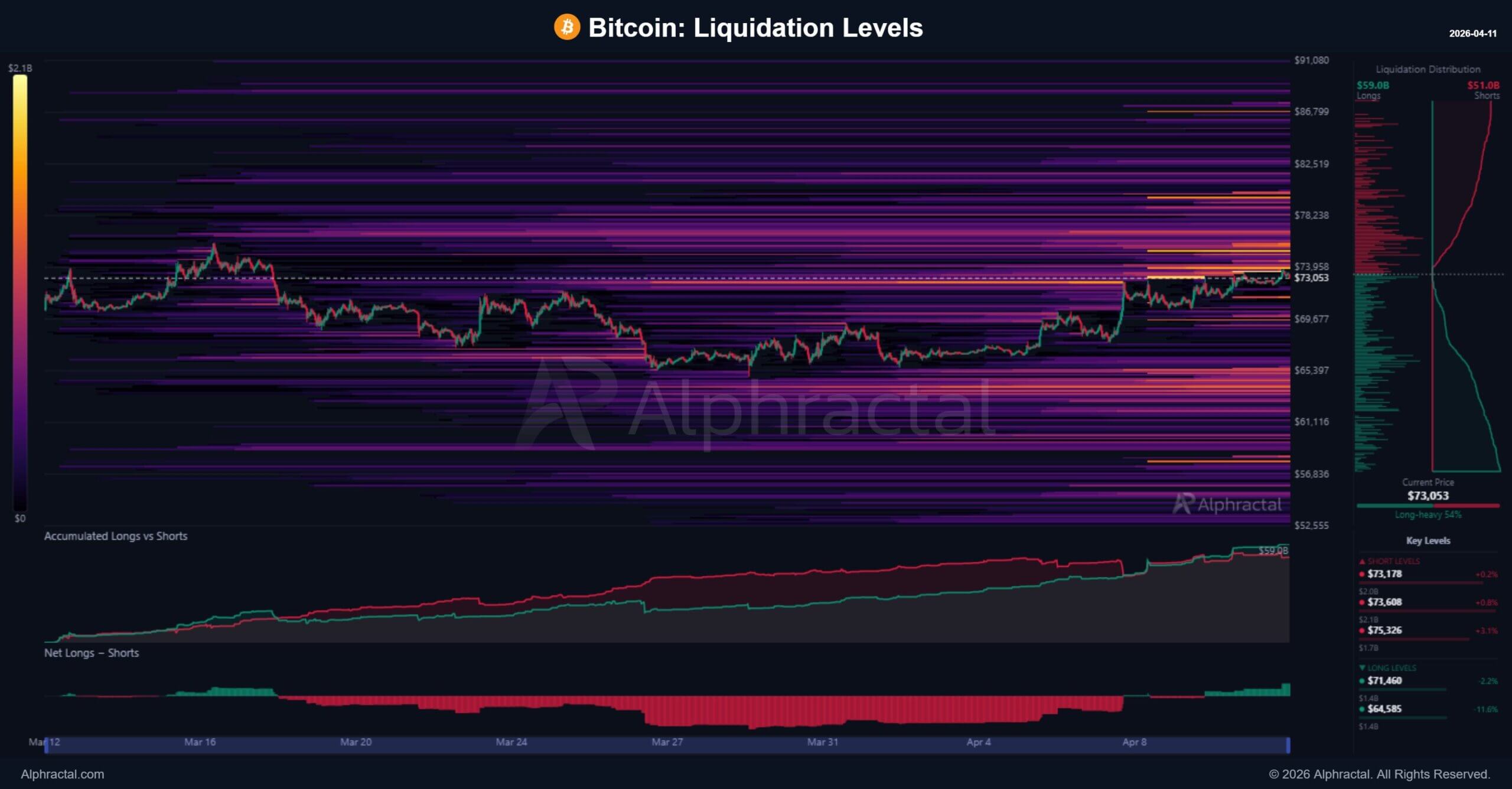
He said that while the broader market structure has not changed decisively, liquidity remains above $75,000. He said long traders remain the dominant party exposed to future liquidations, and the current situation still resembles an extended consolidation within a broader downtrend.
This is backed up by data from CryptoQuant, which notes that nearly $1 billion in selling hit Binance derivatives within an hour after a failed negotiation strengthened the market’s downward momentum.
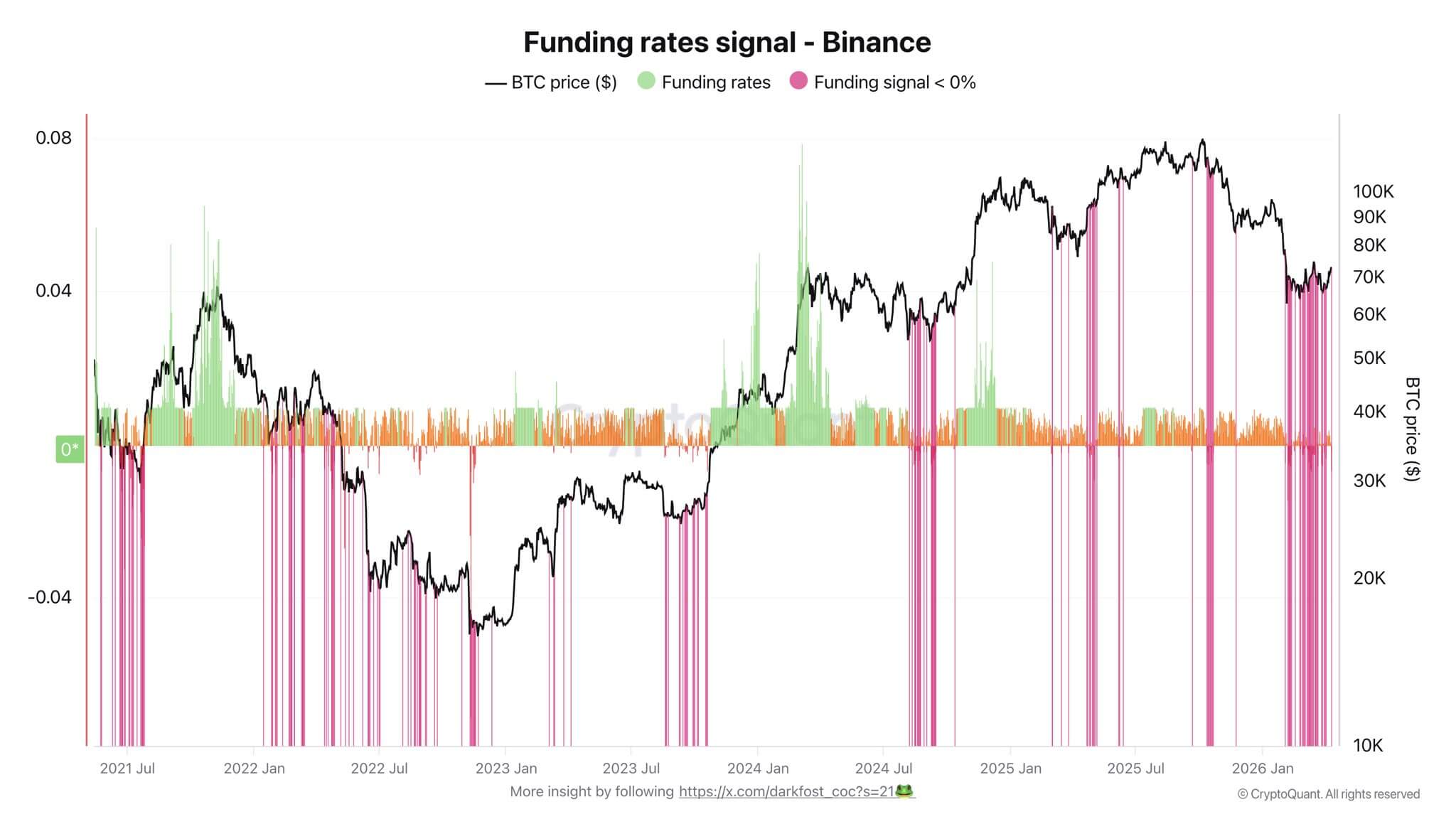
According to the blockchain company, BTC funding rates remain negative at around -0.0065%, a sign that short positions have come to dominate very short-term positions. Historically, crowded short positions can create conditions for a squeeze, but in bear markets these reversals tend to be small and short-lived.
This may help explain why Monday’s move didn’t seem like a simple flight away from crypto alone. Bitcoin is increasingly traded as a liquidity-sensitive macro asset, responding to changes in oil prices, interest rates, geopolitics, and the risk appetite of a wide range of investors.
As hopes for a ceasefire grew, cryptocurrencies quickly rebounded. But once those hopes faded, the market conceded just as quickly.
Institutional demand through Bitcoin ETFs provides support amid decline
Despite headline risks weighing on prices, some parts of the market continued to show signs of recovery.
Rachel Lucas, a crypto analyst at BTC Markets, said the institutional backdrop remains positive after U.S.-listed Bitcoin exchange-traded funds posted their biggest weekly inflows since February.
She said those products generated $786 million in sales in the week ending April 10, of which BlackRock’s iShares Bitcoin Trust accounted for $612 million. Morgan Stanley’s newly launched MSBT fund has added $46 million in its first three business days, an impressive start for a product backed by a distribution network of 16,000 financial advisors with commissions of 0.14%.
This demand is important. Because it becomes a sink when older holders take advantage of the rally to reduce their exposure. In recent weeks, the market has struggled to maintain its upside in the $70,000 to $80,000 range, due to a combination of thin liquidity, profit-taking and uncertainty surrounding macro conditions. If geopolitical tensions stop worsening, continued ETF inflows could offset some of that pressure.
Analysts at BIT Official, a crypto financial services company formerly known as Matrixport, said:
“What makes this particularly noteworthy is the parallel with 2025, when year-to-date ETF flows were similarly flat at this stage, followed by a nearly $30 billion surge in inflows. That wave of funds ultimately led to stronger tariff policy from April onwards. Viewed through this lens, the recent stabilization suggests that Bitcoin has already absorbed most of the selling pressure in January and February, and March may be back to its first positive turn. This is the first inflow since the adjustment in October. ”
Furthermore, CryptoQuant data shows that Bitcoin is currently undervalued, noting that the top cryptocurrencies are below the 20th decile of the power law model.
The firm put the measurement at 18.5%, which indicates that Bitcoin has only spent 18.5% of its history at similar valuation levels compared to its framework.
Although this signal is long-term and offers little protection against sudden macro shocks, it does suggest a deep downside is unfolding in a market already trading well below previous extremes.
Oil, inflation and flows will shape what’s next
BRN Research Director Timothy Michiel said: crypto slate Markets are entering the new week facing two contradictory factors: improved capital flows into Bitcoin investment products and increased macro risks related to the Middle East.
He named three drivers who will set the tone for the upcoming sessions. The first is the trajectory of the conflict itself. Further disruption in or around the Strait of Hormuz would push energy prices higher again, amplifying volatility across the asset class.
The second is inflation data and Federal Reserve communications, both of which will influence whether traders price in a longer period of restrictive policy. The third question is whether ETF inflows can continue to be strong enough to absorb selling pressure while holders repeatedly take profits.
He said Bitcoin is approaching a key test within the $70,000 to $80,000 zone. Stability above $70,000 leaves room for a more rapid upside move, but failure to sustain that level will likely strengthen the current range and extend the consolidation phase. A sustained rally will likely require both continued buying of the ETF and reduced profit-taking for holders looking to exit on solid conditions.
Meanwhile, Lucas said Bitcoin is testing support in the $70,500 to $71,000 range. He said holding in this zone would leave room for a move back toward $72,000 to $73,000, while stronger recoveries supported by sustained ETF demand would improve the situation in the short term.
For now, the price of Bitcoin has been driven by geopolitical changes that quickly spilled over into oil and then into every major risk asset.
(Tag translation) Bitcoin


