


A new Bitcoin security proposal includes provisions that could protect stragglers from losing everything.
Anyone who missed the upgrade deadline but still has the seed phrase will have a way to recover it through zero-knowledge proof techniques. This is a last-resort mechanism built into the final stages of BIP-361, a draft of which cypherpunk Jameson Lopp and five co-authors posted to GitHub on Tuesday.
The overall proposal is a three-step plan designed to protect Bitcoin from a threat that has quietly become more serious: the eventual ability of quantum computers to crack the encryption keys protecting initial Bitcoin addresses.
Satoshi’s Luck at the Center of Everything
About 1.7 million BTC is held in an old-style address called P2PK that was used in the early days of Bitcoin. These addresses directly expose public keys, making them vulnerable once quantum computing reaches sufficient performance.
Satoshi Nakamoto’s stash alone is worth about $74 billion at today’s prices. According to the proposal’s authors, if a malicious actor gains quantum access to those coins, it could cause serious damage to the value and credibility of Bitcoin.
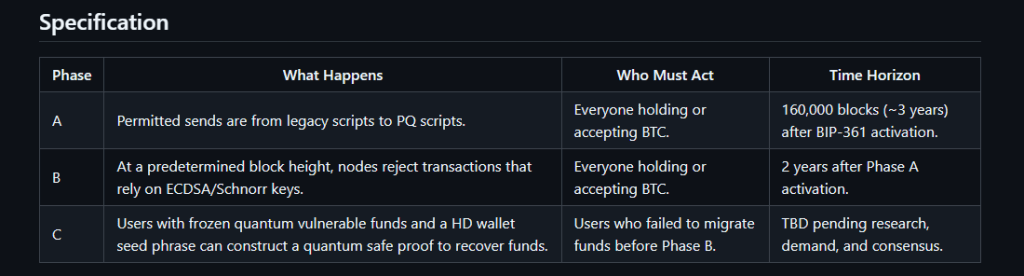
New 3-step strategy targets quantum risk. Source: Github
BIP-361 builds on BIP-360, released in February, and introduced a new quantum-resistive address format called pay-to-Merkle-root (P2MR). The old offer protects the new coins. BIP-361 solves a problem that BIP-360 did not: approximately 34% of the total supply of Bitcoin still remains in vulnerable addresses.
The plan unfolds in stages. After 3 years of activation, sending BTC to your old address is no longer allowed. After two years, the previous formal signature becomes completely invalid.
Coins that have not been moved by then will be frozen. The third stage, Rescue Window, provides latecomers with a technical path to recover their funds using proof of seed ownership.
BTCUSD trading at $73,722 on the 24-hour chart: TradingView
The community’s reaction was blunt
This proposal was one of the loudest voices in Bitcoin. The editor of Bitcoin Magazine rejected this outright. TFTC founder Marty Bent called it “hilarious.” Metaplanet’s head of business development expressed the contradiction blatantly: “If you want to keep people’s money from being stolen, you have to steal people’s money.”
The authors expected a backlash. According to its own framing, freezing does not mean punishment, but is explained as a defense against worse consequences. They claim that frozen coins slightly increase the value of everyone else’s holdings. Quantum stolen coins are the opposite.
This quantum proposal is very authoritarian and confiscatory, but of course it is what Lopp proposed. 🚩 🚩
There is no sound basis for forcing upgrades and invalidating old spending. Upgrades must be 100% voluntary. pic.twitter.com/tQvJVgdPRY
— Cato the Elder (@CatoTheElder17) April 14, 2026
Protocol developer Mark Erhardt shared a proposal for X that quickly received pushback. Critics called it “highly authoritarian and confiscatory” and questioned whether the deadline could justify making existing bitcoins unusable by their rightful owners. Lopp did not respond to a request for comment at the time of publication.
Whether BIP-361 moves forward will depend on the consensus process, which has historically been resistant to such significant changes. For now, it remains a draft and a flashpoint.
Featured image by PostQuantum, chart by TradingView
editing process for focuses on providing thoroughly researched, accurate, and unbiased content. We adhere to strict sourcing standards and each page undergoes diligent review by our team of top technology experts and seasoned editors. This process ensures the integrity, relevance, and value of the content for readers.


