


U.S. Representative Daniel Muser of Pennsylvania has recently accelerated the sale of his Nvidia (NASDAQ: NVDA) stock, according to financial reports.
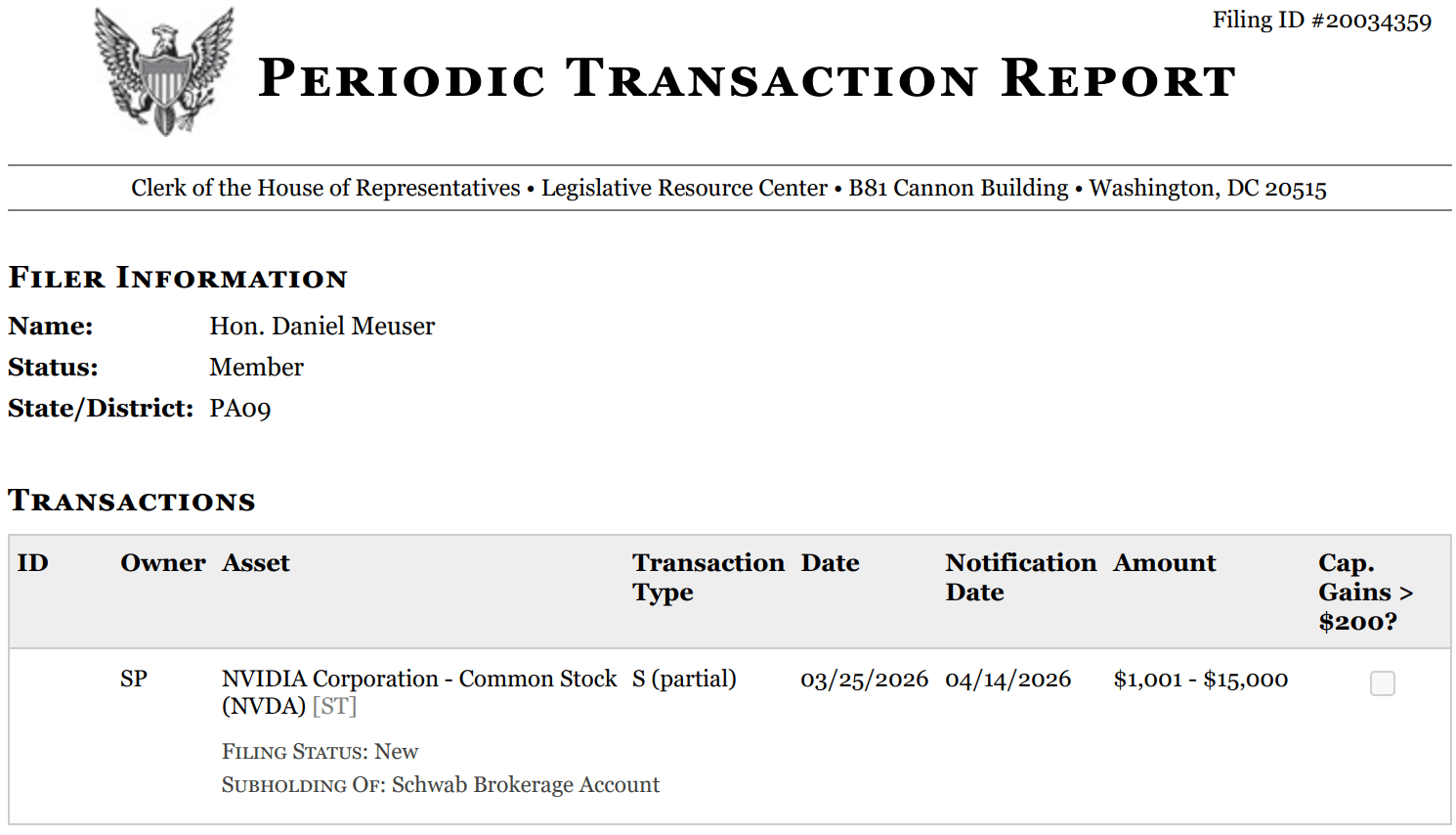
According to the latest transaction, Meuser reported selling Nvidia stock in a transaction executed on March 25, 2026, with an estimated value of between $1,001 and $15,000.
The disclosure, filed on April 14, 2026, shows that the sale was partial and, notably, no stock purchases were reported during the same period.
Additional records indicate this was not an isolated transaction involving the American semiconductor giant.
In this regard, the congressman conducted multiple sales of Nvidia stock earlier this year, including transactions executed on February 25, 2026, January 30, 2026, and January 14, 2026, each with a valuation ranging from $1,001 to $15,000.
The Congressional transactions were disclosed in multiple filings, including on April 3, 2026 and February 17, 2026, and showed a steady pattern of sales over several weeks.
Nvidia’s repeated sales are notable given the company’s central role in the burgeoning artificial intelligence and semiconductor sectors, which continue to attract strong investor interest.
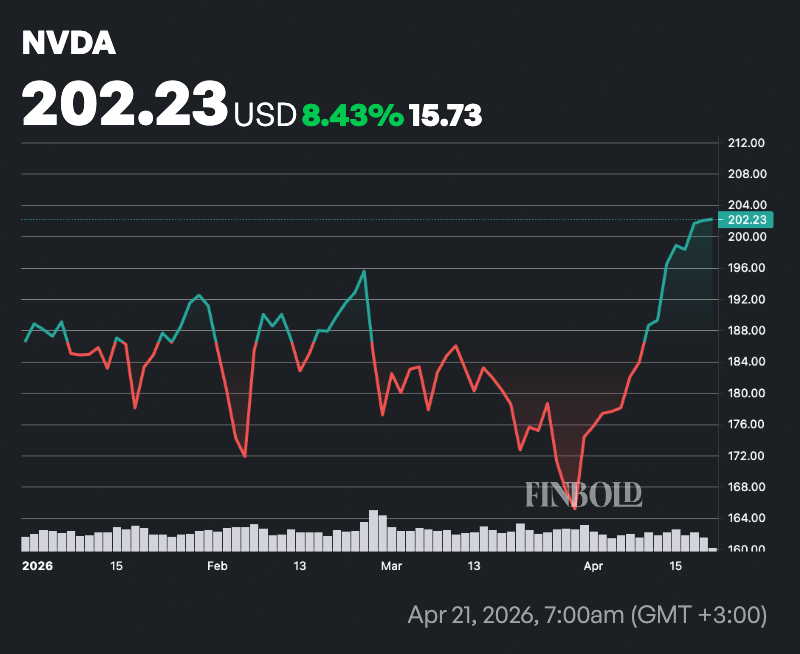
The trade also comes as NVIDIA has faced increased bearish pressure of late, prompting a more cautious stance toward technology stocks, even as the stock has risen about 12% year-to-date and hovered around $201 as of press time.
Meuser’s history of selling Nvidia stock
In retrospect, it was revealed that Mueser did not purchase the stock in 2025, instead selling approximately $580,000 in stock, and that the NVIDIA transaction was carried out by his spouse.
Overall, Mouser has been steadily reducing his holdings in NVIDIA since 2022, selling more than $1 million worth of stock as the stock price soared more than 1,100% in five years, and some individual transactions in 2024 and 2025 reaching up to $1 million.
The sale has drawn added scrutiny given his roles on the House Financial Services Committee and the Small Business Committee, putting him close to policy areas that can affect market conditions.
Although each trade is within standard disclosure ranges, the consistent pattern of selling raises questions about whether it reflects routine portfolio management or a more deliberate reduction in exposure to hot tech stocks.


