

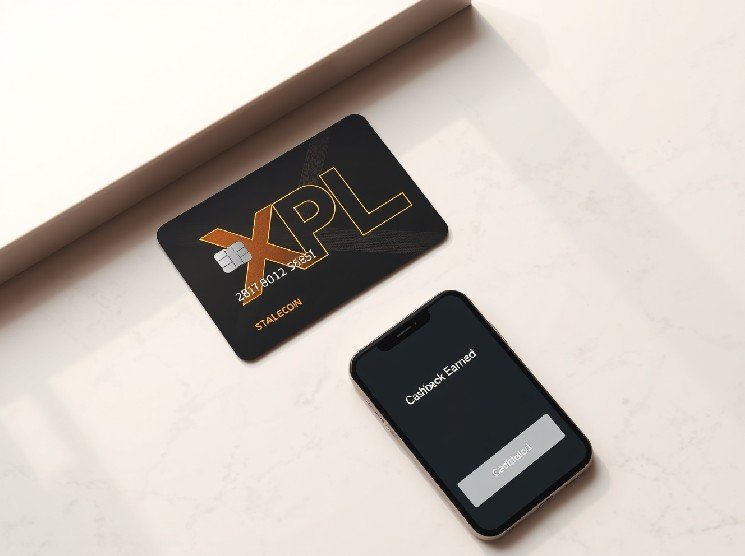
plasma($XPL) has officially announced the launch of new stablecoin-related products scheduled for June 2025. The project announced this development at X, publishing a video showcasing an application that integrates stablecoin payments, a dedicated card, and a cashback rewards system. The move marks an important step for Plasma in expanding beyond existing decentralized finance (DeFi) infrastructure.
Plasma Stablecoin Product: What Teaser Reveals
A short video published by Plasma shows the user-friendly interface. It highlights three core features: seamless stablecoin payments, physical or virtual cards, and automatic cashback on transactions. This product aims to bridge the gap between cryptocurrencies and everyday spending. By offering cards linked to stablecoins, Plasma targets users who want to use digital dollars for real-world purchases without exchanging them for fiat currency. Cashback features add incentive and potentially drive adoption by both crypto natives and new entrants.
Main features of the Plasma Stablecoin ecosystem
- Stablecoin payments: Users can make direct payments using stablecoins such as: $USDC or $DAI.
- Plasma card: Physical or virtual cards for POS and online transactions.
- Cashback benefits: A percentage of the expenditure will be refunded $XPL token or stablecoin.
- Mobile application: A dedicated app to manage your balances, transactions and benefits.
This combination positions Plasma to compete with existing crypto debit cards from platforms such as Crypto.com and Coinbase. However, Plasma is focused on stablecoins and offers a unique value proposition. Stablecoins offer price stability, making them ideal for everyday spending. The cashback mechanism further incentivizes users to hold and use. $XPL token.
Background: Plasma ($XPL) and its journey
Plasma is a blockchain project focused on scalability and interoperability. Initially, it gained attention for its Layer 2 scaling solution. of $XPL Tokens power the network and are used for transaction fees, staking, and governance. Over the past year, Plasma has partnered with several DeFi protocols to expand its ecosystem. Stablecoin products represent a tipping point towards mainstream adoption. By targeting payments, Plasma aims to capture a share of the growing stablecoin market, which currently has a total supply of over $150 billion.
Plasma development timeline
This timeline provides a clear strategy. Plasma was the first to build its technological foundation. Then we expanded our ecosystem. We are now moving towards user-facing applications. Stablecoin products are the culmination of these efforts.
Impact on stablecoins and virtual currency payments market
The introduction of Plasma stablecoin products has the potential to reshape the cryptocurrency payments landscape. Currently, most cryptocurrency debit cards require users to sell their cryptocurrency for fiat currency at the point of sale. This process is subject to fees and taxes. Stablecoin-based cards avoid these issues. The transaction remains within the crypto ecosystem. This reduces friction and costs. Additionally, cashback features may attract users looking for passive income from their spending.
Compare Plasma’s products to our competitors
- Crypto.com Visa Card: Staking CRO is required to get higher cashback tiers. Supports multiple cryptocurrencies, but not just stablecoins.
- Coinbase card: support $USDC and other cryptocurrencies. Cashback in XLM or other tokens. There are no native token staking requirements.
- Plasma card: It focuses only on stablecoins. cash back in $XPL Or a stablecoin. Layer 2 infrastructure may result in lower rates.
Plasma’s unique selling point is its focus on stablecoins and its own layer 2 network. This can potentially result in faster and cheaper transactions compared to our competitors. The cashback at $XPL It also creates a use case for the token, potentially driving demand.
Expert analysis and market reaction
Industry analysts responded positively to the teaser. Many believe this is a logical step for plasma. The stablecoin market is growing rapidly with increased adoption in remittances, e-commerce, and DeFi. Dedicated payment products could capture some of this growth. However, challenges still remain. Regulatory scrutiny of stablecoins is increasing globally. Plasma must comply with local laws. The project has not yet revealed which stablecoins it will support or which jurisdictions it will target.
Potential challenges and risks
- Regulatory compliance: Stablecoin regulations vary by country. Plasma must overcome these complexities.
- User adoption: Competing with existing players requires strong marketing and user experience.
- safety: Cards and payment systems require strong security measures to prevent fraud.
- Token volatility: cash back in $XPL If the price of the token fluctuates significantly, it may become less attractive.
Despite these challenges, the market opportunity is vast. Global stablecoin trading volume will reach $10 trillion in 2024. User-friendly cards could take advantage of this trend.
what this means $XPL token holder
In the current case $XPL For holders, stablecoin products offer new utility. Cashback mechanisms require users to keep or receive. $XPL token. This can increase demand and decrease circulating supply. Additionally, this card may encourage long-term holding. Users who want to maximize their cashback may bet $XPL To get higher rewards. This mirrors the model used by Crypto.com and others. Product success will likely have an impact $XPLmarket performance.
Tokenomics and staking incentives
Plasma has not yet announced full details of staking requirements. However, based on industry norms, users may be required to stake. $XPL Unlock higher cashback tiers. This creates deflationary pressure on the token. Greater adoption could reduce the supply of the token, supporting price appreciation. Projects must provide clear information about these mechanisms before launch in June.
conclusion
Plasma’s June 2025 stablecoin product teaser marks a pivotal moment for the project. Plasma aims to bridge the gap between DeFi and everyday finance by integrating stablecoin payments, dedicated cards, and cashback rewards. This product has the potential to attract both cryptocurrency enthusiasts and mainstream users. However, success depends on execution, regulatory compliance, and user adoption. of $XPL As June approaches, the community and broader crypto market will be watching closely. The launch of this plasma stablecoin product has the potential to redefine how people use digital currencies in everyday transactions.
FAQ
Q1: What are Plasma stablecoin products?
The Plasma stablecoin product is a new product scheduled to launch in June 2025. This includes stablecoin payments, physical or virtual cards, and cashback reward systems. This product aims to make it easy to use stablecoins in everyday transactions.
Q2: When will Plasma stablecoin cards be available?
Plasma has announced that its stablecoin product will be launched in June 2025. No specific date has been announced. More information about this project may be provided closer to launch.
Q3: Which stablecoins does Plasma Card support?
Plasma has not yet revealed which stablecoins it will support. Common options include: $USDC, $DAIUSDT. The project is likely to announce a supported stablecoin before its launch in June.
Q4: How does the cashback feature work?
The cashback feature returns a certain percentage of each transaction to the user. Cashback can be paid $XPL token or stablecoin. Higher cashback rates may require staking $XPL token. Details will be announced closer to release.
Q5: Is the plasma card available worldwide?
Availability is subject to regulatory approval. Plasma does not reveal which countries will be supported. Users should check for regional restrictions upon release.


