

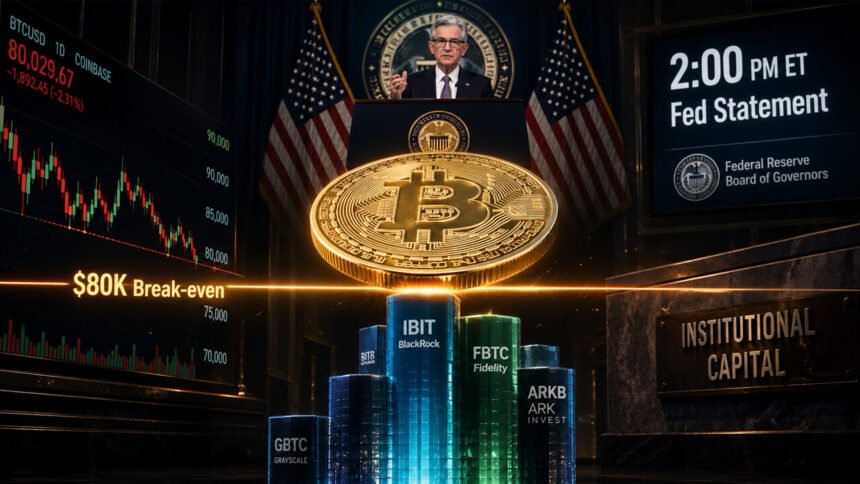


Bitcoin’s rally is squarely in the face of one of the few events whose price cannot be estimated in advance. BTC rallied towards $80,000 on the back of new institutional buying and nine straight days of ETF inflows, before rebounding to around $76,500 on Tuesday and then around $77,800 early Wednesday as the Federal Reserve began its two-day meeting in Washington.
The policy statement will be released today, April 29, at 2:00 p.m. ET, followed by a press conference from Chairman Jerome Powell at 2:30 p.m.
The same rally that proved Bitcoin’s resilience has now entered a zone where its resilience will be seriously tested, with a large portion of its investor base nearing breakeven just as the Fed prepares to speak.
$80,000 is the breaking point for action.
To understand why $80,000 is getting so much attention, it helps to think of it not as a price target. Instead, look at it as a threshold that defines what a particular investor will do next.
A recent report from Bitwise identified a cluster of cost-based metrics that sit directly within the current price range. The cost basis for short-term holders is around $80,000, the true market average is around $79,000, and the average inflow cost basis for Bitcoin ETFs is in the same range.
This means that a significant portion of the investor base that has held on through months of volatility is now close to being able to sell without losing money.
Once the market recovers to break-even levels, holders will face a genuine fork in the road.
They can treat the rebound as evidence that their conviction was justified, maintain their position, and develop their theory over a longer period of time. Alternatively, it can be used as a long-awaited exit, especially if the macro environment feels too uncertain to justify continued exposure to volatile assets.
The Spot Bitcoin ETF posted nine consecutive business days of net inflows through April 24, and is up about $2.12 billion since April 14, suggesting that the institutional bid is sustained.
The question that Wednesday’s Fed decision will now have to answer is whether it will overcome the kinds of macro events that have historically led to “selling the news” behavior, even if the actual policy decision lands in line with market expectations.
Why institutional investors’ Bitcoin bids are effective
The most important structural change over the past two weeks has been the demand mix driving this rally.
Bitwise reported that while on-chain selling pressure has slowed, global ETPs and corporate treasury programs have accumulated approximately 92,900 BTC in 30 days, suggesting that large buyers are steadily absorbing the supply that roiled the market at the beginning of the year.
Whale holdings, a broad term that refers to wallets with large positions that tend to be owned by long-term, high-conviction participants, increased during the same period. The total net assets of the entire U.S. Bitcoin Spot ETF amounted to approximately $101 billion, representing approximately 6.57% of Bitcoin market capitalization, indicating a significantly deeper institutional ownership than even six months ago.
What this means in practical terms is that this rally has a different structure than the short-covering surge that characterized the early 2026 bailouts. This rally has been led by buyers who are less likely to panic at the first sign of volatility, giving the move some structural support that is simply not there for short-term tightening.
That said, structural support and momentum are two different arguments, and momentum needs new buyers. The central risk until Wednesday is that the existing bids absorb all the selling that occurs at the break-even level, but that is not the same as there being enough additional demand to push BTC cleanly up to $80,000 and maintain it there.
President Powell’s language is a real variable
The Fed has kept interest rates on hold at 3.50% to 3.75% since March, and 100% of traders expect them to keep rates on hold again at its April 28-29 meeting, according to CME FedWatch data.
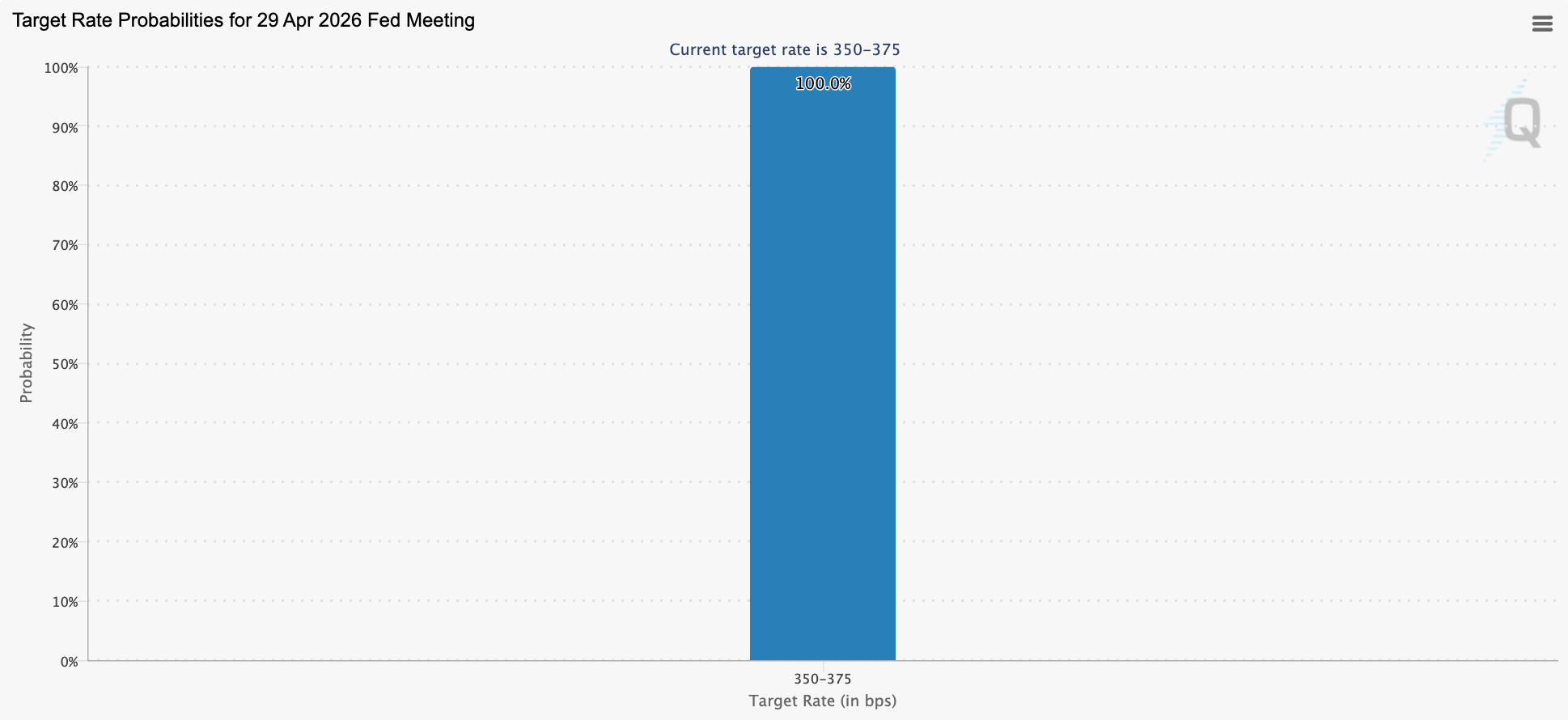
Paradoxically, it is this near certainty about interest rate decisions that makes Powell’s words so significant. The outcome is already priced in, and the market’s reaction depends entirely on how the Fed plans what happens next.
U.S. inflation reached 3.3% in March, due almost entirely to soaring energy costs following the Iran conflict and the closure of the Strait of Hormuz. Core inflation, which excludes energy and food, was 2.6%, lower than expected. The Fed is effectively navigating the split screen of headline numbers that look alarming and underlying numbers that advocate patience.
If Chairman Powell takes a hawkish view of 3.3%, Bitcoin will be exposed to macro headwinds. If he leans toward the core 2.6%, suggesting the energy shock is temporary and geopolitically generated, the market could get the permission to extend the bull run it has been waiting for.
Any sign of a hawkish pause, defined as language that opens the door to future rate hikes, could send the cryptocurrency into a cooling off period, while a neutral rate move could push Bitcoin above $80,000.
The Fed’s interest rate decision will be announced on the same afternoon as Microsoft, Alphabet, Meta, and Amazon post their Q1 2026 results after the close, and first-quarter GDP, PCE inflation data, and employment cost index will all be released at the same time the next morning, an incredible set of macro information that traders will interpret through the framework established by Powell’s press conference the night before.
There are also more long-term variables that are somewhat hidden behind near-term price movements.
Kevin Warsh is set to become the first Fed chair to publicly announce his crypto holdings when Powell’s term ends on May 15, but his policy instincts are already being read as more hawkish than his predecessor’s when it comes to balance sheet management.
as crypto slate According to the report, a combination of personal proximity to the asset class and a macro worldview in which the market sees it as structurally tighter has created real ambiguity about what the post-Powell era means for Bitcoin. That ambiguity is being postponed until May, but it hasn’t disappeared yet.
Bitcoin has rebounded enough this week to test market confidence, and the Fed’s decision on Wednesday will determine whether that confidence leads to a true breakout or another failure at the levels sellers have been patiently waiting for since the beginning of the year.
(Tag translation) Bitcoin


