

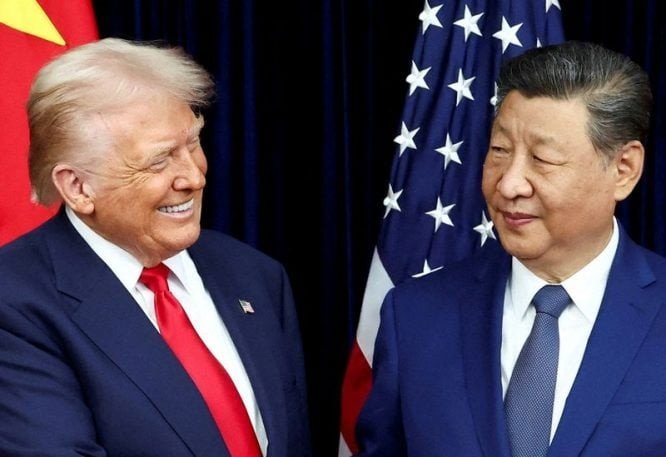
The world’s two largest economies are headed for another high-stakes summit, and investors are on the lookout for any good news. President Donald Trump and Chinese President Xi Jinping are scheduled to meet in Beijing, with markets hoping the meeting will be a concrete step towards easing tensions after months of tariffs, semiconductor sanctions and escalating geopolitical tensions.
stake
The U.S. Entity List, which currently prohibits more than 1,000 Chinese companies from accessing advanced chips and equipment, has been in place since 2016. Semiconductor export controls remain at the forefront of U.S. technology policy, and the Chinese government views them as an existential threat to its industrial ambitions.
The United States’ $11.1 billion worth of arms sales to Taiwan in December 2025 reinforced China’s calls for restraint in future military transactions. For the Chinese government, arms sales to Taiwan are not a trade nuisance. These are questions of sovereignty, issues that make compromise on other fronts difficult.
President Trump is expected to seek to reduce U.S. dependence on China’s dominant position in rare earth minerals, a critical raw material for everything from electric cars to missile guidance systems.
Time is up for the one year truce.
The backdrop for these talks includes a one-year tariff ceasefire agreed at the Busan meeting in October 2025. The ceasefire agreement is expiring and China is seeking an extension. Re-imposed tariffs from early 2025 were already shaking supply chains and investor confidence even before the Busan suspension.
Proposals on the table reportedly include increased purchases of U.S. goods by China in the agriculture and energy sectors, areas where deals have historically been politically favorable for both sides.
China’s direct investment in the US has plummeted by 90% since its peak between 2014 and 2017. This decline is significantly larger than the 57% decline in global FDI over the comparable period.
What this means for investors
Market players are preparing for two scenarios. Any meaningful agreement at the summit, whether it be an extension of the tariff ceasefire, a framework for semiconductor negotiations or warm body language between the two leaders, could buy Chinese stocks. A less favorable scenario, with no key deal, a breakdown in talks, or new provocations on both sides, would likely mean fresh pressure on Chinese stocks, disruption to global supply chains, particularly in technology and manufacturing, and a new risk-off posture across emerging markets.
Regarding cryptocurrency markets in particular, rising tensions between the US and China have historically correlated with risk-off sentiment across global markets, including digital assets. Deteriorating trade conditions also tend to lead to a stronger dollar, creating a headwind for Bitcoin and other dollar-denominated crypto assets.
Whether the tariff truce is extended, semiconductor regulations are amended, and FDI flows show signs of stabilization are much more important than handshake photos.


