

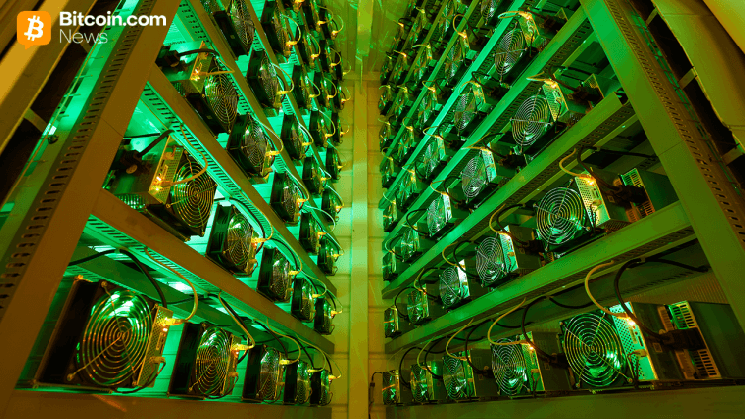
Cleanspark reported a net loss of $378.3 million for its second fiscal quarter ended March 31, 2026, with a $224.1 million non-cash loss in Bitcoin fair value weighing on its results, despite expanding its hash rate and power capacity.
Important points:
- Cleanspark’s second quarter 2026 revenue was $136.4 million, down 24.9% year over year due to Bitcoin price fluctuations.
- A non-cash Bitcoin fair value loss of $224.1 million brought Cleanspark’s net loss to $378.3 million for the March 2026 quarter.
- CEO Matt Schultz aims to commercialize AI/HPC as Cleanspark doubles MW under contract with 585 MW of ERCOT capacity.
Cleanspark posts $378 million loss in second quarter as Bitcoin fair value fluctuations impact performance
Cleanspark (Nasdaq: CLSK)’s revenue for the quarter was $136.4 million, a decrease of $45.3 million, or 24.9%, from $181.7 million in the year-ago quarter. This decline reflects Bitcoin price trends and increasing network difficulties, despite business growth across the company’s US mining portfolio.
Net loss was $1.52 per basic share, compared to a loss of $0.49 per share in the prior year period. Cost of revenue totaled $81.7 million and depreciation expense totaled $115.9 million, numbers that increased as the company continued to expand its fleet.
Adjusted EBITDA, a non-GAAP measure that excludes non-cash items, including Bitcoin fair value adjustments, was -$241.2 million, compared to -$57.8 million in the prior year period.
On its balance sheet, Cleanspark had $260.3 million in cash and $925.2 million in Bitcoin as of March 31, 2026. This number for Bitcoin represents a 14% year-over-year increase. Total assets were $2.9 billion, long-term debt was $1.79 billion, and total stockholders’ equity was $986.2 million. The company reported working capital of $1 billion.
On the operational side, miners’ average monthly hashrate increased by 18% year-over-year. The amount of megawatts under contract has doubled over the same period, including 585 MW of ERCOT-approved capacity in Texas. Cleanspark also secured ERCOT approval for 300 MW in Brazoria and continued progress on leases in Georgia, including construction work in Sandersville.
CEO and Chairman Matt Schultz pointed to four areas for future progress.
“This quarter, we accelerated the evolution of our digital infrastructure across four key areas: land and power development with a 300MW ERCOT approval in Brazoria, leasing with further developments in Georgia and other regions, financing as market conditions remain constructive, and construction as we continue to develop new parcels in Sandersville,” he said.
Schultz added:
“Our goal is clear: to commercialize AI/HPC applicable assets, expand our portfolio, and continue mining efficiently.”
Gary Vecchiarelli, president and chief financial officer, said the balance sheet is a competitive advantage for the company’s next stage. He said CleanSpark ended the quarter with sufficient liquidity to support near-term execution while maintaining optionality as demand for artificial intelligence (AI) and high performance computing (HPC) infrastructure increases.
The company said it manages more than 1.8 gigawatts of power, land and data center assets across the United States. Cleanspark’s release states that it positions its low-cost energy base as the foundation for both Bitcoin mining and potential AI and HPC workloads, and that commercialization efforts for the site are underway.
The company also warned of uncertainty surrounding tariff liability for miners purchased after 2024.


