


Several Bitcoin mining stocks rose on Tuesday, reflecting a broader stock rally driven by optimism about artificial intelligence’s productivity gains as more miners pivot to AI and high-performance computing workloads.
In addition to Terrawolf (WULF), which rose as much as 17% on news of the Kentucky data center acquisition, Hut8 (HUT), IREN (IREN), and Riot Platforms (RIOT) also closed the day up more than 5%.
The rally highlights investors’ growing enthusiasm for Bitcoin miners, which are repurposing some of the energy infrastructure and data center capacity to support AI and high-performance computing applications. This business is seen as potentially more stable and profitable than crypto mining alone.
The gains came as the S&P 500 index hit a new all-time high of more than 7,500, led by a surge in information technology and semiconductor stocks.
The Philadelphia Semiconductor Index, which tracks the performance of America’s largest chipmakers and semiconductor companies, rose 5.6% on Tuesday and is up nearly 77% since the beginning of the year.
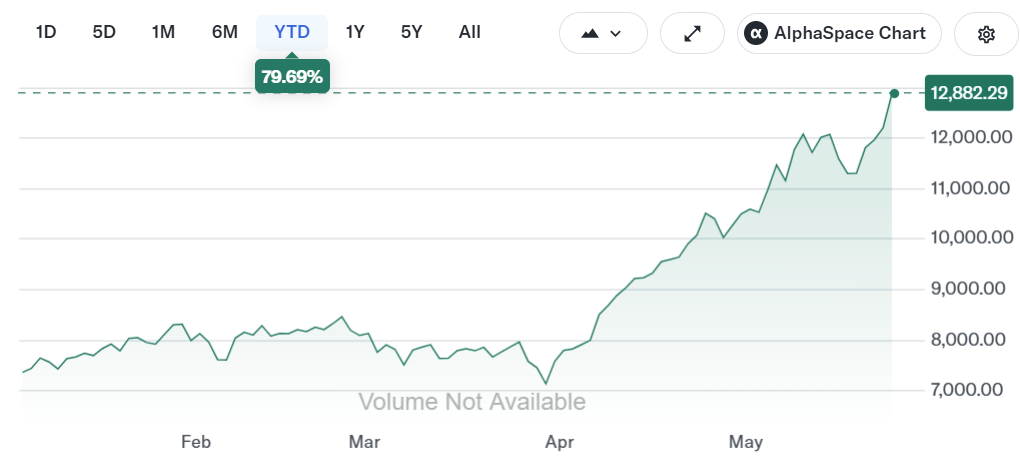
Year-to-date returns of the Philadelphia Semiconductor Index (SOX).
sauce: Yahoo Finance
The semiconductor boom has also boosted sentiment toward Bitcoin miners moving into AI infrastructure, given the large power capacity and access to data center operations needed to support high-performance computing.
Bitcoin miners emerge as AI infrastructure players
The relevance of Bitcoin miners to building AI infrastructure is becoming increasingly prominent as miners leverage large-scale power access and data center expertise to support high-performance computing workloads.
Bernstein’s recent research found that 11 publicly traded Bitcoin miners control a current and projected power portfolio of approximately 27 gigawatts. Analysts believe this power portfolio could become important as demand for AI data centers accelerates.
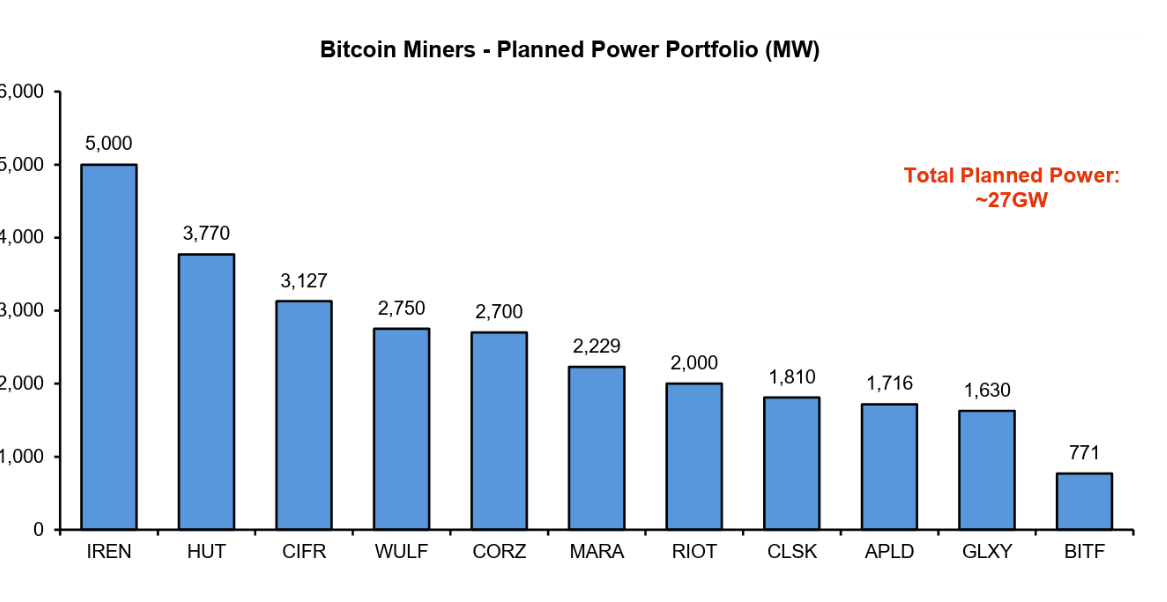
The 11 public Bitcoin miners are planning a power portfolio of approximately 27 gigawatts. Source: Bernstein
Beyond semiconductors, the report argues that access to reliable power has emerged as a key bottleneck in expanding AI infrastructure. This dynamic positions Bitcoin miners as strategic partners for hyperscalers and AI companies seeking off-the-shelf power capacity and operational infrastructure.
Bernstein analysts said in a separate note that this shift is already evident among large-scale miners, citing IREN as an example of a company pivoting from Bitcoin mining to AI infrastructure. The company points to IREN’s recent agreement with Microsoft, which Bernstein estimates could support an annual revenue run rate of about $3.7 billion for the company’s AI cloud infrastructure business.
Related: CoreWeave’s $8.5 billion loan shows how AI is replacing crypto mining finance


