

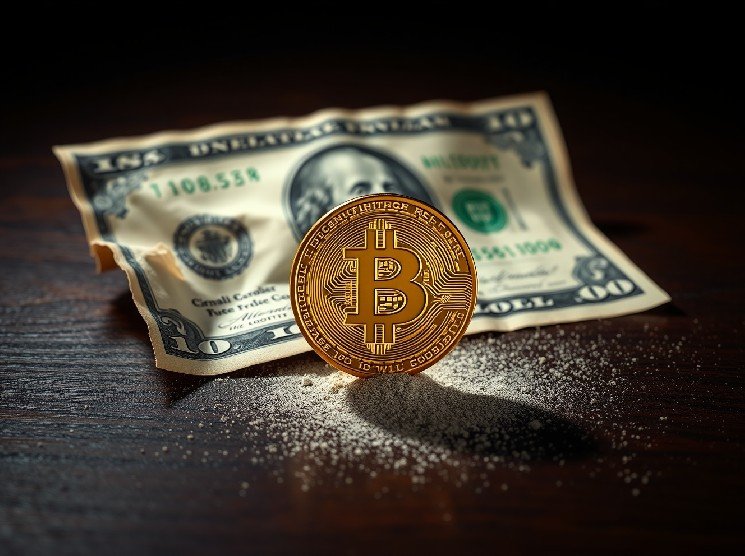
Mike Belshe, CEO of digital asset custodian BitGo, disputed the prevailing narrative in the crypto market, arguing that the main driver of Bitcoin (BTC)’s long-term value is not the prospect of lower interest rates, but rather a severe decline in public confidence in traditional fiat currencies.
Change in monetary policy and credibility of the dollar
Bershe’s comments, shared on social media platform X, followed the appointment of Kevin Warsh as the new chairman of the Federal Reserve Board. Warsh is a former Federal Reserve board member who has been a vocal critic of quantitative easing (QE) and the central bank’s history of large-scale asset purchases. Bershe argued that Warsh’s serious criticism could end the use of reflexive expansionary monetary policy to meet economic challenges.
The CEO outlined two different scenarios resulting from this leadership change. First, a successful restoration of confidence in the US dollar under the Warsh administration would be a positive development for the stability of the global financial system. Second, if that trust cannot be restored, it will serve as conclusive evidence that the existing monetary framework is fundamentally broken, and will serve as a strong catalyst for the adoption of Bitcoin.
Hard money theory in binary outcomes
Belshe’s analysis frames Bitcoin’s future in terms of binary outcomes, and in Belshe’s view, leads to the same conclusion. “Hard money wins in both scenarios,” he said, referring to assets like Bitcoin, which are not subject to government or central bank inflation and whose supply is fixed or determined by algorithms. This perspective suggests that whether the dollar rises or falls, the fundamental appeal of a decentralized, non-sovereign store of value remains the same.
This discussion adds a layer of nuance to the ongoing debate over Bitcoin’s role as a hedge against inflation and currency depreciation. While many market participants focus on the Federal Reserve’s interest rate decisions as the primary driver for risk assets like cryptocurrencies, Bershe’s commentary shifts the focus to more structural trust-based concerns.
Implications for investors and the broader market
For investors, this analysis suggests that Bitcoin’s value proposition may be less correlated with traditional macroeconomic cycles than previously assumed. If the whole point of a bull market is actually to erode confidence in fiat currencies, changes in short-term interest rates become less important. Instead, the focus is on long-term fiscal and monetary reliability. The appointment of a new Fed chair skeptical of quantitative easing introduces variables that could either strengthen the dollar or accelerate the decline in public confidence, and Bitcoin stands to benefit from the latter.
This perspective is particularly important as global debt levels remain high and central banks around the world grapple with inflationary pressures. Bershe’s comments serve as a reminder to many supporters that Bitcoin is not just a speculative asset, but a bet on the long-term sustainability of the current fiat-based system.
conclusion
Mike Belshe’s remarks provide a clear and thought-provoking lens through which to view Bitcoin’s future. By centering the discussion on trust in fiat currencies rather than interest rate policy, he is asking market participants to consider deeper structural drivers of value. Regardless of whether Warsh succeeds in restoring confidence in the dollar, Bershe’s analysis underscores a core tenet of Bitcoin’s original theory: that hard money, by its very nature, remains an attractive alternative in times of financial instability.
FAQ
Q1: Why does Mike Belshe believe that interest rate cuts are not the main driver of Bitcoin price?
A1: Bershe argues that Bitcoin’s core value proposition is tied to a loss of confidence in the fiat system, rather than short-term changes in interest rates. He believes the fundamental question is whether people trust the dollar, not whether the Fed will cut interest rates.
Q2: Who is Kevin Warsh and why is his appointment related to Bitcoin?
A2: Kevin Warsh is the newly appointed Chairman of the Federal Reserve Board. He is known for his criticism of quantitative easing. Bershe suggests that if Warsh succeeds in restoring confidence in the dollar, the system will stabilize, but if he fails, he will prove the system is broken, which would be bullish for Bitcoin.
Q3: What does “hard money” mean in the context of this article?
A3: “Hard money” refers to assets like Bitcoin that have a fixed or algorithmically controlled supply that cannot be increased by governments or central banks. Because of this, currencies are resistant to inflation and land price declines, in contrast to fiat currencies, which can be printed at will.


