

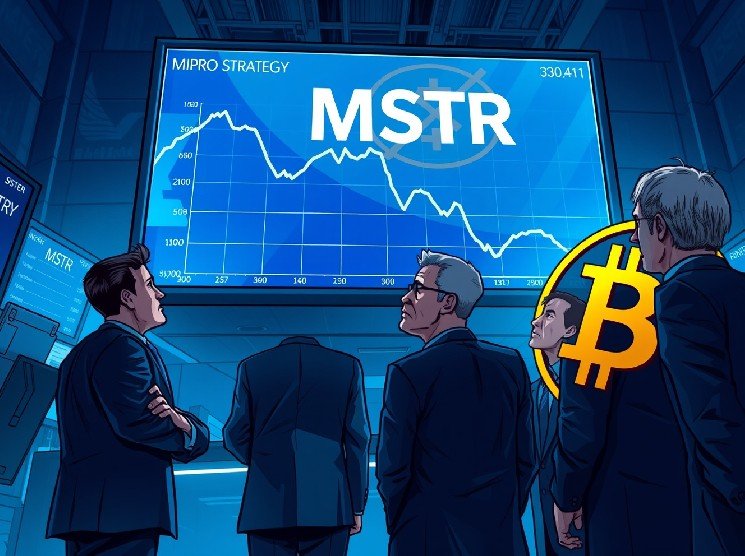
A chorus of financial experts suggests that Wall Street’s longstanding skepticism about Bitcoin has turned into an unusually aggressive desire to see MicroStrategy (MSTR) fail. The software company, which has transformed into the de facto Bitcoin financial instrument under the leadership of executive chairman Michael Saylor, has become a lightning rod for criticism from traditional financial investors.
Expert observations on Wall Street sentiment
Nate Geraci, CEO of wealth management firm Novadius Wealth Management, recently highlighted an unprecedented level of hostility toward MicroStrategy on social media. In a post about X, Geraci said he had never seen traditional financial investors so openly want a single company to fail. He suggested that this sentiment stems from a combination of factors, including deep-seated skepticism about Bitcoin itself, the company’s aggressive financial strategy, Michael Saylor’s polarizing profile, and ongoing regulatory compliance controversy.
Bloomberg ETF analyst Eric Balciunas responded to Geraci’s comments with a more precise explanation. Balciunas argued that a central factor in this hostility is a fundamental dissatisfaction with Bitcoin, an asset that deeply antagonizes many within the traditional financial sector. Bitcoin’s decentralized and volatile nature challenges traditional investment principles, Balciunas said, making it a target for those who see it as a speculative or destabilizing force.
MicroStrategy and Bitcoin Nexus
MicroStrategy’s commitment to Bitcoin began in 2020 when Michael Saylor announced that the company would adopt Bitcoin as its primary financial reserve asset. Since then, the company has accumulated over 200,000 BTC, making it one of the largest corporate holders of the cryptocurrency. This strategy ties MicroStrategy’s stock performance directly to Bitcoin price movements, creating a high-risk, high-return profile that has attracted both enthusiasts and vocal critics.
Critics argue that this strategy exposes shareholders to too much volatility and undermines the company’s core software business. But supporters see it as a visionary hedge against inflation and a bet on the future of decentralized finance. The debate has intensified as Bitcoin’s price has fluctuated dramatically, and MicroStrategy’s stock price has often amplified those movements.
Broader market impact
The hostility toward MicroStrategy reflects a deeper cultural rift within the financial industry. Traditional investors, accustomed to regulated markets and predictable returns, often view Bitcoin as a speculative bubble. In contrast, proponents of cryptocurrencies see them as an innovative asset class that challenges the status quo. This tension has real-world implications, as institutional adoption of Bitcoin remains uneven, with some companies embracing it and others actively avoiding it.
For MicroStrategy, the stakes are high. A significant drop in the price of Bitcoin could result in margin calls or force the company to sell its holdings at a loss, leading to financial difficulties. On the other hand, a continued rally could legitimize Saylor’s strategy and draw more institutional investors into the crypto space. The outcome will shape how other companies approach Bitcoin as a treasury asset.
conclusion
The debate over MicroStrategy’s future is essentially a debate over Bitcoin’s place in the global financial system. Experts like Mr. Geraci and Mr. Balciunas offer varying views on the motives behind Wall Street’s hostility, but they agree that the sentiment is real and unusually intense. As Bitcoin continues to mature, MicroStrategy’s fate could usher in broader acceptance of cryptocurrencies in traditional finance. For now, the company remains at the center of an ongoing conflict between innovation and convention.
FAQ
Q1: Why is Wall Street specifically targeting MicroStrategy?
Experts suggest Michael Saylor’s MicroStrategy’s aggressive Bitcoin acquisition strategy has become a symbolic target for traditional investors skeptical of cryptocurrencies. The company’s stock price is highly correlated with the price of Bitcoin, which amplifies the perceived risk.
Q2: What is Michael Saylor’s role in this controversy?
Michael Saylor is MicroStrategy’s executive chairman and Bitcoin financial strategy architect. His high-profile Bitcoin advocacy and large holdings in the company have made him a polarizing figure in the financial world.
Q3: Can a MicroStrategy strategy lead to failure?
Although this strategy involves significant risks, including exposure to Bitcoin volatility, MicroStrategy has managed its holdings to date without major issues. However, a severe and long-term decline in Bitcoin prices could put pressure on the company’s finances, forcing it to liquidate its assets.


