


Recent developments in the Bitcoin market are raising some disturbing questions. Could it be that the bull market has turned into a short-term trap before the next leg? Liquidity may hold the key to the solution.
Market slows down significantly
Recent stablecoin flow data shows that market liquidity has been steadily declining. Supply growth for both $USDT And USDC has slowed down significantly compared to before, resulting in a situation where the capital entering the crypto market is insufficient to maintain long-term upward momentum.
Major Bitcoin rallies in the past were powered by an increase in the supply of stablecoins, which brought new purchasing power. Today, that support seems to be severely lacking. This graphic calls attention to repeating patterns. Whenever stablecoin growth declines significantly, the price of Bitcoin also declines. Even short-term reversals fail to generate long-term momentum, ultimately leading to renewed selling pressure.
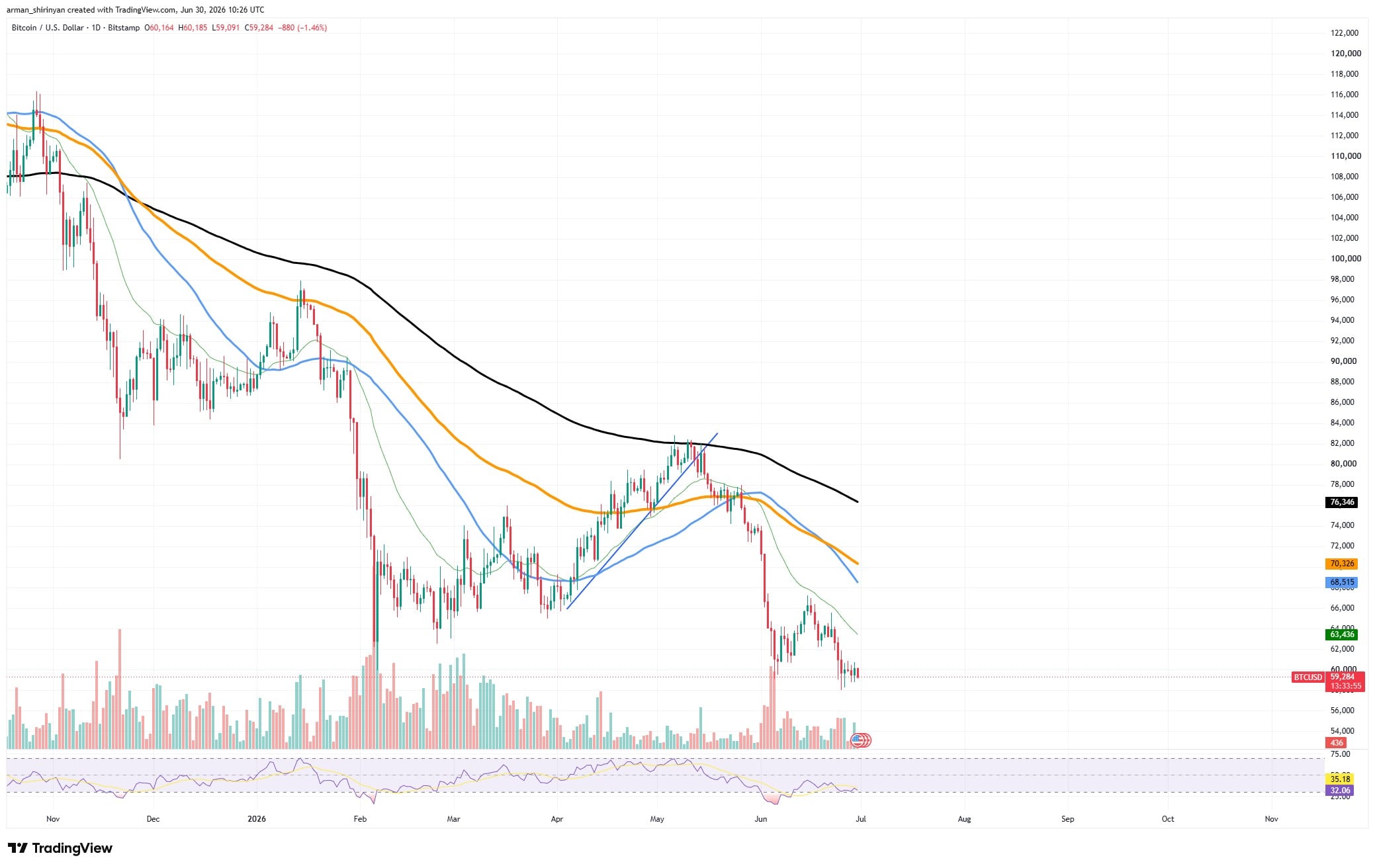
The recent decline in stablecoin growth is now approaching levels before major corrections in the past. This concern is supported by Bitcoin’s technical situation. This asset experienced a severe decline from the $80,000 area and is currently trading near $59,000. Price remains below all important moving averages, including the downward 50-day, 100-day, and 200-day trends.
The momentum is not good
An established bear market structure is typically represented by this correction. When Bitcoin approached its 200-day moving average in May, a brief recovery attempt looked encouraging. However, this rally was short-lived, resulting in what now appears to be a classic bear market rebound. Almost immediately, sellers regained control and pushed Bitcoin back toward regional lows. Additionally, momentum indicators are not very encouraging. Despite several attempts to stabilize, the RSI is still weak and finding it difficult to break out of bearish territory.
This means that buyers are not challenging the current downtrend with enough momentum. Probably the main reason is the lack of stablecoin inflows. Without new capital flowing into the ecosystem, rallies will rely more on speculative positioning and short covering than real demand.
These actions can result in dramatic increases, but are unlikely to become long-term trends. A pullback that occurs in this type of setup is more likely to be a temporary technical reaction rather than the beginning of a trend reversal. Bitcoin is likely to continue repeating the same cycle (a strong bailout rally followed by renewed selling pressure) until the liquidity situation improves and stablecoin growth resumes. The dry powder needed to support long-term recovery does not currently exist on the market.


