

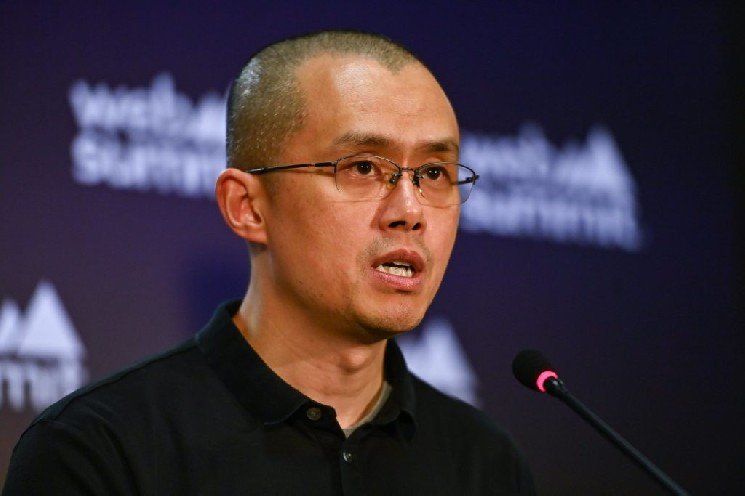
Speaking at Binance’s 9th anniversary celebration, company founder Changpeng Zhao (CZ) made a remarkable assessment of the next decade of the crypto sector. CZ said the potential for growth in AI-powered payments, tokenization of real-world assets, and blockchain-based finance will shape a new era for the sector.
CZ, who founded Binance in 2017, said crypto exchanges have significant shortcomings in terms of user experience, security, trading infrastructure, and customer service, and explained that the company has set its sights on improving these areas.
CZ said that while most of the major exchanges at the time focused only on Bitcoin trading, Binance gained a huge advantage by supporting ICO projects and new cryptocurrencies at an early stage. Binance has become the world’s largest cryptocurrency exchange by trading volume in about five months since its establishment.
CZ said that if he were giving advice to his 2017 counterpart, he would tell them to learn more about laws, regulations and political trends.
CZ said that Binance was focused on product development and user protection in the early stages, but also admitted that it did not fully consider the complexities of international regulations. He specifically noted that some U.S. laws may apply to foreign companies and transactions.
CZ’s second most important conclusion was that they needed to launch products faster. CZ recalled that Binance launched a futures product about two years after its founding, and said that if it were to make the same decision today, it would act sooner.
CZ said it is more efficient to introduce the product to users and get feedback early on than to perfect the product in secret for a long period of time.
CZ attributed Binance’s longevity as the industry’s largest exchange to product quality, user security, and general market conditions, noting that the company’s core mission is to “increase money freedom.”
CZ touched on Binance’s 9th anniversary theme, “Built by You,” and asserted that the global cryptocurrency community has played a decisive role in the company’s development.
CZ said that nine years ago, the cryptocurrency sector consisted of a small but highly engaged community, and as Binance grew, large numbers of volunteers contributed to the company’s ecosystem.
CZ said that while centralized companies are vulnerable to regulatory, legal and geopolitical pressures, they cannot target the global decentralized community from a single point. According to CZ, if companies treat their users well, communities can become a powerful defense mechanism through social media.
According to CZ, the crypto sector is still in its infancy
CZ disputed the notion that the crypto market has reached saturation, saying that less than 1% of the world’s wealth may still be flowing into cryptocurrencies.
CZ noted that fiat deposits and withdrawals in this space remain costly and complex, and stablecoins also struggle to provide both yield and liquidity at the same time.
CZ said that tokenization of real-world assets is primarily focused on the US market, and the RWA sector needs to become more global and diversified.
According to CZ, the biggest misconception regarding the adoption of cryptocurrencies is that digital assets are only seen as investment vehicles.
CZ noted that people are discussing when to “exit” the market after purchasing Bitcoin, but just as it would be out of the question to exit from the internet or artificial intelligence, it would also not make sense to exit from crypto technology in the future.
CZ argued that blockchain and cryptocurrencies are one of the fundamental technologies of our time, along with the internet and artificial intelligence.
One of CZ’s most notable predictions was about the convergence of artificial intelligence and cryptocurrency payments.
CZ said that while current AI applications can find the best hotels and flights for users, they cannot complete the purchase process, adding that this feature could be available within months rather than years.
CZ says that as AI systems conduct transactions on behalf of users, there will be a need for a global, technology-focused, programmable payment method to replace credit cards.
Therefore, he predicted that crypto payments could become widespread within one to two years.
“AI: A double-edged sword in blockchain security”
CZ said artificial intelligence brings both opportunities and risks when it comes to blockchain security, adding that advanced models can more quickly detect vulnerabilities in smart contracts and software systems.
However, CZ noted that the same technology could also be used by malicious attackers, highlighting the need to quickly develop security tools for developers.
CZ also said that artificial intelligence could help improve blockchain networks’ transaction capabilities and efficiency. He explained that developing faster, higher-capacity networks could reduce transaction costs.
When asked about what the industry will look like on Binance’s 18th anniversary, CZ said that while it is difficult to make such long-term predictions, there is significant growth potential in the two areas.
According to CZ, the credit and debt markets in the crypto sector are still very small compared to the traditional financial system.
Tokenization of real-world assets also stands out as one of the key growth areas that the sector agrees to. CZ expects the migration of bonds, funds, real estate, and various financial products to blockchain to accelerate in the coming years.
Related news Federal Reserve Chairman Kevin Warsh testifies to Congress – makes passionate comments including about virtual currencies
CZ admits failing to predict stablecoin growth
CZ explained that his perspective changed after stepping down as CEO of Binance, noting that while running the company, he attended 20 to 25 meetings a day and constantly had to deal with operational issues.
CZ said his busy schedule prevented him from following some of the latest developments in the crypto sector closely enough, and admitted that he initially underestimated the growth of stablecoins.
CZ said that while he once saw stablecoins as just a temporary solution to facilitate transfers between crypto exchanges, the sector has grown much more than expected.
CZ said that after stepping down as CEO, he had the opportunity to look more closely at the tokenization of RWA and has also advised some governments on the issue.
“Traditional finance and crypto finance will merge.”
CZ said that if he had to start a business from scratch today, he would still focus on his area of expertise: transaction systems.
CZ advises people to find the intersection of their talents, interests, and areas where they can provide value to others, jokingly adding that trying to lead an AI team is likely to fail.
CZ argued that traditional finance and crypto finance will be integrated in the future, and said that these two fields should not be viewed as separate systems.
CZ pointed out that while postal services and email were previously seen as two separate worlds, a large portion of communication is now digital. Similarly, he said blockchain and cryptocurrencies will eventually become a natural part of the existing financial system.
According to CZ, cryptocurrencies are not temporary investment products that people will withdraw from someday. They will become permanent technologies, like the internet and artificial intelligence, becoming part of the infrastructure of everyday life.
*This is not investment advice.


