



Bitcoin (BTC) is trading close to the $90,000 level as macro caution, declining liquidity, and changes in market structure continue to weigh on its price movement.
Related Read: Wall Street Makes Waves With Explosive $500 Million Deal
What was once a retail-focused ecosystem is now increasingly shaped by institutional flows, and while US spot Bitcoin ETFs are attracting significant assets, on-chain activity trends are going in the opposite direction. The result is that markets move, but the patterns of engagement are very different from those seen in previous cycles.
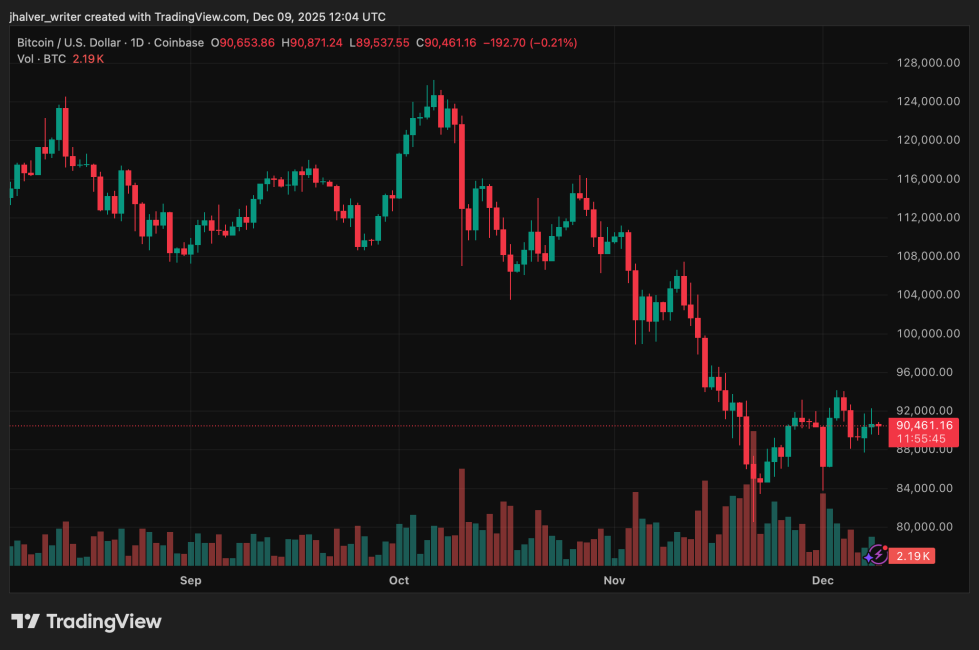
BTC's price trends to the downside on the daily chart. Source: BTCUSD on Tradingview
Bitcoin ETF flows increase as retail activity declines.
Since the launch of the US spot Bitcoin ETF in early 2024, the number of active on-chain addresses on the network has steadily declined. Analysts believe this is partly due to “convenience trading,” where individual investors choose to gain exposure through traditional brokerage accounts rather than managing their own Bitcoin wallets.
BlackRock’s IBIT and similar products are now capturing a growing share of BTC demand, even as the blockchain itself shows declining grassroots participation.
Industry experts argue that this change fundamentally changes the way value circulates in the Bitcoin economy. ETF issuers, rather than miners or network users, are now earning higher returns.
SwanDesk CEO Jacob King describes this as a structural turning point towards off-chain monetization, with Bitcoin functioning more as a financial instrument than as a peer-to-peer asset.
Macro Events Intensify BTC Price Pressure
Bitcoin’s recent price behavior reflects both macro uncertainty and intraday volatility patterns. Despite developments that could historically support bullish sentiment, such as Strategy (formerly MicroStrategy)’s recent purchase of over 10,600 BTC, BTC continued to fall below $90,000.
Traders remain cautious ahead of the Federal Reserve’s policy decision, which is expected to result in a 1/4-point interest rate cut. But the hesitation is evident. The rally towards $92,000 continues to meet resistance and liquidity remains tight across spot and derivatives markets.
As a result, analysts warn that Bitcoin needs to stay above key support levels near $88,000 to avoid a deeper downside.
Institutional trading dynamics shape market movements.
A growing number of analysts suggest that predictable selling at the opening of US markets reflects coordinated execution rather than organic selling.
Market observers point to high-frequency firms, such as Jane Street, which hold large ETF positions, as a possible contributing factor to this repeating pattern. Although unproven, the consistency of these declines has added to traders’ frustration.
Meanwhile, miners face pressures of their own. Hashprice has fallen to near-record lows, and declining mining profitability has prompted operators to turn to AI infrastructure.
Related Read: Major Bank CEOs Discussing Cryptocurrency Market Structure with U.S. Senators This Week
With ETFs soaking up demand, macro signals driving sentiment and miners reshaping their businesses, Bitcoin now sits at a pivotal moment, backed by institutional capital but missing the retail pulse that once defined the cycle.
Cover image by ChatGPT, BTCUSD chart by Tradingview
editing process for focuses on providing thoroughly researched, accurate, and unbiased content. We adhere to strict sourcing standards and each page undergoes diligent review by our team of top technology experts and seasoned editors. This process ensures the integrity, relevance, and value of the content for readers.


