


Bitcoin miners have just been hit with a one-two punch with the price dropping below $71,000 and preparing to ease up, like bouncers who suddenly don’t care about the network’s difficulties.
Dialing down Bitcoin becomes difficult as hashrate loses momentum
When the price of Bitcoin drops and machines start taking longer to spit out blocks, the protocol does what it always does and adjusts. And this time, it is becoming more obvious. Estimates suggest that the difficulty adjustment on March 20th could drop between 6% and 8.5%, with current predictions hovering around a respectable -7.64%.
This essentially means mining is a little less demanding, like switching from a marathon to a slightly more strenuous jog. But before anyone pops the champagne, the picture looks more like survival mode than relief. The network’s hashrate remains below the once touted 1 zetahash/second (ZH/s) mark, currently sitting at around 915 exahash/second (EH/s).
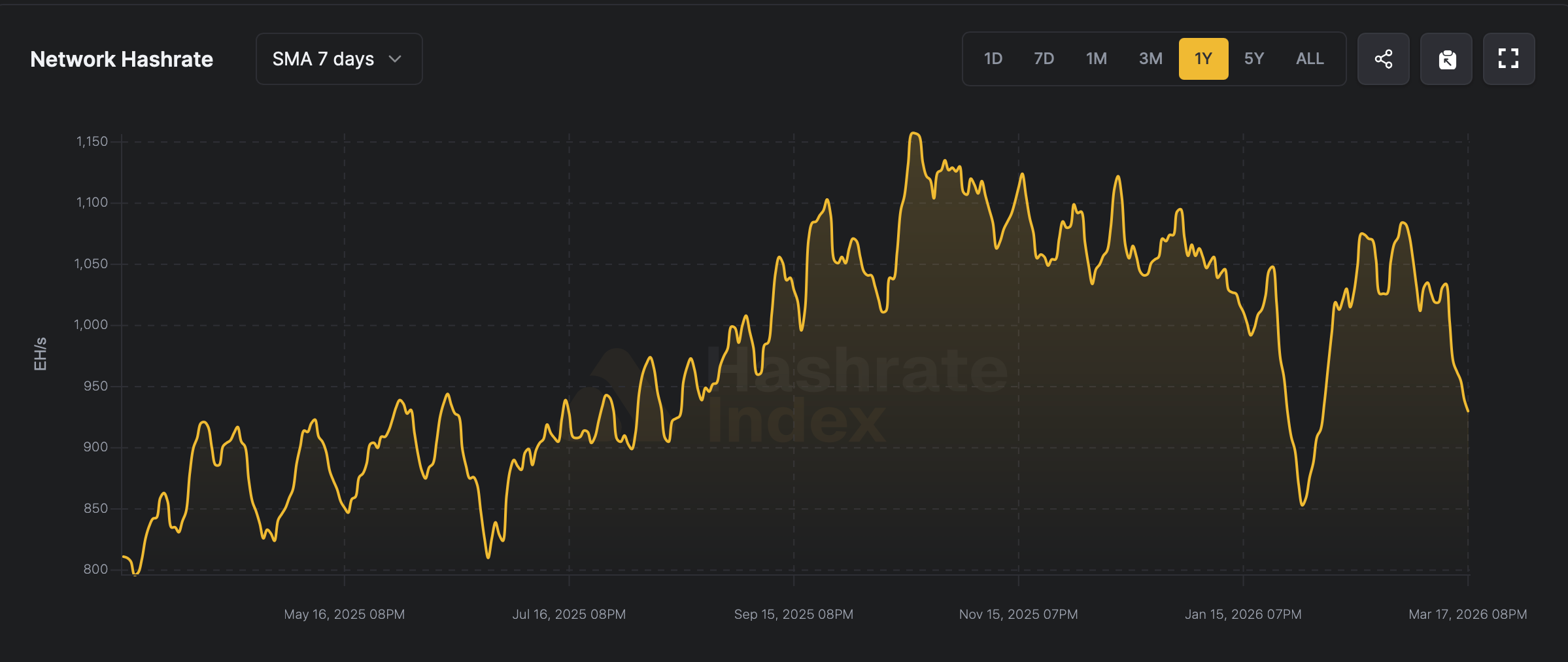
Source: hashrateindex.com
This is a step down from the hashflex that miners were showing off a while back. And yes, the machine is slowing down enough for everyone to notice. Block times averaged 10 minutes and 49 seconds, nearly a minute slower than Bitcoin’s polite goal of 10 minutes. From a protocol standpoint, this basically amounts to showing up late to your party.
Delays in block production create difficulties. It’s not theater, it’s mathematics. The network will adjust down to keep things humming, even if that hum sounds like a tired engine. Bitcoin miners, on the other hand, are doing the economic equivalent of checking couch cushions for loose change. Hashprice (daily revenue per petahash per second (PH/s)) remained at $31.06.
These aren’t numbers that inspire bold expansion plans or celebratory social media posts. This can be attributed to a variety of factors, including softer Bitcoin prices, narrowing margins, and because the universe has a sense of humor, the arctic storm in the United States that disrupted operations a few weeks ago. The near-freezing temperatures are a reminder that industrial mining rigs are still at the mercy of the real world.
Next is concentration. Four mining pools are currently running the mining show: Foundry USA Mining Pool, Antpool, Viabtc, and F2pool, controlling a total of 70.19% of the global hash rate. Lower difficulty means these four giants and the rest of the miners will find blocks faster and get back to the 10-minute rhythm that Bitcoin is addicted to. It also gives struggling operators some breathing room, at least temporarily.
Think of this as a protocol for throwing life rafts to the miners. It’s not a yacht, but don’t get carried away. But enough to keep things afloat. Of course, these exist without any. Bitcoin price fluctuations are the main factor here as well. If BTC falls below $71,000, revenue compression will become inevitable. Mining is essentially a very simple business. When prices fall, profits follow.
So while difficulty adjustment may seem like a gift, it’s actually more of a coping mechanism. The network is not generous, it is working.
And yet, despite slow block speeds, declining revenues, and weather headaches, the network continues to move. No board meetings, no emergency press conferences, no dramatic speeches, just the code working as intended.
Frequently asked questions 🔎
- Why will Bitcoin mining difficulty decrease in March 2026?Block generation is too slow, so the protocol automatically reduces the difficulty back to the 10-minute target pace.
- How much will the difficulty level of Bitcoin decrease?Current forecasts call for a decline of between 6% and 8.5%, with the latest median forecast at -7.64%.
- What is Bitcoin’s current hashrate?The network is running at around 915 EH/s, which is still below the 1 ZH/s milestone that the miner recently maintained.
- Who controls most of the Bitcoin mining power today?Foundry, Antpool, Viabtc, and F2pool together account for around 70% of global hashrate, making them the dominant players.


