

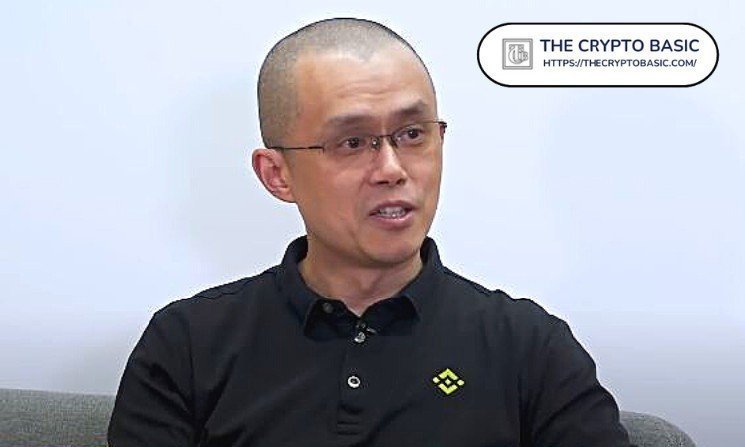
Changpeng Zhao once again revisited a well-known phrase during Bitcoin’s big correction while denying claims that Binance accelerated the market decline.
Important points
- “Poor again,” Changpeng Zhao tweeted, referring to the 2022 post to highlight Bitcoin’s cyclical volatility rather than his personal wealth.
- Bitcoin is trading around $64,731, down about 50% from its all-time high of $126,080 on October 6, 2025.
- Cryptocurrencies have fallen more than 20% in the past week due to liquidity crunch and macroeconomic pressures.
- Zhao denied claims that Binance sold Bitcoin to cause the price to fall, insisting that the movement was due to user withdrawals.
“Poor again”
As the price of Bitcoin plummeted in recent days, the Binance founder gained attention with a short but sharp post about X. “I am poor again,” Zhao wrote, rehashing a phrase he had used during previous market downturns.
This statement was intentionally given a nostalgic feel. Chao directly linked to a post from January 2022, when Bitcoin fell from about $67,000 to nearly $30,000 and eventually rebounded. By citing that episode, he framed his comments as a reflection on the cyclical nature of cryptocurrencies rather than a literal statement about his wealth.
This historical reference immediately prompted comparisons across the cryptocurrency community. Indeed, observers noted that both statements surfaced during periods of heightened volatility following strong rebounds.
Poor again. 😂
(Last time I posted this was when Bitcoin dropped from $67,000 to around $30,000. It worked out in the end.) https://t.co/8NIzNllVS2
— CZ 🔶 BNB (@cz_binance) February 5, 2026
Bitcoin has retreated significantly from its October peak
For context, Bitcoin reached an all-time high of $126,080 on October 6, 2025, but has lost about half of its value since then.
At the time of writing, the world’s largest cryptocurrency was trading around $64,731 after hitting $60,000 earlier today. The economic downturn has accelerated, with prices falling more than 20% in the past week alone. The speed of the decline has spooked traders, already facing a liquidity crunch and broader macroeconomic pressures.
Against this backdrop, Zhao’s remarks struck many as a reminder that sharp reversals have long been part of Bitcoin’s history.
Mr. Zhao refutes claims to sell shares
As the market fell, speculation intensified over the cause of the decline. Earlier this week, Chao addressed what he described as an exaggerated and misleading narrative directed at both himself and Binance.
In a post on X, he denied claims that Binance sold Bitcoin to cause it to fall below $75,000. Zhao said changes in the exchange’s wallet balance reflect users’ withdrawals, not unique transactions. He explained that the bitcoins involved belonged to customers using the platform.
Supercycle controversy and SAFU scrutiny resurfaces
Mr. Zhao also revisited criticism of the long-discussed cryptocurrency “supercycle.” Some commentators argued that his previous statements weakened confidence in the idea. However, Zhao clarified that he was not saying that the paper was invalid, only that he was less confident than before.
At the same time, he defended Binance’s handling of its User Safe Asset Fund (SAFU). Zhao said the exchange will migrate SAFU’s holdings from stablecoins to Bitcoin over 30 days, and the purchases will be carried out in stages through a centralized market. He pointed to Binance’s liquidity as a key element in its approach.
These clarifications come amid continued scrutiny of Binance’s impact on market dynamics.
Flash Crash Fallout draws attention to Binance
This debate is further shaped by lingering concerns about the October 10 flash crash. This sudden market movement wiped out around $19 billion in leveraged positions, squeezing liquidity in the crypto market.
Some industry players continue to seek responsibility. Star Xu, founder of rival exchange OKX, publicly accused Binance of contributing to the crash. Nevertheless, Zhao argued that broader market dynamics and user-driven activities are at play.
Taken together, Zhao’s comments highlight the tension between short-term disruption and long-term prospects in the crypto market. Reflecting on the 2022 economic downturn and subsequent recovery, he suggested that severe corrections are not an anomaly but a recurring feature of Bitcoin’s evolution.


