



Bitcoin price has remained in a consolidation range below $70,000 so far this week after spending most of last weekend above that level. The flagship cryptocurrency’s price action has been largely – and painfully – sideways in recent weeks, but this represents a notable improvement compared to how February began.
The new month saw Bitcoin hit a new low just above the $61,000 level, confirming the start of a bear market. Amid recent weeks of relative stability, recent on-chain assessments show that BTC and broader cryptocurrency marks remain at risk of further downside volatility.
The future of BTC in the hands of large investors: CryptoQuant
Bitcoin’s price movements in the last bull cycle were largely influenced by increased inflows and activity from institutional investors (mainly through spot exchange-traded funds). Likewise, even in bear markets, large groups of investors are likely to remain in control.
Bitcoin exchange inflows and immediate selling pressure have normalized following a capitulation surge in early February, according to CryptoQuant’s latest market report. This trend can be seen in the decline in exchange inflows, from around 60,000 BTC at the beginning of the month to around 23,000 BTC currently.
While the extreme sell-off appears to be easing, a worrying trend appears to be emerging among Bitcoin’s biggest investors. CryptoQuant highlighted in a market report that the BTC exchange whale ratio has risen to 0.64, the highest level since 2015, suggesting that whale inflows are making up a significant portion of exchange deposits.

Source: CryptoQuant
Meanwhile, average BTC deposit sizes have also reached levels not seen since mid-2022, during the heat of the last bear market. This trend further reinforces the idea that institutions or large investors are behind the increase in exchange supply.
CryptoQuant noted that the altcoin market still faces high distribution pressure. The average number of daily altcoin exchange deposits increased from 40,000 in Q4 2025 to 49,000 in 2026. This continued capital circulation in risk assets reflects weakening market confidence and increases the risk of downside volatility.

Source: CryptoQuant
Meanwhile, the continued outflow of stablecoins from exchanges means a decline in marginal purchasing power (or “dry powder”) in the Bitcoin market. According to CryptoQuant data, net USDT’s exchange inflows have fallen sharply from a one-year high of $616 million in November 2025 to just $27 million, sometimes even turning negative (-$469 million at the end of January).
Ultimately, the combination of increased selling pressure from large Bitcoin holders, increased altcoin circulation, and continued stablecoin outflows suggests that the cryptocurrency market structure remains exposed to the risk of further downside volatility.
Bitcoin price at a glance
As of this writing, the price of Bitcoin is around $67,580, up a slight 1% over the past 24 hours.
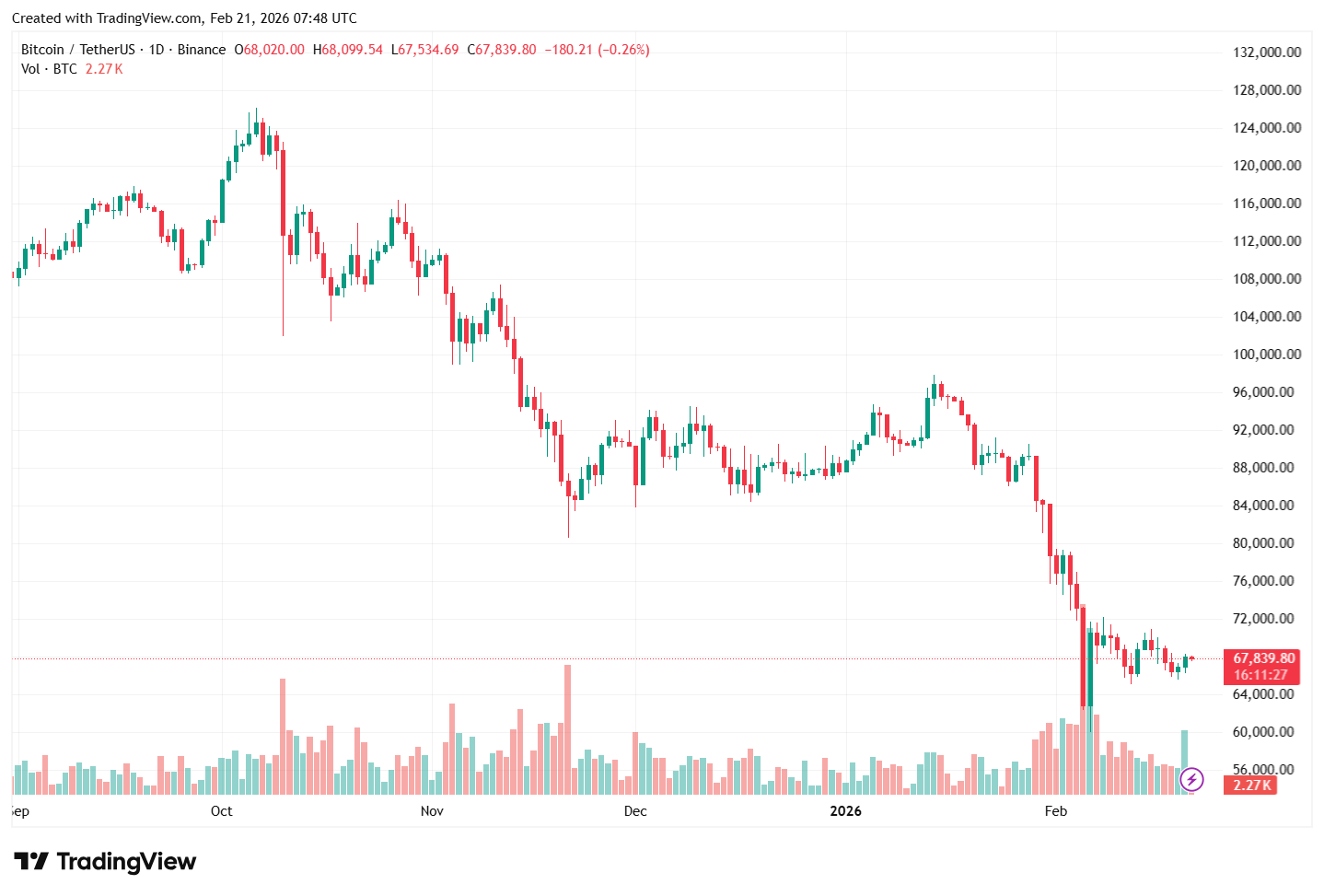
The price of BTC on the daily timeframe | Source: BTCUSDT chart on TradingView
Featured image from iStock, chart from TradingView
editing process for focuses on providing thoroughly researched, accurate, and unbiased content. We adhere to strict sourcing standards and each page undergoes diligent review by our team of top technology experts and seasoned editors. This process ensures the integrity, relevance, and value of the content for readers.


