



A Coinbase research director has warned that advances in quantum computing could pose a greater risk to Bitcoin than simple wallet theft.
According to David Duong, the company’s head of global investment research, future quantum machines could break the cryptographic signatures that protect transactions, giving quantum-based miners a massive speed advantage. These are two separate threats that affect both user funds and Bitcoin’s economic model.
Quantum Risk Moves Beyond Keys
Duong said that about a third of the Bitcoin supply could be structurally exposed because public keys are already visible on the blockchain. This figure amounts to about 33%, or about 6.51 million BTC, held in address types whose public keys are public, and could theoretically be derived into private keys by a sufficiently powerful quantum computer. According to the report, these exposures primarily come from address reuse and outdated wallet formats.
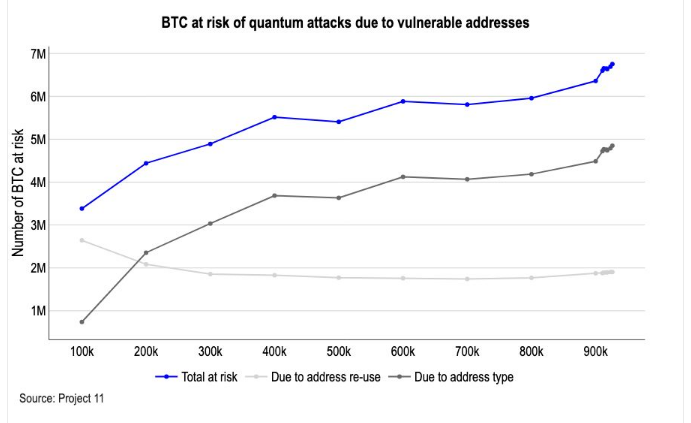
Experts say there are two main technological threats:
One threat is over signatures. Quantum algorithms like Shor recover private keys from public keys at scale, allowing attackers to sign transactions and exfiltrate funds.
The second is a possible mining problem. A fast enough quantum miner can shake up incentives and block production by finding proof-of-work much faster than traditional equipment. Duong and others emphasize that the signature risk is theoretically more short-term because it only requires cracking the signature associated with the published public key.
What is the industry doing?
According to the report, talks have already reached fund managers and standards bodies. Some agency filings are starting to flag quantum risks, and NIST and other agencies are pushing work on post-quantum cryptography for broader systems.
BTCUSD trading at $92,010 on the 24-hour chart: TradingView
Engineers in the cryptocurrency space are looking for migration paths to quantum-resistant systems. However, this change to Bitcoin is complex and requires broad consensus.
A long-term problem, not an immediate problem
Duong and other commentators point out that today’s quantum machines are too small and noisy to crack Bitcoin’s encryption. The warning is for a possible future point in time, called “Q-day,” when sufficiently large and stable machines will be able to run Shor and related algorithms at scale. Timelines vary greatly from expert to expert. Some predict decades, others say the gap is narrowing faster than many expected.
Coins left on addresses that already allow vulnerabilities in their public keys are most exposed if well-configured quantum machines are deployed, according to industry sources. This makes best practices such as avoiding address reuse and moving existing balances to new quantum-resistant addresses when available a reasonable step. But experts say there is no simple one-click fix for the entire ecosystem.
Featured image by Peter Hansen/Getty Images, TradingView chart
editing process for focuses on providing thoroughly researched, accurate, and unbiased content. We adhere to strict sourcing standards and each page is diligently reviewed by our team of top technology experts and seasoned editors. This process ensures the integrity, relevance, and value of the content for readers.


