

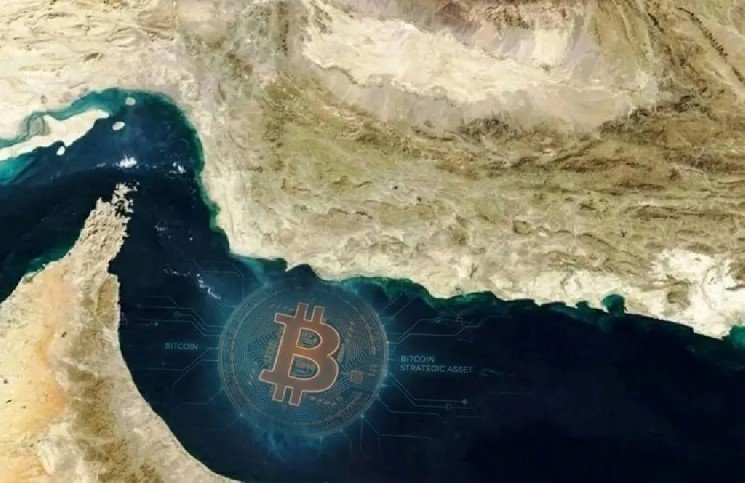
James Butterfill, head of research at CoinShares, said the volatility in global markets due to the Iran crisis is severely testing Bitcoin’s (BTC) role as a “safe haven.”
According to Butterfill, recent developments may cause investors to reassess the place of digital assets in the global financial system.
Geopolitical tensions rose again over the weekend, with attention focused on new moves by US President Donald Trump that could impact markets. Even before the crisis, signs such as Britain withdrawing some diplomatic personnel from the region pointed to a growing awareness of risk. However, rapid developments have brought renewed attention to the role of digital assets in crisis environments.
At the center of the crisis is the Strait of Hormuz, which is critical to the world’s energy supply. Approximately 21% of the world’s daily oil trade passes through this narrow strait. Disruption in this region could therefore have serious implications not only for the region but also for the global economy.
Butterfill said the withdrawal of marine insurance and increased tanker traffic in the region shows that this crisis is not just glossy rhetoric and that the market is starting to position itself according to the real risks. At the same time, groups like Hezbollah and the Houthis are on the rise again, raising the possibility of an escalation of the conflict.
Amid heightened geopolitical risks, oil prices rose by about 13%, while gold prices fell by 1.8%. But Butterfill said the most notable movement was in Bitcoin.
Bitcoin, the only major liquid asset that can be traded on weekends, has historically acted as a “safety belt” during similar crises, absorbing selling pressure during times of risk aversion. But this time, a different image emerged.
Bitcoin prices have increased as global uncertainty has increased. Butterfill said this shows investors are pouring money into Bitcoin rather than panic selling.
The analysis shows that Bitcoin’s resilience is also related to the timing of the crisis. Large investors are estimated to have sold around $30 billion worth of assets in the past five months. This process has significantly reduced supply pressure in the market. During the same period, many technical indicators also approached their bottoms.
- The MVRV ratio fell approximately 1 standard deviation below the actual value.
- The RSI indicator has fallen to 16 and entered oversold territory.
- The leverage ratio fell to 25% from 33% in October 2025, returning to its long-term average.
According to Butterfill, these developments indicate that Bitcoin had already largely completed its correction process by the time the geopolitical shock originating from Iran hit the market.
The most important data supporting market movements was the flow of funds. Bitcoin ETFs saw a total of $4.3 billion in outflows for five consecutive weeks. But last week the trend reversed, with about $1 billion flowing into ETFs.
Another $500 million was recorded in ETFs on Monday following the weekend’s geopolitical tensions. Butterfill said the data shows investors are not fleeing the market, but are turning to Bitcoin amid heightened uncertainty.
However, the macroeconomic environment remains complex. In the United States, producer price index (PPI) data was 0.5% month-on-month, better than expected. Core inflation was measured at 0.8%.
The continued rise in energy prices due to tensions with Iran suggests that commodity inflation may also rise. This has led to the postponement of expectations for a rate cut, with the probability of a rate cut in June dropping below 50% in the futures market.
According to Butterfill, this complicates the situation for Bitcoin in the short term. A high interest rate environment can make non-yielding assets less attractive. But as tensions between energy-driven inflation and central bank credibility continue, rare non-sovereign assets like Bitcoin could become more attractive.
Butterfill said a prolonged disruption in the Strait of Hormuz could have far-reaching implications for the global financial system. Developments such as rising energy prices, supply chain disruptions, and pressure on the fiscal balances of energy importing countries could weaken confidence in the world’s financial infrastructure.
It has been suggested that some of Bitcoin’s core features may stand out in such an environment.
Butterfill also recalled that around $300 billion in Russian central bank reserves were frozen in 2022 and said political risks in the global financial system could change investor behavior.
According to CoinShares, Bitcoin consolidation and limited downside risk may continue in the short term. However, changes in market structure are noteworthy. The $1.5 billion in ETF inflows amid normalization of leverage ratios, reduced selling by large investors, stabilization of valuation metrics, and rising geopolitical risks indicate that Bitcoin is increasingly functioning as a mature safe-haven asset.
“While the Iran crisis did not prove Bitcoin’s safe-haven thesis, it was the most powerful real-world test so far this cycle,” Butterfill said in a statement. According to the analyst, market trends over the past 72 hours indicate that Bitcoin has passed this test for now.
*This is not investment advice.


