

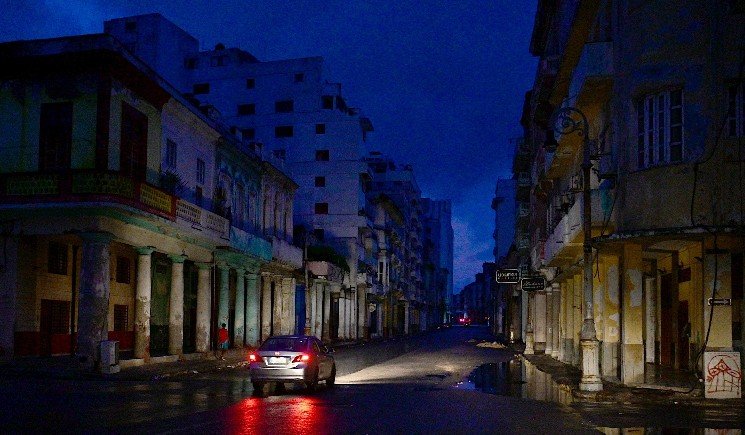
When Cuba’s power grid collapsed in early March, millions of people suffered sudden power outages. Households lost refrigerators, water pumps stopped working, and much of Havana was plunged into darkness. The reasons for the outage are: Antonio Guiteras Closure A thermoelectric power plant, one of the country’s largest power plants, was shut down due to a boiler failure.
The power outage affected much of the island, stretching from Pinar del Rio in the west to Camaguey in the center, leaving millions without power. At its peak, the failure wiped out more than half of the island’s power generation capacity and left large parts of the country without power for hours.
For many Cubans, the effects were immediate and physical. Food spoiled, public transportation stopped, and hospitals relied on backup generators. The outage revealed a deeper structural problem: when energy systems are centralized, a single technical failure can reverberate throughout the country. This outage raises important questions for energy systems around the world about how the infrastructure can remain stable in the event of individual component failures.
Structural risks of concentrated energy
Cuba’s energy crisis has been deepening for years. Much of the country’s electricity infrastructure is decades old, and fuel shortages have repeatedly brought the grid to the brink of collapse. These vulnerabilities are exacerbated by US sanctions; oil supply restrictionsparticularly the recent reductions in shipments from Venezuela and the threat of tariffs on other suppliers. This has strained fuel supplies and brought the power grid closer to repeated failures.
At the same time, the island has long relied on imported oil to keep its thermoelectric power plants running. When fuel supplies become tight or infrastructure fails, there are few alternative sources of power to maintain system stability.
This vulnerability is a common feature of centralized energy systems. When power generation is concentrated in a few large power plants connected to a single national grid, technical failures can ripple throughout the network.
In the case of Cuba, power outages have become increasingly frequent, with a series of blackouts affecting large parts of the country starting in 2024. It shows the fragility of the system and the difficulty of maintaining aging infrastructure under economic pressure.
According to the report, Cuba experienced at least five nationwide power outages in 2024 and three more in 2025, leading to a power outage in March 2026 that left millions without power. world bank Data shows that Cuba’s per capita electricity consumption has fallen from 1,450 kWh in 2019 to 1,102 kWh in 2022 (the latest figure available), well below the global average of around 3,670 kWh. This reflects the strain on infrastructure during such disruptions.
Why distributed energy changes the equation
The real solution lies in building a different energy architecture. Distributed energy systems, especially local microgrids powered by solar, wind, or hydropower, can operate independently even in the event of a failure of the main grid. Instead of relying on a single national system, communities can generate and manage their own electricity locally.
Janet Maingi, Chief Operating Officer gridlessA company building a renewable energy Bitcoin mining microgrid in Africa says the lessons learned from the Cuba power outage are clear.
“A resilient energy system requires both distributed renewable energy and flexible demand. Models like gridless help balance supply and demand in real time, reducing the risk of widespread grid failure.”
Miners consume a lot of power, but they also have one unusual characteristic. It can be switched off almost instantly without damaging equipment or disrupting other systems. Flexible loads help stabilize the power grid by absorbing excess power when supply is high and reducing consumption when demand increases.
Maingi added: “When the failure of a single power plant can bring down a country’s power grid, it highlights how vulnerable centralized systems are. Combining distributed renewable energy, such as solar, with flexible demand can help stabilize supply and significantly increase the resilience of energy systems.”
From a practical point of view, Miners can contribute to grid stabilization Powered by intermittent renewable energy, especially solar and wind power.
Mining as a buyer of last resort
For developing countries, the most important role that mining can play is economic. Renewable energy projects are often financially challenged when there is no immediate demand for the electricity they generate. For example, a solar power plant may generate surplus electricity during the day that cannot be stored or sold.
bitcoin mining Create the last buyer of that electricity. When demand is low, miners can consume extra energy that goes to waste. When demand increases, power can be shut down and returned to the grid.
A real example has already shown how this model works in practice. In rural Zambia, Gridless operates a renewable energy microgrid and monetizes surplus hydropower through Bitcoin mining. This will provide affordable electricity to remote communities that previously had no electricity. The same model is being implemented at scale in Texas, where mining operations absorb excess wind and solar power, helping to balance the ERCOT grid and reduce energy curtailment.
Bitcoin mining can turn deferred or intermittent energy into economic assets, accelerating the deployment of distributed systems even in resource-constrained environments. Challenges can include start-up costs, but initiatives like the Caribbean Recovery Program offer avenues for funding.
This economic bottom can make small-scale renewable projects economically viable, even in places where traditional grid infrastructure is weak or unreliable. In other words, energy production no longer needs to be completely dependent on the central grid.
infrastructure and sovereignty
Cuba’s power outages demonstrate how energy infrastructure shapes a nation’s resilience and impacts economic stability, political independence, and daily life. When power generation relies on centralized systems, the effects of failure are rapid and widespread. When energy systems are decentralized and locally controlled, communities become more resilient and autonomous.
Rachel Geyer, Chair European Bitcoin Energy Associationstates that the transition to renewable energy is increasing the flexibility of the power grid. She told Forbes: “Europe’s goal of achieving at least 42.5% renewable energy by 2030 is only achievable if the energy system becomes more flexible. Bitcoin miners, which can increase power usage when renewables are abundant and shut down power when grids are strained, could serve as a powerful demand-side tool to balance Europe’s clean energy future.”
Whether this challenge occurs in Central America, Africa, the United States, or Europe, the fundamental problem is the same. Energy systems need to be more flexible, more distributed, and less dependent on single points of failure.
The same principle increasingly applies to money and information. Systems built on decentralized protocols, whether energy networks, digital verification systems, or financial networks like Bitcoin, reduce dependence on a single authority by replacing trust with open and verifiable infrastructure that everyone can access.
In a world where power grids are failing, institutions are being weakened, and information trust is under pressure, architectural change may be more important than ever. Energy resilience and financial resilience may increasingly rely on the same principles of building systems that do not rely on single points of failure.


