

The Fed kept interest rates unchanged at 3.5% to 3.75% at its March meeting, as expected.
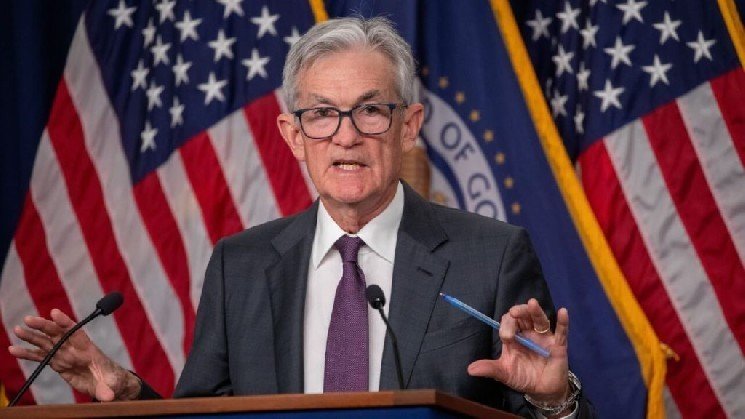
Currently, Federal Reserve Chairman Jerome Powell is holding a long-awaited press conference in response to this decision. Bitcoinsistemi.com will provide live updates on the details of the press conference. Please refresh the page for the latest information.
Here is Jerome Powell’s statement:
- The economy is growing.
- Inflation remains somewhat high.
- The monetary policy stance is appropriate.
- We support progress towards two key goals.
- We carefully monitor all risks.
- The impact of developments in the Middle East remains uncertain.
- Consumer spending remains firm.
- Activities in the housing sector are sluggish.
- The current monetary policy stance is helping us achieve our goals.
- The unemployment rate has not changed much since last summer.
- PCE inflation is expected to be 2.8% in February, with core PCE inflation expected to be 3.0%.
- High inflation primarily reflects commodity prices.
- Inflation expectations have been rising recently.
- It is too early to assess the extent and duration of the economic impact.
- The Fed is in a good position to determine future interest rate adjustments.
- Rising energy prices will push up overall inflation.
- Past rate cuts have contributed to stabilizing the labor market.
- There is uncertainty in individual policymakers’ interest rate expectations, and the dotplot is not a predetermined plan or decision.
- Decisions are made individually at each meeting.
- Rising energy prices will push up inflation, but it is too early to assess the extent.
- It is too early to assess the overall economic impact of the situation in the Middle East.
- Policies are not predetermined.
- We are well aware that a series of inflationary shocks are hampering progress.
- Future inflation will be affected to some extent.
- Progress towards curbing commodity inflation is essential this year.
- To assess whether we have made progress, we first need to look at the improvement in commodity inflation.
- Whether we can ignore energy inflation depends on whether we can control commodity inflation.
- Assessing oil price movements depends on inflation expectations and the macroeconomic environment, where inflation has been above target for five consecutive years.
- Many people would like to see fewer interest rate cuts.
- Although the median forecast for the trajectory of interest rates remained unchanged, there was a significant increase in the number of respondents who wanted the rate cuts to be narrower.
- While inflation is expected to improve, this improvement may not be as rapid as expected.
- Interest rates cannot be lowered unless inflation improves.
- We should see progress on tariffs and inflation by the middle of this year.
- The dot plot shows that four out of five officials now support reducing the number of rate cuts.
- We cannot be content to ignore the problem of energy inflation.
- The upward revision to the inflation outlook is partly due to the oil crisis, but also reflects the fact that inflation is not progressing as expected.
- Some of the oil shock will be reflected in core inflation.
- We believe we are making progress on tariff inflation, but this may take more time.
- Delays in tariff reductions are impacting inflation forecasts.
- I would like to emphasize that no one knows the full extent of the economic impact of the Middle East conflict.
- We have no idea what impact rising energy prices will have.
- If oil prices remain high for a long time, consumption will likely decline, but it is unclear whether this will happen.
- If you want to skip the Summary Economic Outlook (SEP), now is a good time to do so.
- Economic growth is solid, and the main drivers of rising commodity inflation are commodity prices and tariffs.
- The threshold required to create new jobs is clearly too low.
- Oil companies want oil prices to continue rising and believe this upward trend will continue. Therefore, they are increasing production.
- The net effects of the oil crisis will continue to put downward pressure on spending and employment, pushing up inflation.
- The impact of the oil shock could be offset by strong US energy production.
The decision highlighted the impact of the Middle East wars on the economic outlook, adding that uncertainty has increased. “The impact of developments in the Middle East on the U.S. economy remains uncertain,” the officials said, noting that risks to both inflation and employment targets are being closely monitored.
The US Federal Open Market Committee (FOMC) voted 11-1 to keep interest rates unchanged. Fed member Stephen Milan was the only dissenting vote, favoring a quarter-point rate cut. This is the second consecutive time the Fed has kept interest rates unchanged.
However, the economic outlook presents a more mixed picture compared to the previous meeting. Signs of labor market stabilization were noticeable in January, but weak employment data released in February cast a shadow on this outlook. Meanwhile, the rise in oil prices following the US-Israeli attack on Iran that began on February 28 stands out as a risk that could put fresh upward pressure on inflation.
*This is not investment advice.


