

Far from the oil fields, new financial power is sprouting in the palms of Venezuelans. It is a digital economy where markets are consolidated through the use of stablecoins such as Bitcoin (BTC) and Tether’s USDT, mobilizing large amounts of capital that, albeit quietly, challenges traditional indicators of national economies.
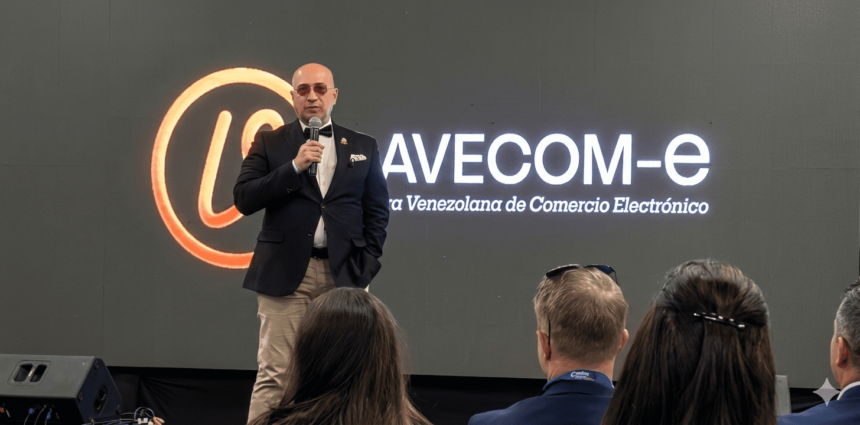
During the Global Crypto Summit 2026, held in Margarita in eastern Venezuela from March 26 to 28 and attended by CriptoNoticias, Richard Ujueta, president of the Venezuelan Chamber of Electronic Commerce (Cavecom-e), presented an X-ray that disputes the official indicators.
Their data reveals that Venezuela’s digital economy mobilized $51 billion in mobile payments alone in 2025, supporting their hypothesis that this is the key to cleaning up public accounts. Our goal is to provide traceability to this “invisible economy.” This also includes the use of cryptocurrencies and stablecoins such as USDT instead of applying new taxes.
The rise of the sector is no coincidence, but an adaptive response to years of regulation and a crisis that forced Venezuelans to flee to technology. With financial digitization reaching 96%, the country has built a payments ecosystem that outperforms the regional average, allowing assets like USDT to penetrate everyday commerce with an agility that surprises many.
The highest banking coverage rate in Latin America is 95%, but the most impressive figure is 96% for financial digitalization. It is the pinnacle for a country that claims to be a developing country. We (Venezuela) are within that range, which leads us to understand why crypto assets are likely to be adopted by Venezuelans.
Richard Ujueta.
And although Ujueta did not mention it, it is worth noting that this technological robustness coexists with irregular network infrastructure and a chronic power crisis that will worsen in 2026. forcing the private sector to make extraordinary investmentsfrom deploying an independent satellite connection to installing your own power generation system.
These measures are not optional, but a survival condition to ensure that servers and digital transactions do not come to a halt due to recurring public service failures, adding a layer of operational costs that is not present in other markets in the region.
When comparing scales, the Cavecom-e study provides data that forces a rethinking of countries’ economic hierarchies. Cryptocurrency spend exceeds $44 billion a year, with sectors such as the delivery industry, which delivers 2.2 million packages a day, and digital finance (buy now, pay later), which already confers three times more credit than traditional banking combined, operating in areas with little or no financial traceability.
The digital sector accounts for 66% of China’s economy. Oil was still leaking from the equipment. For reference, in 2025, Venezuela’s oil operations commanded $13.5 billion, while just one digital economy actor, such as BNPL financing, accounted for about 3% of the country’s GDP.
Richard Ujueta.
This contrast shows that while the state reports a limited tax base, between $46 billion and $65 billion flows outward. Ujueta defines this gap as the driving force that will change the country’s cash flow.
Transparency on crypto avoidance
The Chamber’s technology proposal is practical, using accounting devices to standardize the current point of sale and transform mobile payments and cryptocurrencies into tools of transparency. Due to the current lack of integrated devices, many businesses cancel invoices after collecting VAT, leaving consumers with taxes already paid.
Invisibility harms us all. By converting the current point of sale into checkout points and formally introducing mobile payments, SENIAT will increase its current collection amount by 3.5 times. This is not new legislation or additional tax burdens, but technology that makes today’s tax evasion highly visible and even allows VAT to be reduced to single digits.
Richard Ujueta.
However, the success of this plan depends on a delicate balance. The biggest challenges are not just technical; Encourage over 3.5 million entrepreneurs and small-scale merchants They consider formalization a real risk to their survival. Many people fear that declaring a business before SENIAT will mean additional tax burdens (ISLR, VAT and other taxes), which will ultimately erode profitability and even make the business unviable amid already very low profit margins, high inflation and volatile business costs.
Added to this is the fear of greater exposure to inspections, fines and red tape in an environment where informality has long been the main means of survival. According to Cavecom-e, this path involves translating the agility that Venezuelans already have on their phones into the basis of a formal, transparent, and ultimately visible economy.
Twisting reverse transfers using crypto assets in Venezuela
Venezuela has established itself as a global laboratory for the use of digital assets, ranking first in Latin America and ninth in the world in per capita adoption. According to Richard Ujueta, this position not only responds to the need to overcome the crisis; Financial digitalization infrastructure has already reached almost the entire population. This technological foundation allows crypto assets to become more than just a technical curiosity and become the backbone of cross-border remittances.
The impact is most pronounced in the remittance sector, with Ujueta estimating that 90% of remittances are processed through the use of Bitcoin and cryptocurrencies. Based on sector metrics, the manager estimates that there are 5.5 million Binance users involved in the Venezuelan ecosystem, of which approximately 2 million are active within the country and an additional 3 million are active from outside the country. But he points to changing trends that reflect the region’s complex immigration and economic realities.
For both methods, 90% of transfers at the crypto asset level took place both from here to here and from here to there. But we are seeing what is happening. The remittance was invested. Currently, we Venezuelans are sending more money to our relatives in Colombia than we are receiving.
Richard Ujueta.
This phenomenon of “reverse remittances” suggests that despite domestic hardship, family support networks are flowing from Venezuela to countries such as Colombia, Ecuador and Peru, where many migrants face economic instability.
For Ujueta, This torrent of “downstream” money supports the consumption of the country’s large chains. This shows that the digital economy is creating a more vibrant reality, comparable to that suggested by traditional income metrics.
(Tag translation) Cryptocurrency


