



Ethereum has regained the $2,300 level and is at a critical juncture as the market prepares for a decisive move. After weeks of volatility and correction pressure, ETH is currently testing key zones that could determine the next stage of price movement. Some analysts argue that the current structure is building towards a bullish trend, while others remain cautious and warn that the recent recovery could lead to a short-term pullback before gaining sustained upside.
Amid this uncertainty, on-chain data provides additional context. According to Arkham, Grayscale continues to stake Ethereum, staking an additional 19,200 ETH (worth about $44.6 million) just hours ago. This further strengthens the company’s position and strengthens its long-term exposure to the asset.
Staking activity from entities like Grayscale has structural implications. By locking ETH into staking contracts, the company is effectively removing liquid supply from the market, reducing the amount of ETH available for immediate sale. At the same time, staking reflects a long-term conviction strategy, as assets are dedicated to generating income rather than being actively traded.
For market participants, this move can be interpreted as a sign of institutional confidence in Ethereum’s long-term value, even though the short-term price direction remains uncertain.
Grayscale expands staking as market remains cautious
Institutional investor activity continues to provide structural context for Ethereum, even though price trends remain uncertain. On March 13th, Grayscale (Ethereum Mini Trust) staked 57,600 ETH worth approximately $121.6 million, marking one of the largest allocations to staking in recent times. The move reinforces a broader trend of institutional investors increasing their exposure to Ethereum through yield-generating strategies rather than maintaining highly liquid positions.

From a supply perspective, this makes sense. Staked ETH is effectively removed from the circulating supply, reducing immediate seller-side pressure and tightening the liquidity available in the spot market. Viewed in isolation, this type of behavior is usually interpreted as supporting prices in the medium to long term.
However, market reaction was more subdued. Despite this large-scale influx of staking, Ethereum price movements continue to reflect caution rather than conviction. The asset remains hovering around key resistance levels, with limited follow-through after recent attempts to move higher.
This divergence suggests that while long-term capital is actively taking positions, short-term capital remains hesitant. Macro uncertainty, recent volatility, and previous liquidation events continue to weigh on sentiment.
As a result, Ethereum currently exhibits a mixed structure of institutional accumulation and cautious, reactive trading behavior.
Ethereum faces major resistance after reactive bounce
Ethereum’s price structure on the 3-day chart reflects a reactive recovery rather than a confirmed trend reversal, despite the recent return to the $2,300 level. The asset has recovered from the sharp decline seen in February, when the price briefly fell below $2,000 before finding demand and stabilizing.
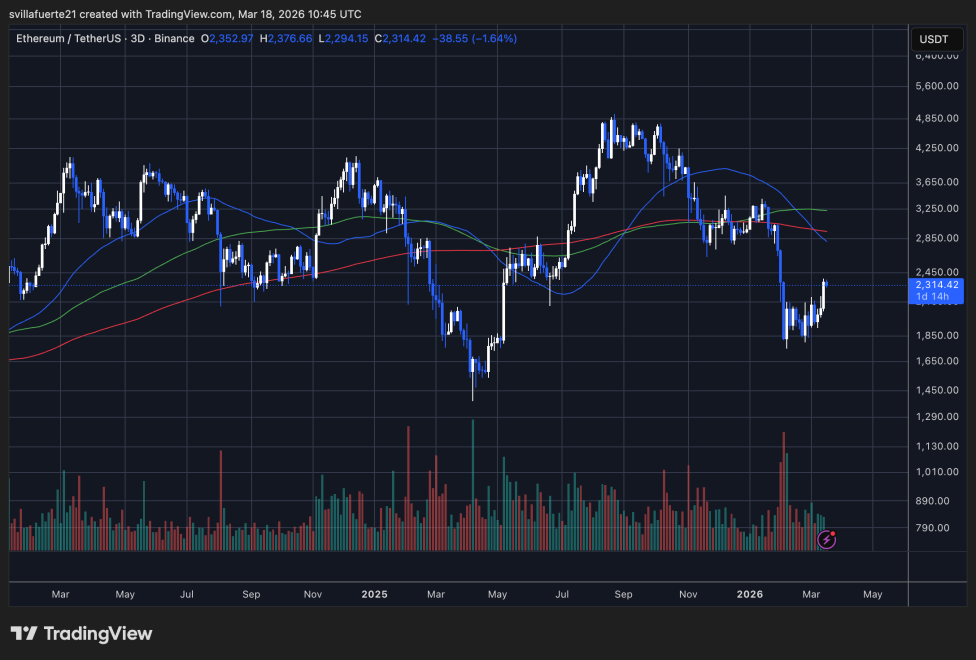
Technically, ETH is currently about to enter a dense resistance cluster between $2,300 and $2,600, an area that previously acted as support but has now turned into resistance. This zone also coincides with the short-term moving averages, which are starting to level out but are not yet definitively bullish.
The broader structure remains cautious. Price is still trading below its 200-day moving average, indicating that the macro trend has not fully returned to the bullish direction. Additionally, the historical lows from late 2025 remain intact, suggesting that ETH is still operating in a correction or transition phase.
Volume dynamics strengthen this interpretation. While the bounce off the local lows indicates increased participation, the amount of follow-through appears to be limited, indicating selective buying rather than aggressive accumulation.
A sustained break above $2,600 is likely needed to confirm a stronger recovery. Until then, the move could be interpreted as a salve in a broader market consolidation environment.
Featured image from ChatGPT, chart from TradingView.com
editing process for is focused on providing thoroughly researched, accurate, and unbiased content. We adhere to strict sourcing standards, and each page is carefully reviewed by our team of top technology experts and experienced editors. This process ensures the integrity, relevance, and value of your content to your readers.


