

San Francisco, California – Cryptocurrencies have a habit of declaring their future early. In recent months, that instinct has been fixated on autonomous AI agents, self-driving wallets, and trading systems that can move capital without human oversight.
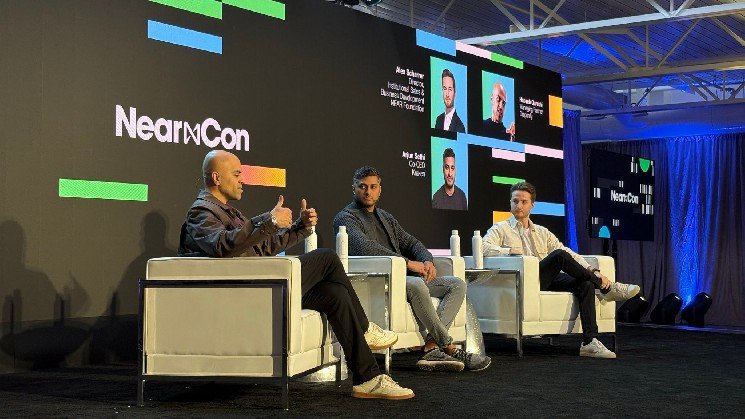
At NEARCON 2026, Dragonfly’s Haseeb Qureshi and Kraken co-CEO Arjun Sethi had a poignant discussion about how quickly these agents can be trusted with real money.
The fundamental disagreement was not whether agents ultimately controlled capital. Both believe it will happen, but it’s about timing and risk tolerance.
“Anything that works with money has a 90% chance of not being able to be used in actual economic activities,” Qureshi said. He argued that even 95% reliability is not enough. “Nothing, nothing, nothing… then something, and then everything. And now we’re still in the nothing stage.”
Qureshi suggested the industry may be overstating its readiness for the technology. He gave examples of autonomous systems malfunctioning and cautioned against extrapolating from viral demonstrations on social media. “Be very careful about trying to ingest your own technology worldview by reading Twitter hype or watching Twitter demos,” he says.
For Qureshi, an impressive demonstration is not the same as a system robust enough to meaningfully manage capital. As for major consumer platforms, he added bluntly, “You can’t do that.”
In contrast, Sethi argued that the pace of improvement is exponential and that they are already rebuilding financial infrastructure. “We think we know what’s going to happen,” he said. “The speed and level of innovation is exponential,” he said, adding that Kraken is already building agent-like capabilities for customers “not years, but weeks and months ahead.”
Qureshi sees a very high reliability threshold before widespread adoption, but Sethi sees rapid iterations narrowing the gap. “As the security surface grows, so does the attack surface,” he said, suggesting that defensive capabilities scale with risk.
Discussion took shape during rapid-fire rounds. Asked what percentage of his portfolio could now be better managed by AI, Qureshi cautiously answered, “5 percent.”
Sethi’s answer is “100”.
Furthermore, when asked to commit all his cryptocurrencies to autonomous agents within a year, Sethi did not hesitate.
“Everything,” he said. “Within the next six to 12 months.”
The exchange highlighted a broader divide emerging in the crypto industry over whether autonomous finance is inevitable in the short term or is still a frontier experiment, and how much risk the industry is willing to accept in figuring it out.
Read more: Cryptocurrency venture capital firm Dragonfly raises $650 million despite ‘bear market gloom’


