


Bitcoin (BTC)’s losing streak deepened on October 17th, when the leading cryptocurrency plummeted to just over $104,000, losing nearly $150 billion in market value in less than 24 hours.
The decline pushed BTC’s market capitalization to $2.07 trillion from $2.216 trillion on October 16, raising concerns that the $100,000 threshold could be tested in the coming days.
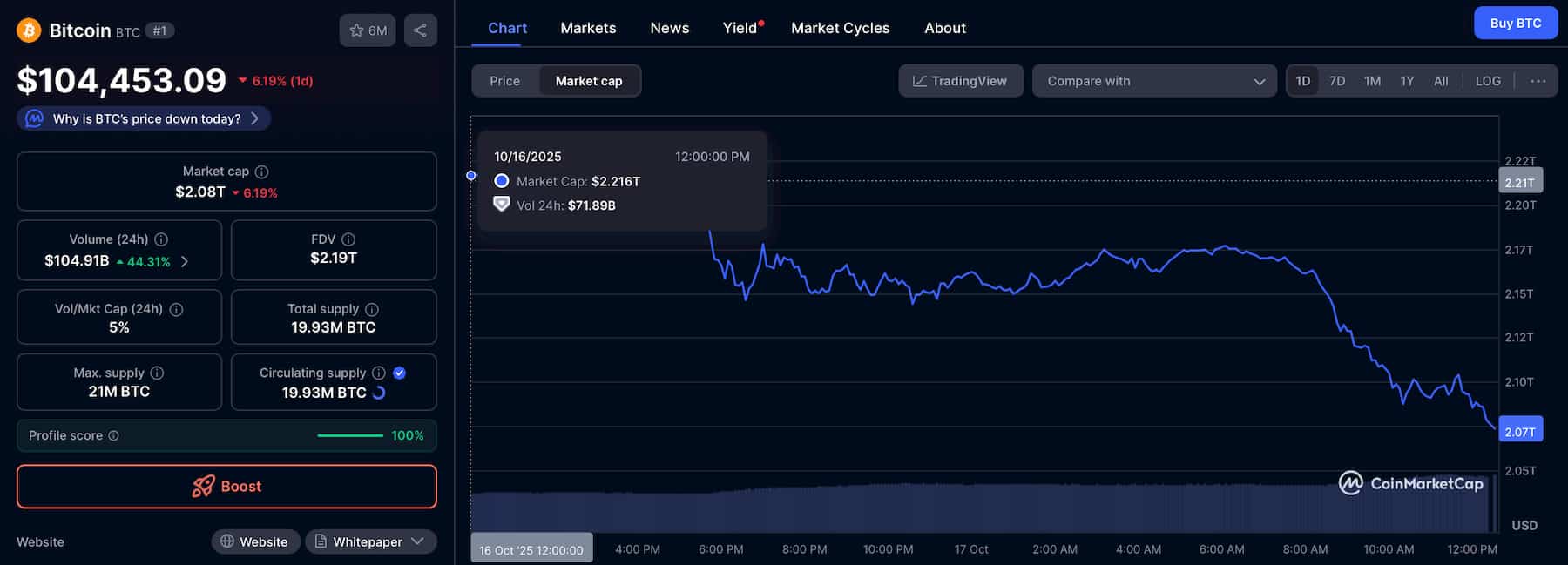
The decline was caused by a new escalation in U.S.-China trade tensions. President Trump’s threat to impose 100% tariffs on Chinese imports sent a shockwave through global risk assets, driving investors toward gold while draining liquidity from cryptocurrencies.
The Spot Bitcoin ETF recorded $536 million in outflows on October 16, the largest single-day withdrawal since August, highlighting the retreat of even institutional investors in the face of growing uncertainty.
The derivatives market added fuel to the fire. More than $1.15 billion of leveraged Bitcoin longs were liquidated within 48 hours, setting off a chain of forced sells and accelerating the decline. This type of unwinding of leverage has repeatedly amplified volatility during periods of macro stress, and October’s selloff was no exception.
Bitcoin price analysis
Technicians provided little support. BTC decisively fell below $109,000, below the 200-day simple moving average of $107,402, and broke through the lower bound of the expansion channel near $99,500.
Indicators remain bearish. The daily RSI is deep in oversold territory at 28, but the MACD continues to show downward momentum.
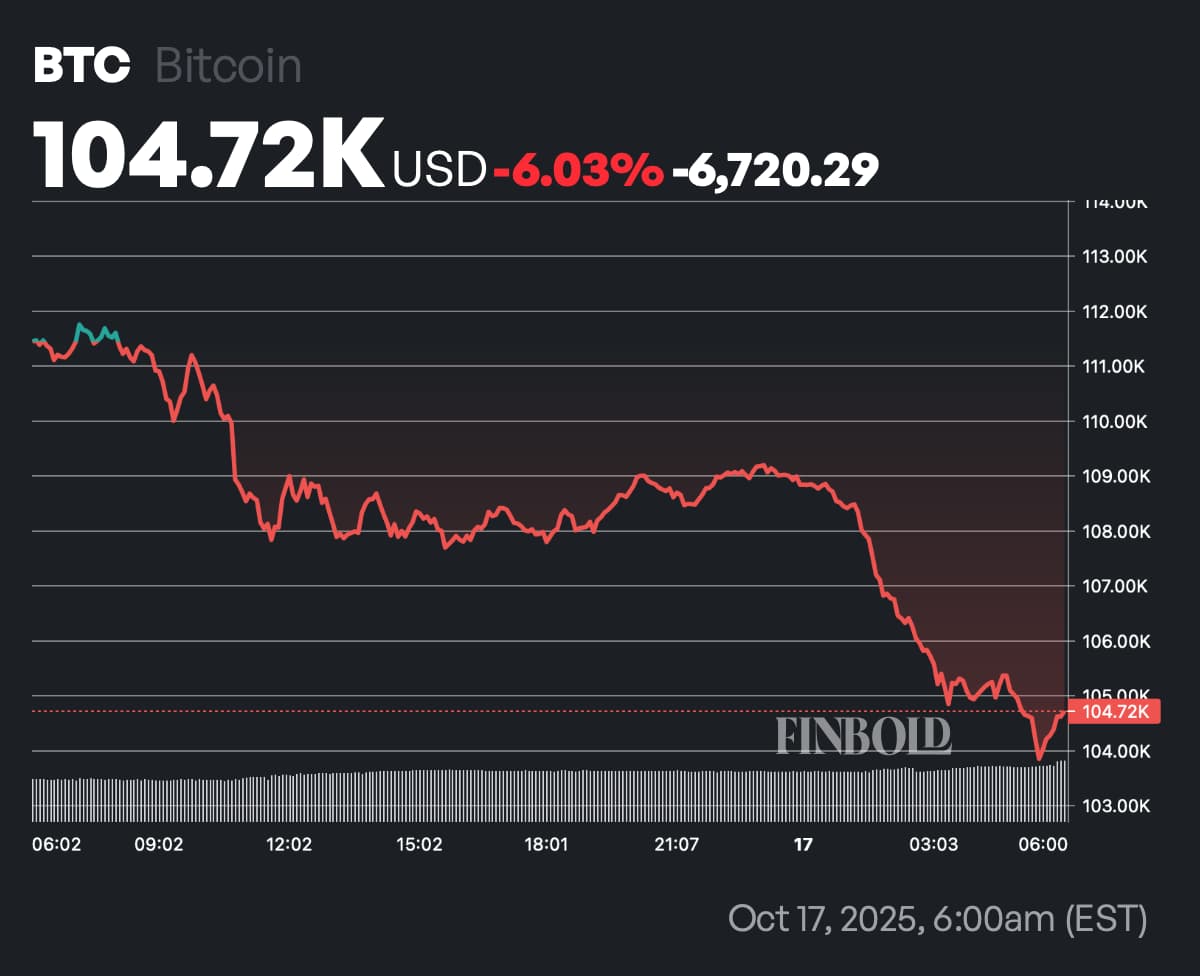
The focus now shifts to November 5, when the threatened tariffs go into effect. Any signs of compromise between the US and Chinese governments could provide relief for risky assets, but without it Bitcoin faces the possibility of further decline. As macro uncertainty and technical weakness collide, the $99,500 support zone is the last barrier before BTC risks falling below six digits.


