

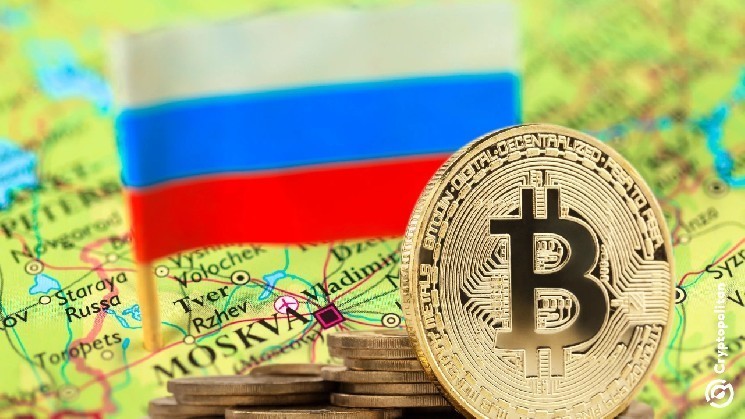
One of Russia’s largest banks is currently offering tokens based on regular unleaded fuel, the kind sold at gas stations across the country.
Once this financial instrument matures, investors can collect their funds with unpaid interest or receive a fuel card, which they can use to refill their tanks.
Russia’s Alfa Bank issues digital financial assets with fuel
Alfabank, Russia’s largest private bank, announced the launch of Digital Financial Assets (DFA), which offers the option of making a profit on investments or receiving physical goods in return.
EuroTrans, Russia’s leading fuel operator that manages the Trassa network of gas stations, is the company behind this initiative, which uses its proprietary A-Token platform developed by Alfa-Bank.
Business news outlet RBC reported that the hybrid product certifies a claim for money or the right to receive a specified amount of fuel.
When it matures between March 1 and 15 next year, holders will have to choose between getting back the full face value plus a fixed annual yield of 20%, or being issued with a fuel certificate for 100 liters of regular 95 gasoline.
Investors can compare the current price of the most common grades of gasoline with other terms of the investment product and choose the more advantageous option. The press release explains:
“Digital financial assets for fuel combine the characteristics of a financial instrument and a real consumer asset. Investors have the opportunity to invest in a liquid, transparent and protected asset, and also have the option of using the proceeds to pay for fuel, an important expense.”
The nominal value of one token is 6,650 rubles (just under $85), equivalent to the fixed price of the fuel supporting it.
Trial issuance is limited to 50 million rubles (approximately $635,000) and is currently available only in the Russian capital and the adjacent Moscow region.
An Alpha Bank spokesperson emphasized that anyone who wants to invest in DFA can buy DFA without any restrictions from December 23rd to 26th.
According to representatives, the product is aimed at a wide audience and demonstrates the practical application of digital assets as a source of funding and a marketing tool, as was the case with Trassa’s token.
Alpha’s launch coincides with Russia’s move to legalize cryptocurrency investment
As defined in the Law “On Digital Financial Assets” from 2021, Russian DFAs represent real assets that are tokenized using distributed ledger technology.
Decentralized digital assets, unlike cryptocurrencies and digital tokens traded on cryptocurrency exchanges, are based on private blockchains rather than public blockchains.
Also, currently they are only issued via platforms licensed by the Central Bank of Russia (CBR), such as A-Token, Amitize, Masterchain, Sber, etc.
Apart from an “experimental legal regime” that restricts investors’ access to cryptocurrencies, the DFA law is the only Russian law that partially regulates digital asset investment.
However, this may change in the coming months. On Tuesday, the Bank of Russia announced the outline of a plan to legalize and comprehensively regulate all transactions involving digital coins and related products in 2026.
As reported by Cryptopolitan, the financial authorities’ new regulatory concept aims to recognize cryptocurrencies and stablecoins as “monetary assets” and expand investors’ access to them.
The new legal framework will also impact Russia’s digital financial assets market, which currently offers products such as tokenized securities and digital rights.
The central bank plans to allow Russian DFAs to circulate on open networks with the aim of helping Russian companies attract foreign investment.
AlphaBank was one of the financial institutions that launched DFAs based on major cryptocurrencies such as Bitcoin (BTC) and Ethereum (ETH) after the CBR authorized the offering of crypto derivatives in May.


