

South Korea’s stablecoin balances have declined significantly since July despite rising equity inflows, highlighting changes in capital flows.
The total value of so-called tokenized versions of fiat currencies held in wallets linked to South Korea’s five largest cryptocurrency exchanges has plummeted by 55%, with on-chain data showing a sharp wave of outflows that began when the won topped 1,500 won to the dollar in mid-March.
According to data from Allium Labs, which tracked Ethereum and Tron wallets from Upbit, Bithumb, Coinone, Korbit, and GOPAX, total holdings in stablecoins have fallen from $575 million in July 2025 to about $188 million as of mid-March, with the won at 16% against the dollar. The decline is shown to have accelerated as prices fell to year-long lows.
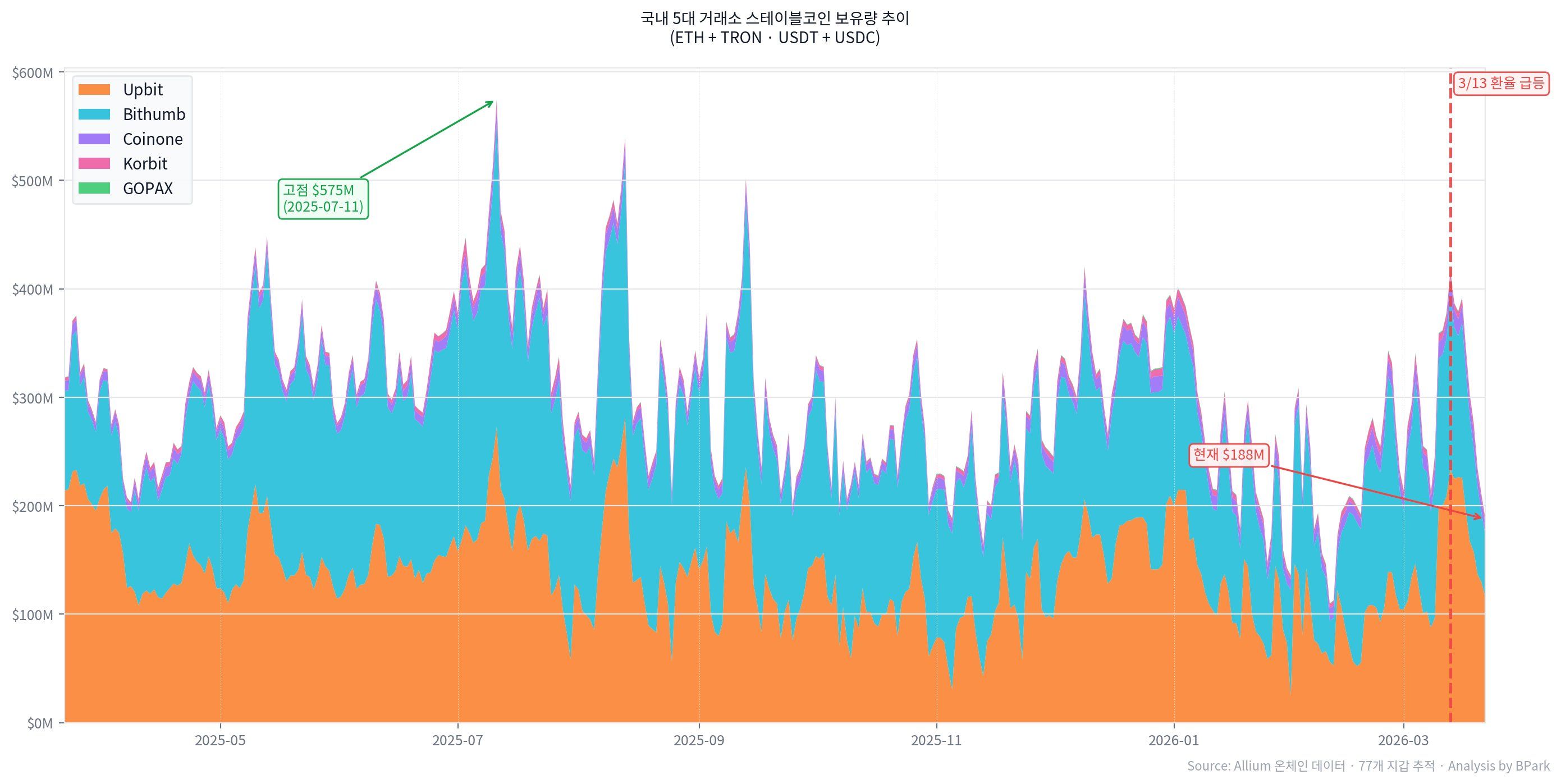
(Korea Exchange/Allium Labs stablecoin holdings compiled by Bradley Park)
The timing suggests that traders sold Tether at higher dollar/won levels after the won fell above 1,500 won to the dollar in mid-March. This is the highest level since the 2008 financial crisis.
Bradley Park, founder of DNTV Research, said the weaker currency amplified the incentive to dump dollar-denominated holdings, prompting traders to convert into won and reinvest in domestic assets.
The outflow marks the latest step in a broader shift of South Korean retail capital from cryptocurrencies to equities, a shift first documented by CoinDesk in November. However, while previous rotations were largely driven by narrative, with traders chasing AI-related chipmakers as altcoin momentum waned, the recent drawdown appears to be related to specific currency factors rather than changes in risk appetite.
Since then, the South Korean government has stepped up efforts to attract capital to the domestic market through new policies such as “repatriation” accounts that offer up to 100% capital gains tax exemptions for investors who sell overseas assets and reinvest locally.
This change is reflected in securities trading data. Investor deposits, which can be used in place of cash to buy stocks, fell from about 131 trillion won ($86 billion) in early March to about 112 trillion won ($74 billion) after currency fluctuations in mid-month. This shows that capital is being actively invested in stocks while stablecoin balances are decreasing. Deposits have since begun to stabilize, suggesting new inflows are replenishing purchasing power.
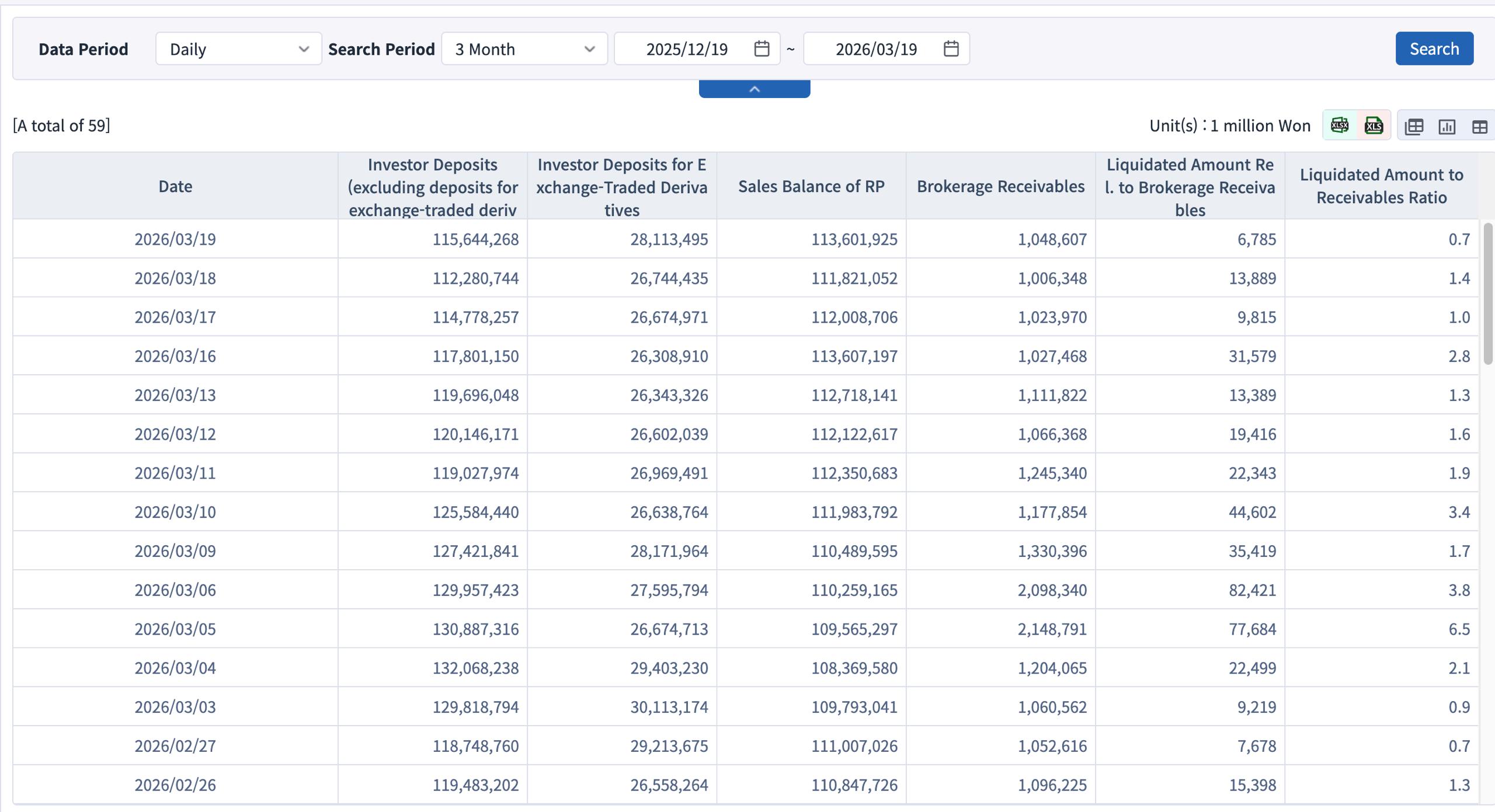
(Korea Financial Investment Association)
KOSPI is already up 75% in 2025 and is up another 37% this year, making it the world’s best-performing major index. The bull market is highly concentrated, with Samsung Electronics and SK Hynix accounting for about half of the market capitalization and more than 50% of expected profits, making them major destinations for both retail and institutional capital flows.
Broad stablecoin trading volumes across Asia have increased in the last year, according to Artemis data, suggesting that the decline on Korean exchanges reflects domestic capital rotation rather than a regional decline.
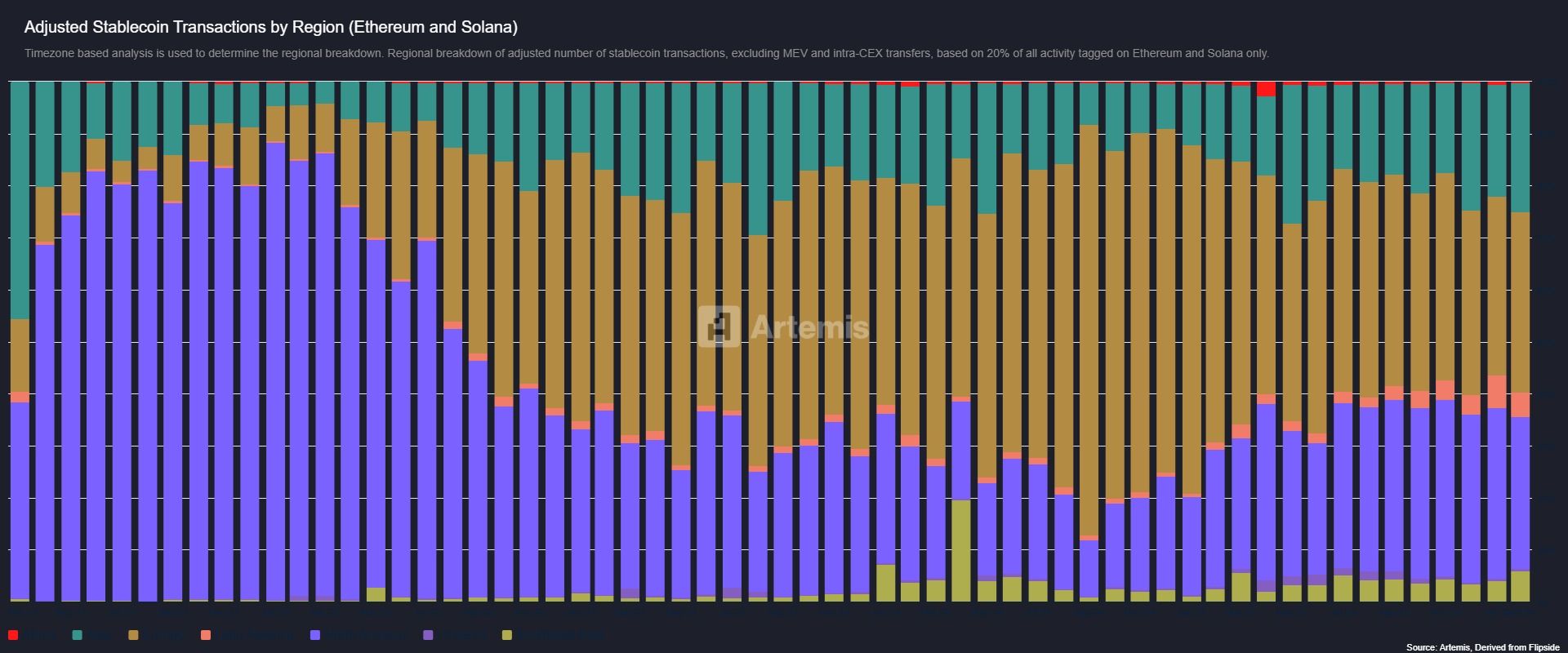
(Artemis)
For the cryptocurrency market, this shift highlights the loss of one of the most important retail liquidity pools.
South Korea’s participation has historically amplified market cycles, but the data now shows that capital is being actively redeployed rather than being left idle. Whether these trends return may depend less on the crypto story and more on the sustainability of South Korea’s stock price rise.
A sharp correction in the market, particularly concentrated in semiconductor stocks, could force a rapid recirculation of capital. KOSPI has been under pressure recently as disruptions to oil shipments through the Strait of Hormuz have raised concerns about energy supplies.


