

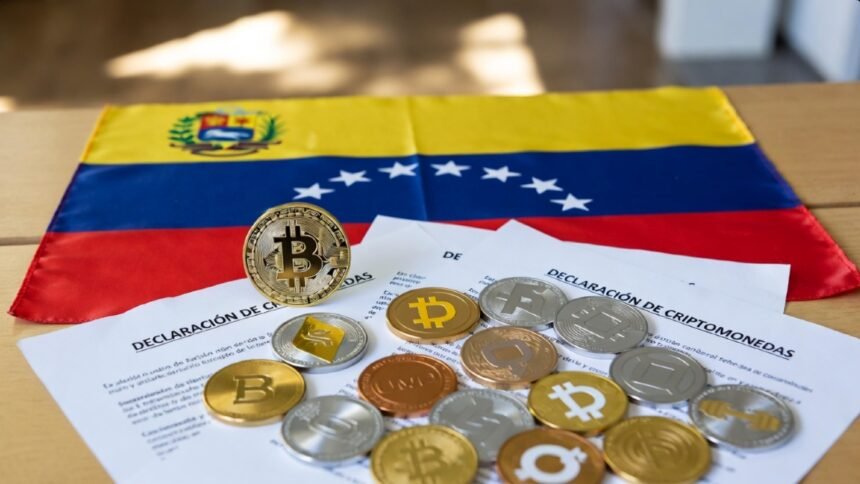
Venezuelan taxpayers are in the final stages of complying with their tax obligations corresponding to the 2025 fiscal year. According to the calendar set by the State Integrated Customs and Tax Administration (Seniat), the income tax (ISLR) filing deadline expires on March 31, and the procedure emphasizes the obligation to report profits earned through operations with Bitcoin (BTC) and other digital assets.
According to Venezuela’s current regulations, there are clear parameters as to who must comply with this obligation. Natural persons who have resided in the country for more than 183 days in the past year and earned an average monthly income of more than 30 to 40 USD Tether (USDT) You must file a tax return.
The process of declaring income from the sale of Bitcoin and other digital assets in Venezuela will be carried out entirely electronically through Seniat’s official portal. Taxpayers must access the system using their username and password, select their final ISLR filing options, and complete the questionnaire corresponding to the 2025 financial year.
The main technical document generated after this registration is Form DPN 25 for natural persons, shown below. There, income from the sale of digital assets, such as territorial income, will be integrated. It is distinguished from traditional salary and professional compensation.
To complete this form, it is essential to have detailed records that include the acquisition date of the digital asset, initial market value, and final value recognized upon sale or exchange. Once the information has been processed and Form DPN 25 has been issued; A system that allows citizens to pay their taxes in installments Divide into up to 3 equal parts.
The first installment must be paid by March 31, while the remaining two have additional periods of 20 and 40 days, and payments can be made online through a national bank linked to the accounting portal or at authorized ticket offices.
Omitting these payments can lead to administrative sanctions and complications in working with national banks. Due to lack of traceability and legitimacy of funds. For example, omission of income in the ISLR’s final return is considered a fraudulent or incomplete declaration and, in accordance with the Organic Taxation Act (COT), is subject to penalties ranging from 100% to 300% of the omitted tax, in addition to payment of default interest.
If fraud or an intent to systematically conceal information is established, sanctions may extend to measures restricting freedoms, but in administrative practice they are usually resolved through tax challenges and fines.
Regarding this compliance, Jan Domínguez, CEO and founder of the technology tool Cointable, emphasized in a press release sent to CriptoNoticias that the most effective ways to reduce legal risks are: Create an accounting that formally incorporates these profits.
According to a certified public accountant, Not knowing the rules does not exempt citizens from fiscal responsibility.This is especially true if they operate on international platforms that are not under the direct supervision of local entities, but which nonetheless generate financial movements that need to be declared to provide transparency to regulators.
The formalization process involves the consolidation of all operations performed during the year, whether performed on national exchanges or on global platforms. Automated accounting reports allow users and their accountants to transform their transaction history. As basic information for professional statements.
In this way, the community of Bitcoin users and P2P sellers is expected to abandon improvisation and adopt a culture of financial compliance. In an environment where digital assets are increasingly supervised, transparency may be the only way to guarantee legal security for holders in Venezuela.
(Tag Translation)Bitcoin (BTC)


