

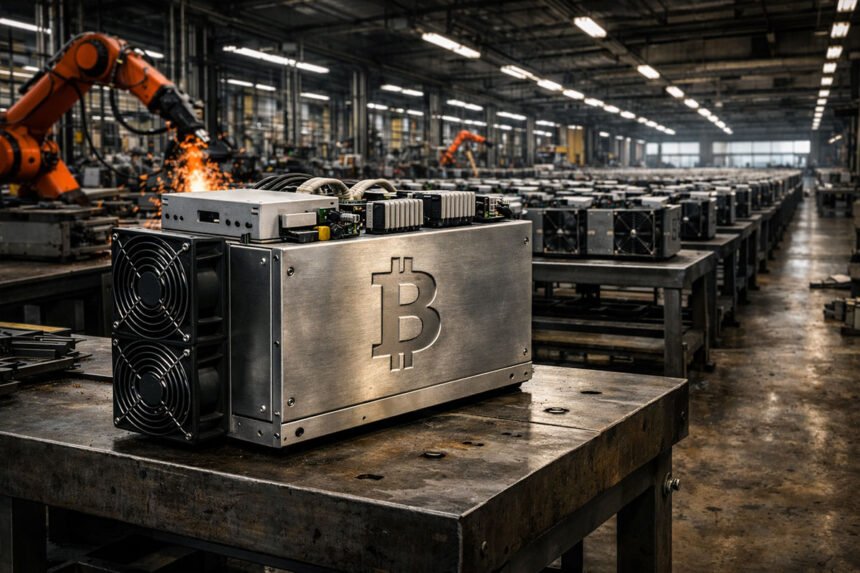
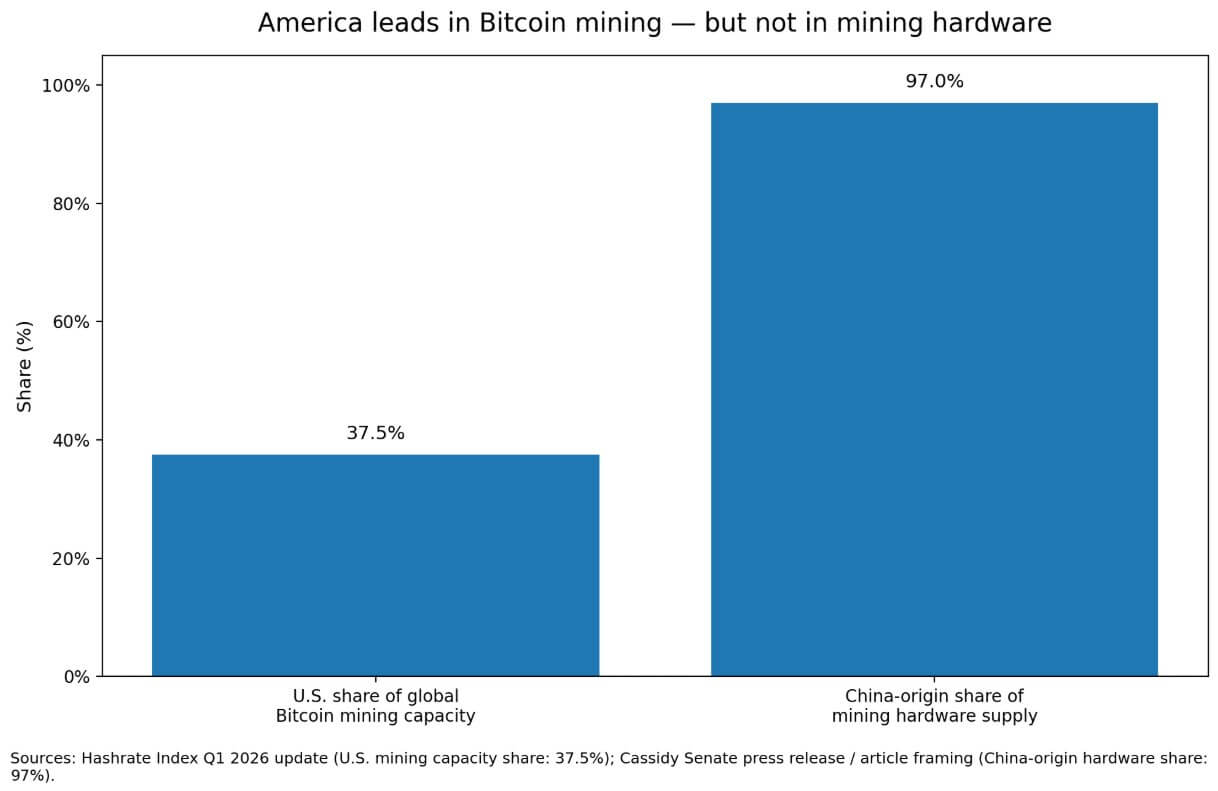
The United States owns about 38% of the world’s Bitcoin mining capacity, and the specialized hardware that underpins that position comes overwhelmingly from Chinese manufacturers.
Sens. Bill Cassidy and Cynthia Lummis introduced the American Mining Act on March 30 to address that gap, proposing certification, support for domestic manufacturing, and codification of President Donald Trump’s Strategic Bitcoin Reserve to begin easing dependence on foreign hardware that they see as a vulnerability to the nation’s industry.
Cassidy’s office says 97% of mining hardware comes from China. According to the January 2026 update of the Hash Rate Index, Bitcoin mining capacity in the United States is approximately 37% to 38% of the world’s total, or approximately 400 exahashes per second.
Both data points represent the same supply chain gap. That means U.S. mining operations are being run on machines supplied by Chinese manufacturers. The combination of leading the world in an activity and relying on an adversary to manufacture the machinery that makes it possible translates the bill’s argument into legislative form.
The bill proposes a voluntary “Mined in America” certification administered by the Department of Commerce. Certified facilities will phase out mining hardware associated with foreign adversaries.
NIST and the Manufacturing Extension Partnership will leverage existing federal energy and local programs to support domestic hardware manufacturing. Cassidy’s office says the bill operates within the scope of current program authorities.
The bill would also legislate the Strategic Bitcoin Reserve. President Trump’s March 2025 executive order created a reserve fund using confiscated government Bitcoin and specified that any additional acquisition strategy would be budget neutral and impose no additional taxpayer burden.
Moving this reserve from executive action to law gives it legislative status beyond a single administration and ties hardware procurement discussions to federal balance sheet instruments for the first time.
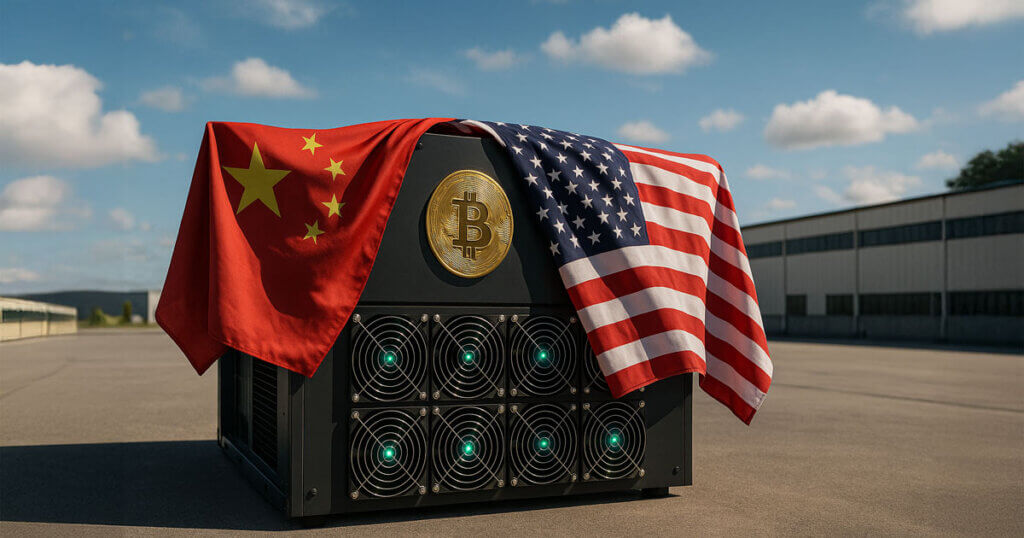
The Mined in America Act is based on specific arguments. Owning the activity layer and transferring the hardware layer to manufacturers of foreign origin leaves the United States exposed upstream.
The bill’s answers span certification, manufacturing support, and codification of reserves, and together these three policy measures frame Bitcoin mining as an area worthy of the same upstream attention that Washington is giving to semiconductors and critical minerals.
Why did Washington come here?
According to Reuters, U.S. authorities began seizing some Chinese mining equipment at ports in late 2024 based on FCC and Customs enforcement reasons, and later released some in March 2025.
These bouts gave concrete and documented importance to the hardware dependency discussion.
Friction at the port level raised questions that this bill now codifies. If Chinese-origin mining equipment can be intercepted by customs enforcement, what does that mean for an industry whose hardware stack is directly tied to Treasury reserve policy?
For the bill’s supporters, this episode transformed the question from theory to documented implementation history.
From a mining economics perspective, supply chain exposure has become more significant. A CoinShares report states that network hash prices range from $30 to $35 per petahash per day, with approximately 15% to 20% of the world’s fleet operating in the red at that level.
Hardware supply disruptions will be exacerbated by a hash pricing environment already compressing margins, with operators unable to quickly procure replacement equipment and facing real operational risks from customs holds and increased tariffs.
On March 17, the SEC issued guidance clarifying the treatment of protocol mining and other cryptocurrency activities. The July 2025 White House Digital Assets Report directed Congress and regulators to support U.S. digital asset leadership.
Washington now treats crypto infrastructure as a category of industrial policy, and the Mining in America Act was enacted as the hardware procurement component of that change in direction.
| date | event | Why is it important? |
|---|---|---|
| Late 2024 | US authorities begin seizing some Chinese mining equipment at ports | Transformed hardware dependence from a theoretical concern to an actual enforcement issue |
| March 2025 | Some of the confiscated mining equipment has begun to be released. | Showed that the issue was ongoing rather than a one-off headline |
| March 2025 | Trump Executive Order Creates Strategic Bitcoin Reserve Fund | Bitcoin Elevated from Market Topic to Federal Policy and Treasury Issue |
| July 2025 | White House Digital Asset Report confirms US digital asset leadership | Positioning cryptographic infrastructure within broader national competitiveness challenges |
| March 17, 2026 | SEC releases guidance on protocol mining and other cryptocurrency activities | Signals a more formal federal stance on crypto infrastructure |
| March 30, 2026 | Cassidy and Lummis introduced the American Mining Act | Legislate mining hardware supply chain issues |
The logic of this bill follows the same path as semiconductor policy, battery manufacturing, or communications equipment. It’s about who controls the machines behind the compute-intensive infrastructure that currently connects power markets and the Federal Reserve.
EIA estimates that by 2024, crypto mining could account for up to 2.3% of U.S. electricity consumption at 137 identified facilities. A March report showed that data center power demands are already straining the grid and causing a public backlash over utility bills.
Mining now sits within a broader public infrastructure conversation that goes far beyond cryptocurrencies.
A more difficult question this bill raises is what “American-made” hardware actually means. According to reports, Chinese-origin manufacturers have already started building production bases in the US as part of tariff avoidance, and US-based Auradine is touting its products and policy case for domestically designed ASICs.
Because assembly in the U.S. and design and sourcing in the U.S. produce different supply chain outcomes, the bill’s certification framework would need to define which ultimately earns the label.
What this bill means
The American Mining Act has broad Republican support, and the White House has packaged it into a bill that combines reserves protection and a manufacturing plan, representing a bull case.
Domestic and domestically assembled rig production capacity has expanded sufficiently to capture meaningful orders from qualified facilities.
The United States maintains a share in the high 30% range of the world’s hash rate while reducing upstream concentration risk, and Bitcoin mining has joined semiconductors and critical minerals as a designated category in the US industrial policy.
In this scenario, Auradine and a potential new entrant would acquire orders that are currently being sent overseas.
In the case of bears, the law is at a standstill. “Mined in America” serves as a certified brand, and although penetration is limited, miners continue to buy from vendors of Chinese origin because price, performance, and availability dominate purchasing decisions.
| test area | bull case | bear case |
|---|---|---|
| Domestic mining hardware capacity | Significant expansion in supply of U.S. and domestically assembled rigs, enabling meaningful order capture | Domestic production capacity remains limited and purchasing patterns cannot be changed. |
| Introduction of certified facilities | A significant number of miners have adopted “Mined in America” certification | Certification has become largely symbolic, with limited market penetration. |
| US hashrate position | US maintains global mining share in the low 30% range while reducing dependence on hardware | US maintains mining share but remains exposed to foreign hardware supply |
| Reliance on vendors of Chinese origin | Business operators are diversifying away from powerful Chinese manufacturers | Price, performance, and availability keep miners buying from the same vendor |
| Auradine and potential new entrants | US-based supplier takes orders that were previously sent overseas | New entrants struggle to compete on cost and scale |
| Strategic Bitcoin Reserve Relevance | Reserves policy and mining hardware policy become part of one industrial strategy | Reservation codification remains largely decoupled from actual hardware bottlenecks |
| Wider policy implications | Bitcoin mining joins semiconductors and critical minerals as a designated category in industrial policy | This bill is primarily a statement of vulnerability rather than a return to success. |
| conclusion | America translates mining leadership into upstream supply chain resilience | America continues to lead mining operations without controlling the machinery behind it |
Washington’s policy ambitions exceed industry’s ability to implement them, and this bill serves as a documented statement of the still-unanswered vulnerabilities of the nation’s manufacturing base.
With the introduction of this bill, supply chain gaps in Bitcoin’s hardware layer will be reflected in the Senate’s legislative record.
(Tag translation) Bitcoin


