

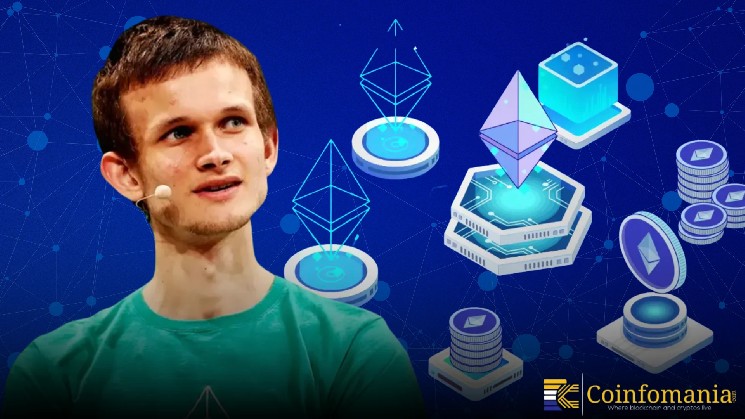
Vitalik Buterin has once again raised a powerful idea about the future of Ethereum. He believes that running Node should be simple and accessible to everyone. His proposal focuses on expanding access to Ethereum nodes so that regular users can participate directly in the network. Many blockchain networks become increasingly difficult for everyday users. Technical complexity and expensive hardware are often barriers to participation. Buterin argues that this trend will weaken decentralization over time. He wants the network to remain open to developers, researchers, and everyday hobbyists.
He recently advocated simplifying Ethereum’s two-node architecture. This change may make it easier to interact with nodes from personal devices. This vision directly supports broader Ethereum node access and stronger community control. As more people run nodes, it becomes harder to control and censor the network. His proposal is also consistent with Ethereum’s long-term philosophy. This platform aims to build decentralized financial and computing systems. For this system to be successful, users must be able to easily verify transactions themselves. That goal relies heavily on expanding access to Ethereum nodes around the world.
Latest: ⚡ Vitalik Buterin advocated for the simplification of Ethereum’s two-node architecture, arguing that running a node should be a fundamental right for everyone, not just experts. pic.twitter.com/VjdddgLbN8
— CoinMarketCap (@CoinMarketCap) March 16, 2026
Understanding the current Ethereum two-node architecture
Ethereum currently uses a two-node model that separates responsibilities between different layers. One layer handles execution tasks and another layer manages consensus operations. This design improved performance and scalability after the network moved to proof-of-stake. However, this architecture makes it more complex for everyday users. Running both components often requires technical knowledge and powerful hardware. Currently, many people rely on third-party providers instead of operating their own nodes.
This situation weakens Ethereum’s decentralization in subtle ways. With fewer individuals running nodes, infrastructure providers have more influence. Buterin believes networks need to reduce this dependency. His proposal proposes simplifying node requirements without sacrificing security. This balance remains critical to Ethereum’s long-term health. As the system becomes simpler, more people will run Ethereum node software at home.
How simplification improves Ethereum decentralization
Ethereum has always promoted openness and transparency. Everyone needs to validate transactions without trusting a centralized service. Ethereum’s growing decentralization relies on this principle. Buterin believes that the ease of operating nodes will strengthen community participation. When people run the Ethereum node system independently, they verify network activity for themselves. This direct verification protects the blockchain from tampering.
The simplified architecture makes blockchain more accessible to users around the world. Developers in emerging markets often face hardware limitations. Relaxing requirements could allow more participants to contribute to Ethereum’s infrastructure. This change will also support its implementation in education. Students and developers could experiment with the nodes using standard computers. Increased experimentation drives innovation across decentralized applications.
Why broader node participation is important for blockchain accessibility
Blockchain technology promises economic freedom and digital ownership. However, technical barriers still prevent many users from taking full advantage. Expanding the accessibility of blockchain remains essential to achieving these goals. When individuals run the Ethereum node software themselves, they have direct control over their data. You can check your balances, transactions, and smart contract activity without using any external services.
This independence builds trust in distributed systems. Users no longer need to rely on centralized intermediaries for blockchain information. Instead, it relies on its own node infrastructure. Improving blockchain accessibility also strengthens network resilience. Distributed nodes reduce the risk of outages and targeted attacks. A large network of nodes ensures that the blockchain continues to operate during interruptions.
Final thoughts on Vitalik Buterin’s vision for Ethereum
Vitalik Buterin continues to shape Ethereum’s long-term vision. His proposals focus on increasing openness and user empowerment. He believes that the ability to run nodes should be universal. Expanding access to Ethereum nodes supports that mission. More nodes means more decentralization and more community control. Infrastructure simplification also improves blockchain access around the world.
This discussion highlights important issues regarding blockchain networks. Will the infrastructure remain accessible to general users or evolve towards specialized operators? Buterin clearly favors the first option. He believes that true decentralization requires everyone’s participation.


