


Bitcoin fell below $66,000 on March 27th Concerns about US inflation and an oil shock caused by the closure of the Strait of Hormuz are growing, and the decline in risk assets is widening.
Since its local peak on March 17, the asset has fallen about 13% to about $65,500, according to CoinCodex data. At the same time, March is on track to be Bitcoin’s sixth straight negative month, something not seen since the 2018 bear market.
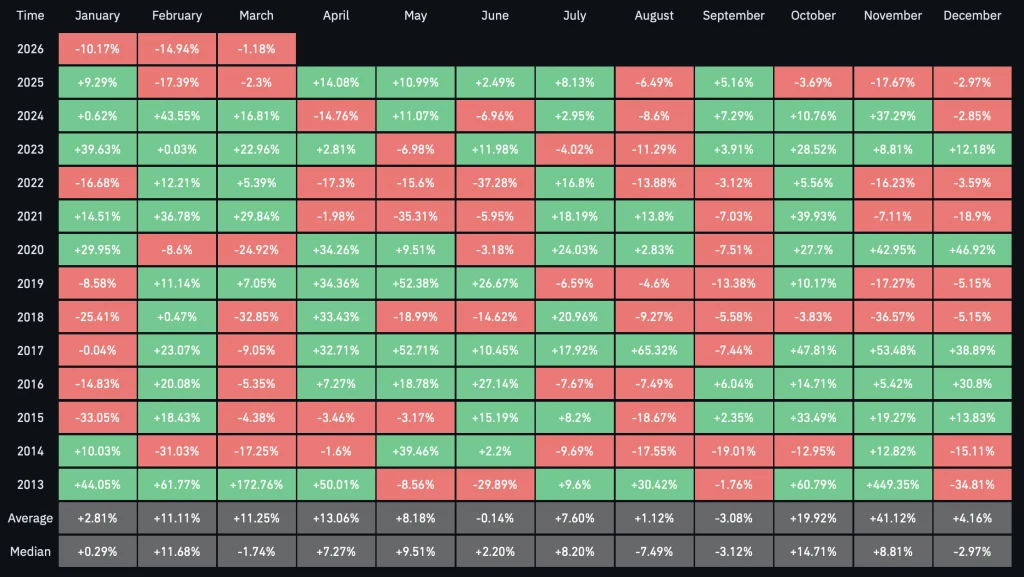
Oil shock and Fed uncertainty increase market pressure
The main driver of the recent correction is macroeconomic stress. US stock markets opened lower on concerns. Deepening global oil supply. The Strait of Hormuz, through which about 25% of the world’s offshore oil flows, remains closed, putting energy markets under pressure.
The shock quickly spread to the bond market. U.S. Treasury yields have soared, with the 10-year bond yield reaching its highest level since the start of the conflict.
Kobeisi Letter X noted that the US bond market is showing signs of stress. In just a few weeks, expectations have changed dramatically from predicting a rate cut to discussing a possible rate hike. of Current baseline scenario The current situation indicates a long period of suspension in Federal Reserve policy.
According to data Markets are rapidly reassessing expectations for monetary policy, according to the Chicago Mercantile Exchange’s FedWatch tool. Adam Kobisi highlighted that inflation expectations have risen to levels where traders are starting to price in the possibility of an emergency rate hike.
Vulnerable macro setup
This creates a difficult situation for policy makers. The Fed initially moved toward easing, citing the weak labor market. But rising oil-driven inflation now complicates that outlook.
Analysts describe this as an “objectively unstable” environment, with both inflationary and slowing pressures simultaneously present.
Bitcoin price faces significant test near $65,000
Bitcoin price trends reflect this uncertainty. The asset has fallen to a three-week low, with the $70,000 level acting as resistance rather than support.
According to trader Technical Crypto Analyst, Bitcoin has broken through the uptrend line and is forming a high below the $70,000 to $72,000 supply zone. This structure suggests that sellers are currently in short-term control.
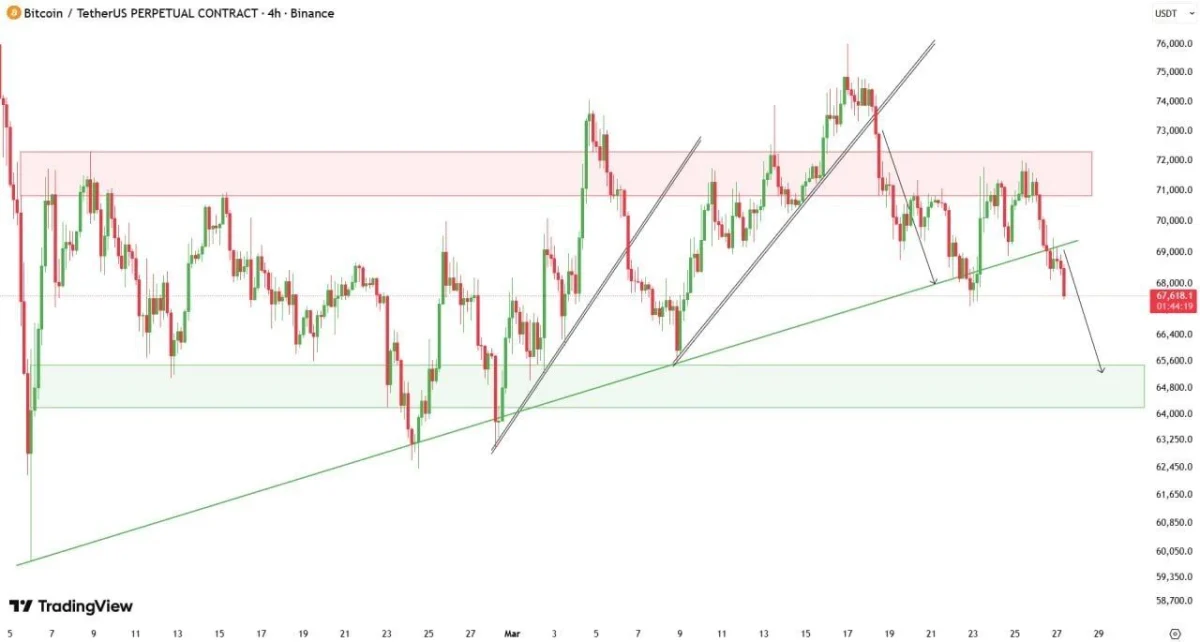
After losing the $68,000 support, the next major demand zone is between $64,000 and $65,000. A sustained move below this range could open the door to further downside. On the other hand, the $70,000 level would need to be regained to shift momentum back in favor of buyers.
Trader Dahn Crypto Trade is also available. pointed up to $65,600 as the crisis level. He noted that markets continued to reduce risk heading into the weekend, a pattern that has repeated several times in recent weeks.
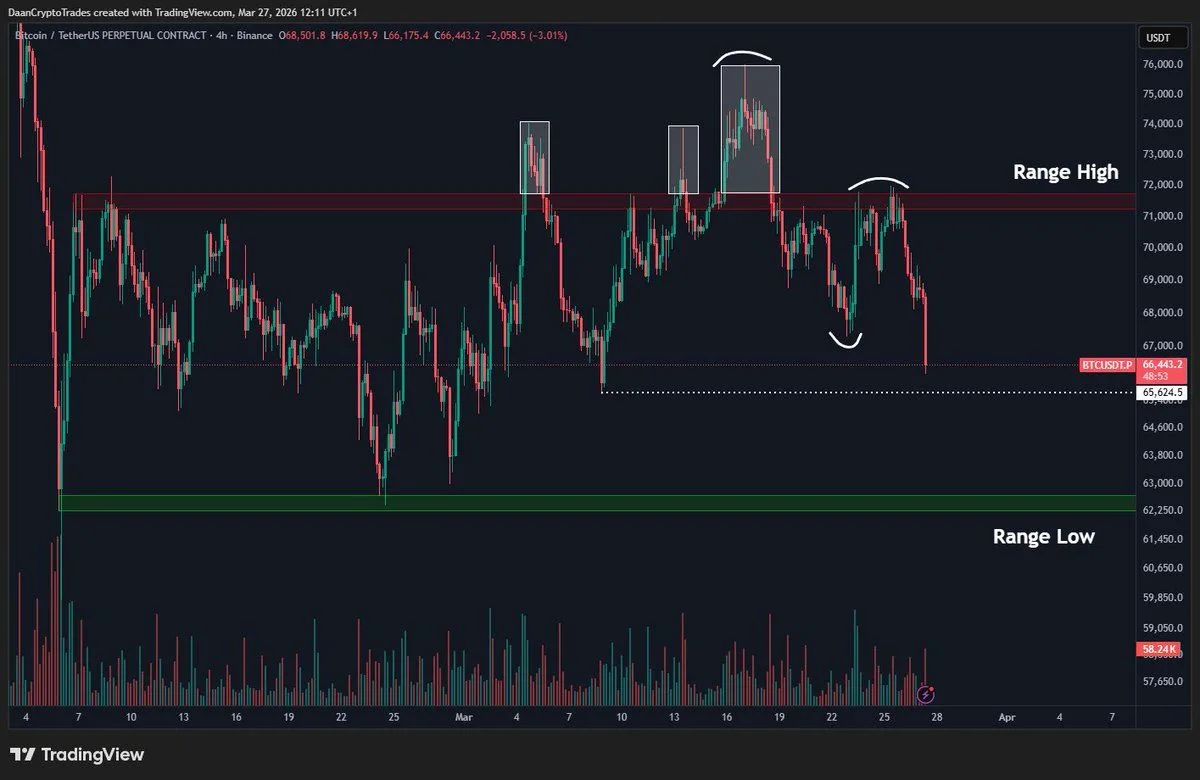
Bitcoin is in trouble due to macro forces
The broader context remains decisive. Oil supply shocks, rising inflation expectations, and a change in the Federal Reserve’s outlook have conspired to create a difficult environment for risk assets.
For Bitcoin, this poses a dual challenge. As a risk asset, it reacts negatively to tight financial conditions. At the same time, it has not yet fully established itself as a reliable hedge against inflation in this type of environment.
From a macro perspective, the current situation resembles a stagflation scenario in which rising prices and slowing growth occur simultaneously. Bitcoin is therefore caught between competing narratives, and its next direction is likely to be closely tied to global market conditions.
Monthly financial statements may be important. Whether Bitcoin sustains the $65,000-$66,000 zone could determine whether the current decline stabilizes or extends into a deeper correction.


