

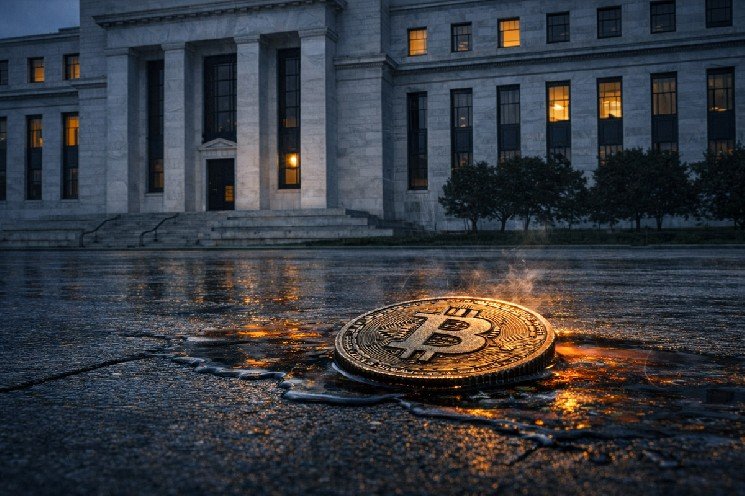
Treasury Secretary Scott Bessent’s call for the Fed to hold off on cutting rates reflects a problem far beyond Washington, where war-induced inflation is closing the door to cheap money.
Reuters Bessent urged caution, citing soaring fuel costs due to the Iran conflict and complicating the inflation outlook. The Fed’s own March minutes said much the same story, with officials warning that higher oil prices could push up inflation in the short term, delay a return to 2%, and spill over into core prices if sustained. The futures market was already moving towards a smaller rate cut, which at the time was not fully priced in until December.
When oil prices rise due to geopolitical conflicts, gasoline, shipping, food production, and logistics all become more expensive, potentially raising inflation even when the economy is not heating up.
Therefore, the Fed remains trapped. There is a risk that lowering rates too soon will test high prices, and holding interest rates the same risks putting pressure on already struggling consumers and businesses. Officials clearly acknowledged the tensions, noting that inflation risks were rising while employment risks were tilted to the downside.
This creates a very specific problem for Bitcoin prices.
The strongest bullish story for the crypto market over the past year has been that slowing growth and slowing inflation will force the Fed to ease, driving liquidity toward risk assets. Oil shock destroys all links in the chain. Growth concerns grow, but the Fed remains hesitant as inflation is uncooperative, leaving Bitcoin without the macro tailwind it has relied on repeatedly in past easing cycles.
Why the Fed is making Bitcoin less secure
The relationship between interest rate expectations and cryptocurrencies occurs through three channels.
First is the cost of capital. If interest rates remain elevated, leverage will remain expensive for hedge funds, market makers, miners, and retail traders on margin.
Second is risk appetite. If the market no longer expects short-term relief, rotation into volatile assets will slow and Bitcoin’s rise will depend more on idiosyncratic demand than macro trends.
Third, the dollar and real yields: A strong dollar and rising real yields are making speculative assets less attractive, and the Fed’s minutes note that high oil prices have already increased inflation compensation and tightened financial conditions.
This does not mean Bitcoin cannot rise through supply dynamics, ETF flows, institutional adoption, or a combination of all of these. But rallies built on leverage rather than spot accumulation always unwind early, and the macro lower bound that many participants assumed would hold now looks less reliable.
The impact if the Fed no longer participates is very concrete and immediate.
Gas remains expensive, credit card interest rates remain tight, mortgage and auto loan relief is unavailable, and discretionary spending is further squeezed. The Fed’s minutes warned that a prolonged conflict could reduce household purchasing power and put pressure on employment.
This adds to the pressure on the cryptocurrency market, especially Bitcoin.
Retail holders face diminishing macro tailwinds and volatile swings in oil and inflation headlines. Traders are grappling with tightening funding costs and macro prints that are more important than crypto-native catalysts. Miners and crypto businesses that need to refinance or raise capital are facing tough conditions across the board.
The most underappreciated impact is the simplest. High living and borrowing costs leave you with less spare cash to speculate, invest, or dollar-cost average into BTC. The decline in retail purchasing power does not immediately appear in on-chain data, but it shapes the market from the bottom up.
So the main threat here is not Bessent’s comments. The threat is the macro environment the document describes. So, in an environment where the Fed is unable to provide the cheap money that risky assets demand, where households remain caught between high prices and high borrowing costs, and where the next phase of the crypto market will depend on whether inflation cools enough for policymakers to actually act. This is a much tougher test than most Bitcoin bulls were pricing in.


