

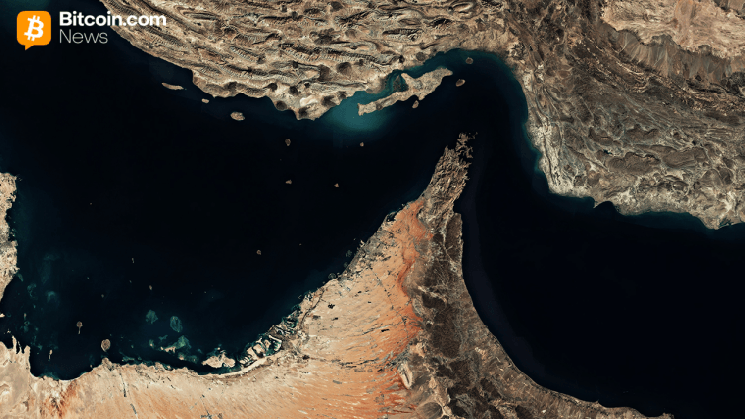
Bitcoin fell to $71,067 on Sunday after peace talks between the US and Iran in Islamabad broke down and the US Navy sent two destroyers into the Strait of Hormuz to begin clearing Iranian mines.
Important points:
- Bitcoin fell to $71,067 on April 12, 2026, after peace talks between the US and Iran in Islamabad broke down without an agreement.
- The US Navy sent the aircraft carrier USS Frank Peterson and aircraft carrier USS Murphy to the Strait of Hormuz to clear Iranian mines.
- Negotiations ended after Iran refused to abandon its nuclear program, leaving about 2,000 ships stranded in the Persian Gulf.
Bitcoin price falls after Islamabad negotiations end without US-Iran deal
The price drop reversed gains earlier in the week, when Bitcoin rose toward $74,000 on optimism that a two-week ceasefire between Washington and the Iranian government might hold. Vice President J.D. Vance acknowledged that negotiations ended without an agreement, leaving Iran’s nuclear program and Strait access unresolved.
President Trump announced on Truth Social that the Navy had begun “clearing” the Strait of Hormuz, claiming this was a boon to countries around the world. He said all 28 Iranian minelayers have been destroyed and are at the bottom of the ocean. U.S. Central Command confirmed that the destroyers Frank Peterson and Michael Murphy passed through the waterway as part of a mine clearance and freedom of navigation operation.
Bitcoin fell about 2.5% within hours of the announcement, tracking the diplomatic breakdown rather than the progress of naval operations in the waterway.
Approximately 20% of the world’s crude oil supply is transported through the Strait of Hormuz. Iran imposed selective restrictions in mid-March, cutting daily shipping traffic from 138 ships to just four or five. The International Maritime Organization estimates there are approximately 2,000 vessels, including six cruise ships and other vessels.The oil tanker remains stranded in the Persian Gulf along with 20,000 sailors.
Global oil markets reacted sharply to the disruption, with prices soaring above $100 per barrel in previous periods. Points of conflict escalation. Bitcoin has consistently tracked these movements, selling on signals of escalation and briefly recovering on news of a ceasefire.
President Trump also accused Iran of imposing tolls to cross the strait, reportedly $1 per barrel, requiring payment in cryptocurrencies such as Bitcoin.
The Iran negotiating team in Islamabad included Mohammad Bagher Ghalibaf, Abbas Araghchi and Ali Bagheri. President Trump said his representatives, including special envoy Steve Witkoff and special envoy Jared Kushner, spent nearly 20 hours.n discuss before returning without agreement. He praised Pakistan’s Field Marshal Asim Munir and Prime Minister Shehbaz Sharif for facilitating the session.
President Trump has made it clear that Iran will never be allowed to possess nuclear weapons. He said disagreements on nuclear issues outweighed progress on other issues agreed upon during the Islamabad meeting.
NATO members, including Germany, Italy, Japan, and the United Kingdom, refused to participate militarily. President Trump has called these countries “cowards” and “paper tigers.” On April 7, Russia and China vetoed a UN Security Council resolution that would allow military force to reopen the waterway.
Initial reports emerge that supertanker safely left the strait with US Navy escortd Sunday morning. Iranian officials accused the United States of violating the ceasefire by entering the strait without coordination. President Trump said this weekend that “no one who pays illegal tolls can safely navigate the high seas.”
Bitcoin trades as a risk asset in this environment, selling off as conflict escalates and recovering as pressure eases. Will demining operations lead to the waterway being fully opened, or will Iran respond with further obstruction?Monday morning will determine the next move for oil prices, crypto markets, and U.S. stocks.


