




Strategy, the Michael Saylor-led company formerly known as MicroStrategy, has surpassed BlackRock’s flagship Spot Bitcoin exchange-traded fund (ETF) to become the world’s largest institutional holder of Bitcoin.
According to an April 20 regulatory filing with the Securities and Exchange Commission (SEC), Strategy acquired an additional 34,164 Bitcoins over the past week at an average price of $74,395 per coin.
The purchase price was approximately $2.54 billion, making it the third largest single acquisition in the company’s history by number of coins.
The latest transaction increases Strategy’s total Bitcoin holdings to 815,061 BTC, which is approximately 3.88% of the token’s total supply.
The company has spent approximately $61.56 billion building its position, giving it an average cost basis of $75,527 per coin. With Bitcoin trading at about $75,000, the company’s assets are worth about $61.2 billion, leaving it with more than $228 million in unrealized losses in its portfolio.

Strategy’s Bitcoin holdings flip BlackRock IBIT
On the other hand, the scale of this acquisition alone is noteworthy. The 34,164 Bitcoins acquired this week alone would rank the company as the fifth-largest corporate holder in the world.
This funding was enough to push Strategy past BlackRock’s iShares Bitcoin Trust (IBIT), the world’s largest Bitcoin fund. IBIT currently holds 798,026 Bitcoins after overtaking Strategy Inc. in Q1 2024 following the approval of the Spot Bitcoin ETF in the US.
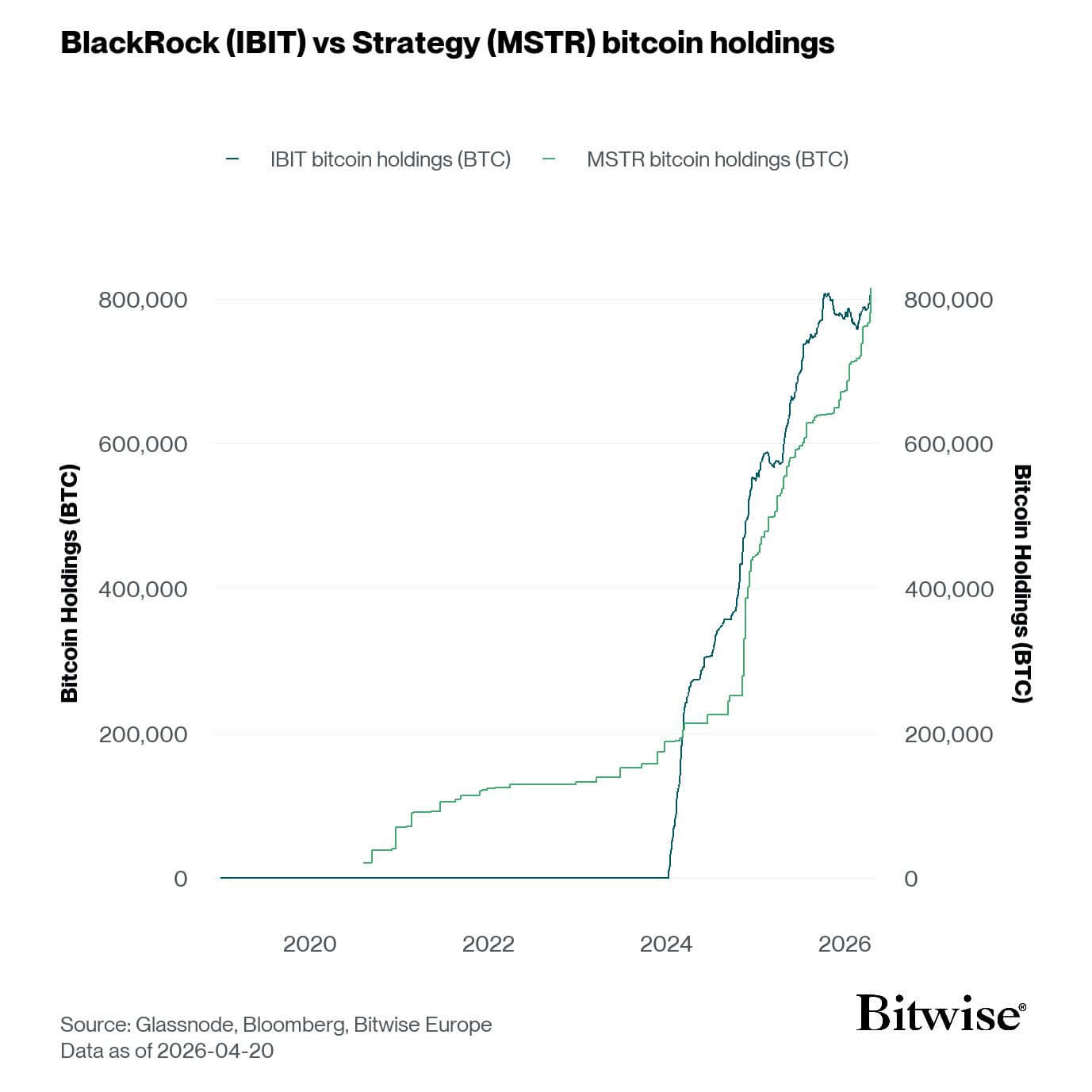
This comparison is important because the two instruments represent different forms of Bitcoin exposure. BlackRock’s funds hold Bitcoin on behalf of individual and institutional investors through a regulated Wall Street structure.
In contrast, Strategy is a publicly traded operating company that uses the bond and stock markets to grow its reserves, making it more of a leveraged BTC financial vehicle.
Against this backdrop, the only entity widely believed to hold more Bitcoin remains the network’s pseudonymous creator Satoshi Nakamoto, whose inactive wallet is estimated to contain around 1.1 million coins.
Meanwhile, Strategy CEO Von Reh said the acquisition increases the company’s annual Bitcoin yield by 82% in just one week to $4.97 billion.
He said the results demonstrate the reflexive power of combining rising digital assets with rising debt financing.
Analysts tracking the company’s accumulation pace predict that the strategy could reach the 1 million Bitcoin mark by the end of the year.
STRC is the center of the model
The acquisition also highlighted that Strategy is now relying less on common stock dilution and more on preferred securities to fund its Bitcoin strategy.
The company’s perpetual preferred securities, known as Stretch, generated $2.18 billion last week, accounting for about 85.7% of the proceeds used to purchase securities, according to filings.
Notably, STRC also funded the entire amount of Bitcoin that Strategy purchased for $1 billion in the week ending April 12th. STRC is designed to trade near its $100 par value and offers investors a variable annualized dividend of 11.5%. Dividends are reset every month.
Strategy executives have previously said the structure is aimed at allowing the stock to trade near its average value while limiting wild swings.
In fact, Stretch is a core part of the company’s funding mechanism, with Saylor and his company acquiring nearly 100,000 BTC in STRC.
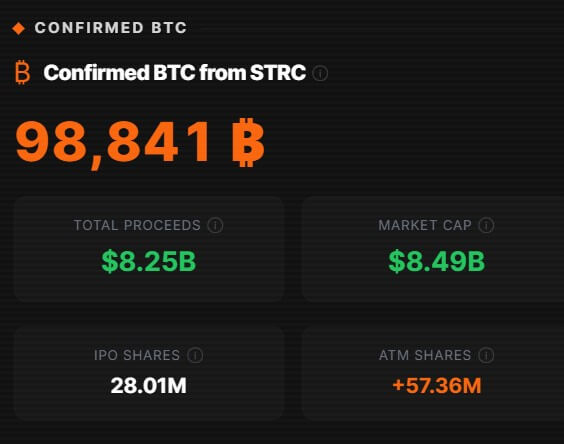
So Strategy is no longer just a software company with Bitcoin finance. Increasingly, Bitcoin is being financed through a range of public market instruments, including common stock, preferred stock, and other securities.
The company said it is accumulating Bitcoin as its primary financial reserve asset using proceeds from equity and debt financing and cash flow from operations.
Familiar patterns on the market
Even as the financing structures behind Strategy’s acquisitions become more sophisticated, the market reaction to those announcements remains relatively consistent.
Disclosures of large strategy purchases often served as buy-the-rumour, sell-the-news events rather than immediate bullish catalysts for Bitcoin. By the time the application is published, traders are often already positioned to meet demand.
Andre Dragosch, Head of Research at Bitwise Europe:
“Announcing a large strategic purchase is historically a sell news event for Bitcoin. By the time it is announced, the buy is old news and traders expect less buying next week, so it is likely a countercyclical action.”
This view is supported by research from Bitwise Europe, which shows that disclosures of major acquisitions by Strategy rarely lead to immediate upside. Rather, Bitcoin has historically tended to fall within hours of filing.
The firm examined 100 Strategy Bitcoin purchase announcements since August 2020 and found that the asset typically peaked about two hours before the firm disclosed the trade. Once the filing is released, prices tend to drop.
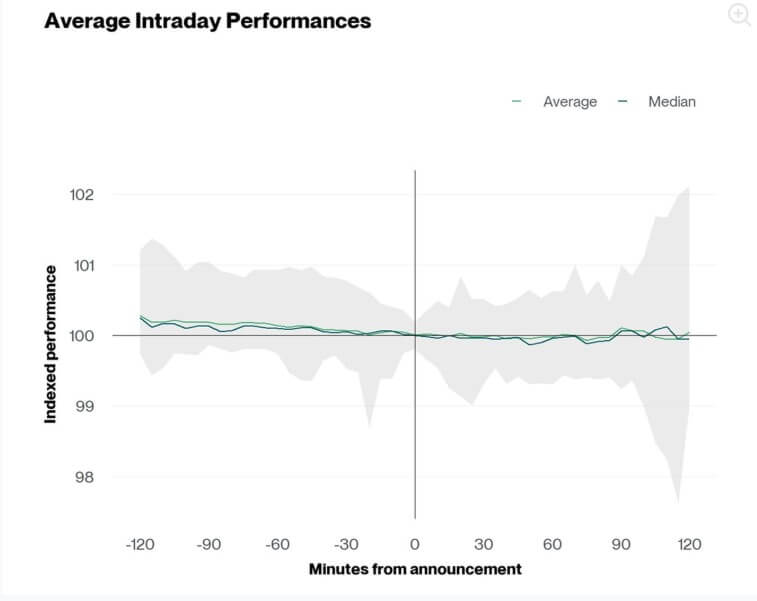
According to Bitwise data, the index’s performance dropped to 99.97 within 30 minutes of the announcement and to 99.96 before attempting a partial recovery an hour later.
The amount you purchase also seems to be important. For the market’s top 10% of purchases, which tend to attract the most attention, Bitcoin typically rose following a disclosure, sold off once the news was confirmed, and continued to fall for the next two hours.
This pattern is consistent with well-known market dynamics. Traders have priced in expected demand in advance, and upside potential is limited once a purchase is officially announced.
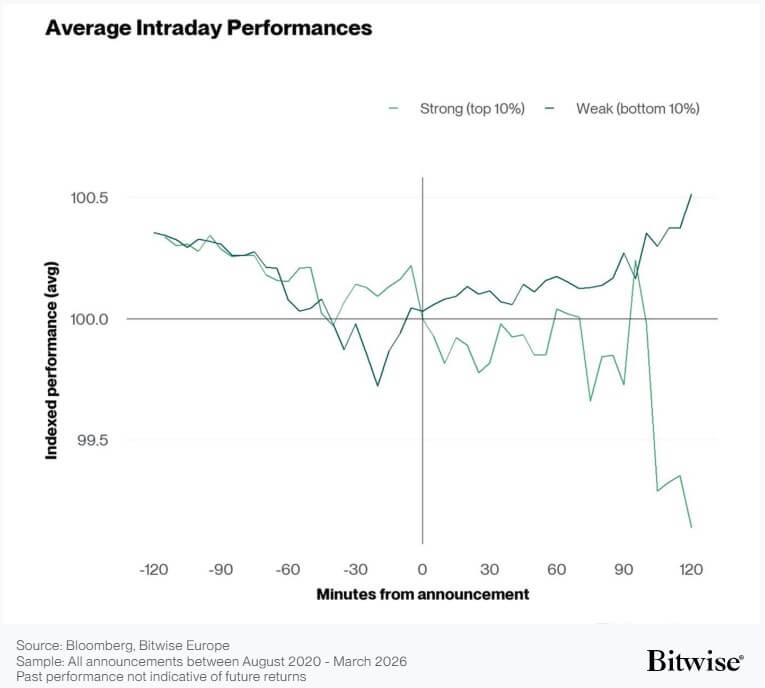
On the other hand, smaller acquisitions tend to have the opposite effect. The bottom 10% of the Strategy Buy tranches had relatively flat price movements before the announcement, but continued to rise steadily in the two hours following the announcement.
Considering this, Bitwise argues that quiet accumulations may provide a clearer signal of sustained demand than the company’s biggest headline-grabbing acquisitions, as they are less susceptible to front-running.
Market analysts therefore caution against treating Strategy’s weekly reports as reliable short-term trading signals.
(Tag Translation)Bitcoin


