

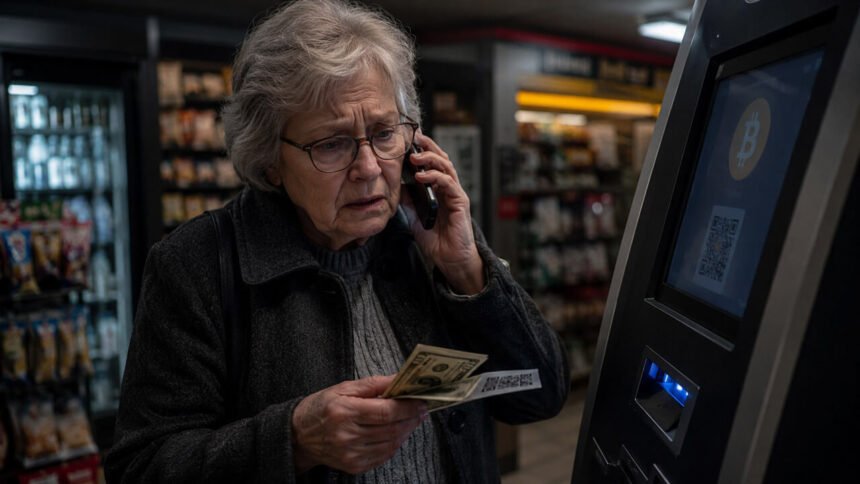
Cryptocurrency scams start online with fake bank alerts, cloned voices, romance messages, or tech support pop-ups. And the last instruction is usually more physical. That means withdrawing your cash, finding a cryptocurrency kiosk, scanning a QR code, and continuing to call the scammer until you run out of money.
But that last step is turning Bitcoin ATMs and other crypto kiosks into pressure points for America’s fraud problem.
FBI Internet Crime Report Americans filed 181,565 complaints related to virtual currencies, with reported losses 11 billion dollars. The subsequent IC3 Cryptocurrency Kiosk PSA drew attention to a smaller but more specific mechanism. In 2025, there were 13,460 complaints related to cryptocurrency kiosks and an adjusted loss of $388,981,267.
Online scams create a belief that money must move quickly. The kiosk creates a payment rail that frightened victims can operate at convenience stores, gas stations, and supermarkets while criminals give them instructions in real time.
Once the cash is in cryptocurrency and moved to a wallet controlled by the scammer, the window to interrupt the transfer typically closes.
The kiosk will be a place where families, banks, businesses, and state regulators still have an opportunity to intervene.
The $11 billion problem has an end point at the street level
The FBI’s 2025 numbers illustrate the scale of the broader fraud pipeline. IC3 received a total of 1,008,597 complaints in 2025, and the FBI said Americans were defrauded of approximately $21 billion due to cyber-based crimes.
Cryptocurrency-related complaints accounted for the highest losses in the report, but AI-related complaints added nearly $893 million in losses.
The rise of generative AI has helped scammers get their victims to kiosks already ready for action. The FBI says scammers are now using fake social profiles, voice clones, identification documents, and believable videos of public figures or loved ones.
These tools don’t need to touch the blockchain to get someone close to the machine. They use pressure, authority, or panic to force the victim out the door with the cash.
Kiosk PSA tells you what happens next. IC3 said a virtual currency kiosk is an ATM-like device or terminal that allows users to exchange cash for virtual currency.
The report said criminals could instruct their victims to transfer funds through these devices, and device-related complaints increased by 23% in 2025, with losses increasing by 58% from 2024.
| formal action | 2025 numbers | reader influence |
|---|---|---|
| Cryptocurrency-related IC3 complaints | 181,565 complaints and over $11 billion in reported losses | Shows the national scale of cryptocurrency-related fraud |
| Complaints about cryptocurrency kiosks | Number of complaints: 13,460, adjusted loss amount: $388,981,267 | View physical last mile channel |
| Kiosk trends from 2024 | Complaints increased by 23%. Losses increased by 58% | Indicates that the problem is accelerating |
| People over 50 years of age complained at kiosk. | More than half of the complaints. Losses of more than $302 million | Indicates where consumer damage is concentrated |
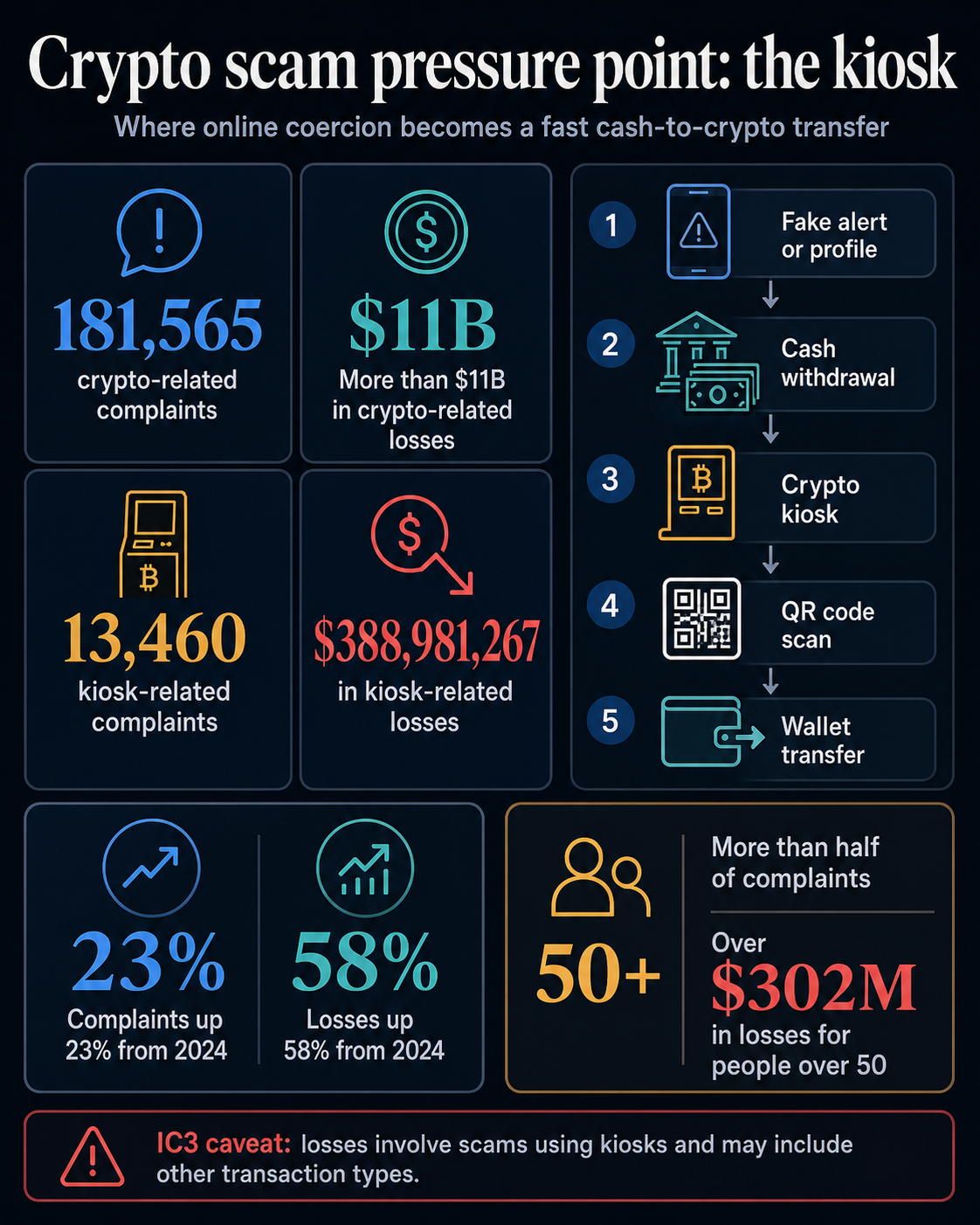
IC3 also warned that its kiosk data contains fraud involving crypto kiosks and may include other transaction types. Still, kiosks have repeatedly appeared as part of fraudulent payment channels, and have already moved from online persuasion to moving cash in the real world.
Scammers don’t need to touch the machine
Although the mechanism is simple, this device is dangerous. IC3 says a typical kiosk complaint includes detailed instructions on how criminals can withdraw cash from a bank, locate a kiosk, and use it to deposit and transfer funds.
Red flags include people with unexplained QR code documents, people withdrawing large sums of cash for the first time, people talking on the phone in banks or kiosks in a confused manner, and people lingering around machines.
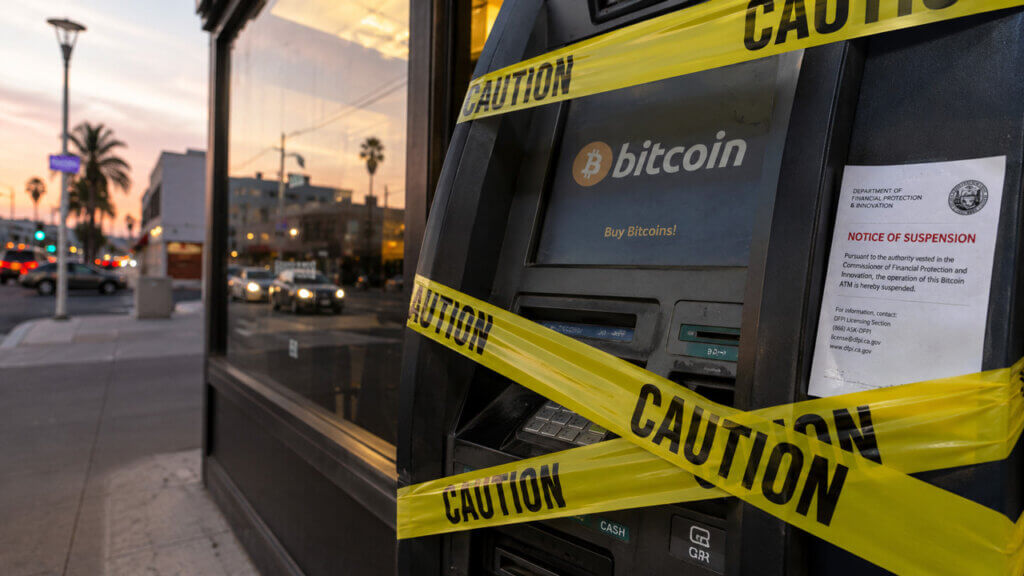
The California Department of Financial Protection and Innovation describes the same pattern in a warning to consumers.
Scammers may contact victims, create a sense of urgency to lure them to a crypto ATM, remain on the phone during the transaction, and then send a QR code that sends the purchased assets directly to the scammer’s wallet. DFPI also highlights the dangers in that transactions occur quickly, instantly, and cannot be reversed.
FinCEN’s 2025 Notice on Convertible Cryptocurrency Kiosks explains why that workflow is attractive to criminals.
Although a purchase at a CVC kiosk looks like a standard ATM transaction to the user, the wallet address that receives the cryptocurrency may belong to someone else and is often embedded in a QR code. According to FinCEN, scammers often keep victims in continuous contact with them by phone or online until the payment is completed.
He also said scammers may instruct victims to split their deposits into multiple amounts or machines in order to circumvent security measures.
Economics adds another clue. Kiosk fees range from 7% to 20%, but scammers tolerate the cost because cryptocurrencies can move quickly after being received and are difficult to recover.
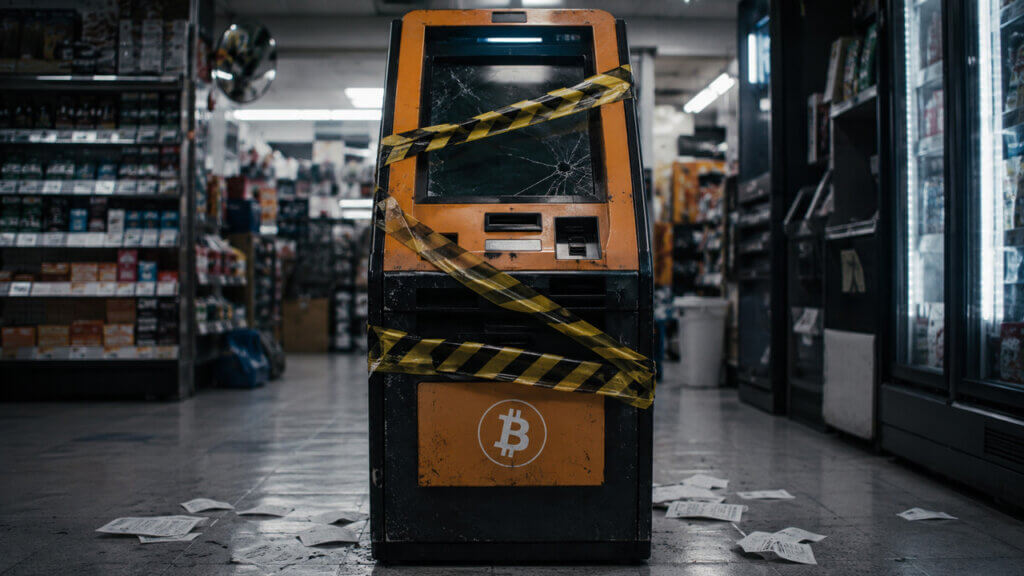
For legitimate buyers, high fees are a bad deal. It can become part of a business model for criminals looking to convert victims’ cash into fast-moving cryptocurrencies.
That is why this device is at the center of liability issues. The victim may be the one pushing the button, but transactions often include visible warning signs before funds are moved.
Red flags include large cash withdrawals, nervous customers, never-ending phone calls, QR codes provided by others, repeated deposits, and destination wallets that the customer cannot explain.
Operators and banks are now part of the control surface
FinCEN urges financial institutions to identify and report suspicious activity involving CVC kiosks. It also warned that if businesses do not comply with their obligations under the Bank Secrecy Act, there is an increased risk of illegal activity.
This is putting pressure on both sides of the kiosk business. Operators must monitor customers and transactions. Banks and credit unions that serve operators need to understand whether their kiosk business has actual anti-fraud and anti-money laundering controls in place.
FinCEN said non-compliant operators are particularly vulnerable to abuse by fraudsters and other criminals. Some scammers may lure victims to specific kiosks, sometimes across state lines, to circumvent stronger regulations, the report said.
California’s DFPI said the state’s Digital Financial Assets Act prohibits kiosk operators from accepting more than $1,000 per person per day.
firememecoins’s recent coverage of Florida’s new crypto ATM law described an alternative model with warnings, receipts, transaction limits, registration, and conditional refunds that could shift some of the fraud risk to the operator.
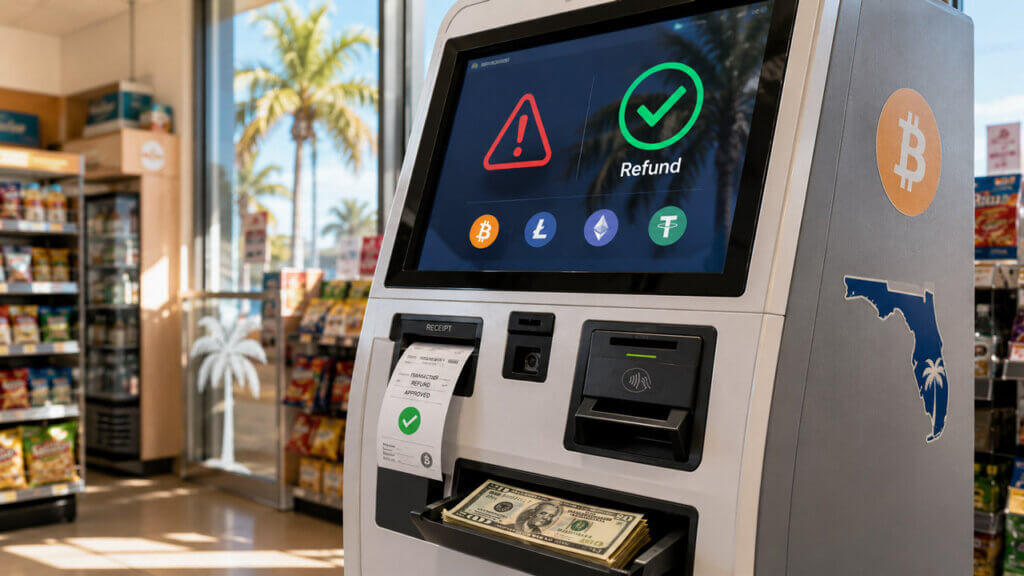
These examples form state-level menus rather than national standards. This means lower daily limits, clearer warnings, real-time customer support, refund rights, operator registration, bank monitoring, and a direct call from the operator if a transaction appears fraudulent.
Each approach aims for the same small time window between cash withdrawal and blockchain settlement.
The FTC’s previous focus on Bitcoin ATM data helps explain its urgency. According to the report, the amount of reported fraud losses related to Bitcoin ATMs increased nearly tenfold from 2020 to 2023, exceeding $65 million in the first half of 2024, with a median reported loss of $10,000 in the same six-month period.
He also said seniors were being disproportionately affected.
IC3’s 2025 kiosk figures framed its concerns within a larger official context. More than half of the kiosk complaints involved people over the age of 50, resulting in losses of more than $302 million.
This is a household risk, often coming from the same places people already buy gas, groceries, and convenience store items.
The next test is whether these everyday touchpoints can become break points. A bank teller questioning the rush to withdraw cash, an operator blocking suspicious transactions, a state cap preventing an account from being drained in its entirety, or a family member recognizing the script can all change the outcome before the money moves.
The tool becomes weaker after the trade. Fraudulent activity may still be traceable on-chain, but funds may pass through wallets and exchanges faster than victims can realize what has happened.
This asymmetry has come under scrutiny because kiosks may be the last place a transfer can be stopped.
If businesses, banks and lawmakers fail to make the moment safer, official figures will paint a starker picture. The weakest link in the cryptocurrency fraud pipeline may be machines like ATMs that convert fear into cryptocurrency transfers before others intervene.
(Tag Translation) Bitcoin


