

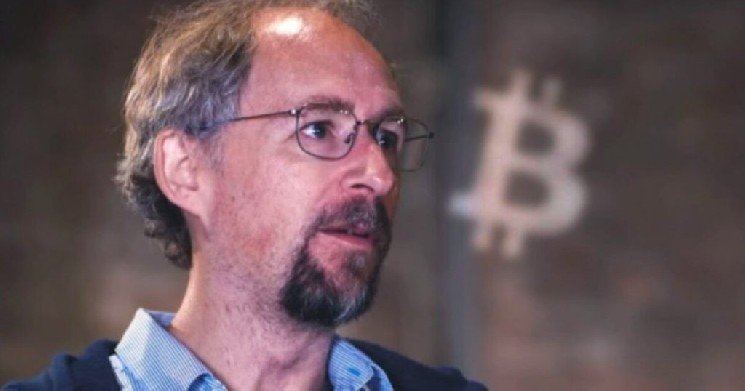
As debate intensifies in the cryptocurrency world about the potential threat of quantum computers to the Bitcoin network, a new approach recently proposed by Adam Back, aka Satoshi Nakamoto, is gaining attention.
Buck introduced a different perspective within the developer community by advocating for optional upgrades rather than forced transitions in the process of making Bitcoin quantum resilient.
Speaking at the Paris Blockchain Week event, Back argued that changes to the system should be implemented in a controlled and gradual manner. “Preparation is key. It’s much safer to implement changes in a controlled manner than to act hastily in a crisis,” Buck said, also highlighting the Bitcoin network’s ability to adjust quickly in emergencies. Recalling that previously discovered security vulnerabilities can be fixed within hours, Bach said that agreements can be reached quickly at critical moments.
Back’s proposal differs significantly from BIP-361, a more stringent version developed by the developer. The proposal, drafted by Jameson Lopp and other developers, was updated and incorporated into Bitcoin’s codebase on April 15 under the title “Post-Quantum Transition and Deprecation of Traditional Signatures.” The proposal envisions gradually disabling addresses vulnerable to quantum attacks over five years and freezing assets that will not be migrated, including Bitcoin believed to belong to Satoshi Nakamoto.
Related news Cryptocurrency exchange CEO goes missing, large amount of Bitcoin lost, users rushing to withdraw funds
The background to these debates is the rapid progress in quantum computing technology. A recent study published by Google Quantum AI revealed that elliptic curve cryptography can be broken with lower hardware requirements than previously expected. Bitcoin’s encryption system could be broken with about 20 times fewer physical qubits than previously expected, according to a study.
Experts believe that, given these developments, approximately 6.9 million people will $BTC May be at risk of quantum attacks. It is said that about 1.7 million people $BTC This amount dates back to the Satoshi Nakamoto era. Meanwhile, BitMEX Research offered an alternative solution. According to the proposal, a “canary fund” consisting of assets vulnerable to quantum risks would be created, and a full-fledged freezing mechanism would only be triggered if a transfer was made from an address within this fund.
*This is not investment advice.


