


Prediction market operators are bringing trading infrastructure in-house, and this rapid change could spark a wave of acquisitions across crypto platforms, sportsbooks, brokerages and independent exchanges, Bernstein analysts said.
Bernstein said in a research note on Monday that the industry is undergoing “consolidation,” with major platforms seeking to control more of the prediction market stack.
“All significant consumer platforms are integrating the front and back ends of their prediction market stacks,” they said. This includes distribution, intermediation, exchange, and clearing. This consolidation has brought companies that previously operated in separate industries into a single competitive environment.
Bernstein noted that Robinhood is routing major World Cup contracts through Rothera, an exchange co-owned with Susquehanna, and that DraftKings is launching DKeX and shifting volume away from CME and Crypto.com infrastructure. The company also cited Coinbase’s acquisition of The Clearing Company and the launch of its event deal as evidence that consumer platforms are seeking more control over the prediction market stack.
Owning the infrastructure allows platforms to retain fees that previously flowed to external partners and allows them to take faster routes to distribution, licensing, or completing missing parts of the stack. However, the same convergence that strengthens the rationale for integration could also further blur the regulatory boundaries between financial transactions and gambling and increase state and federal oversight.
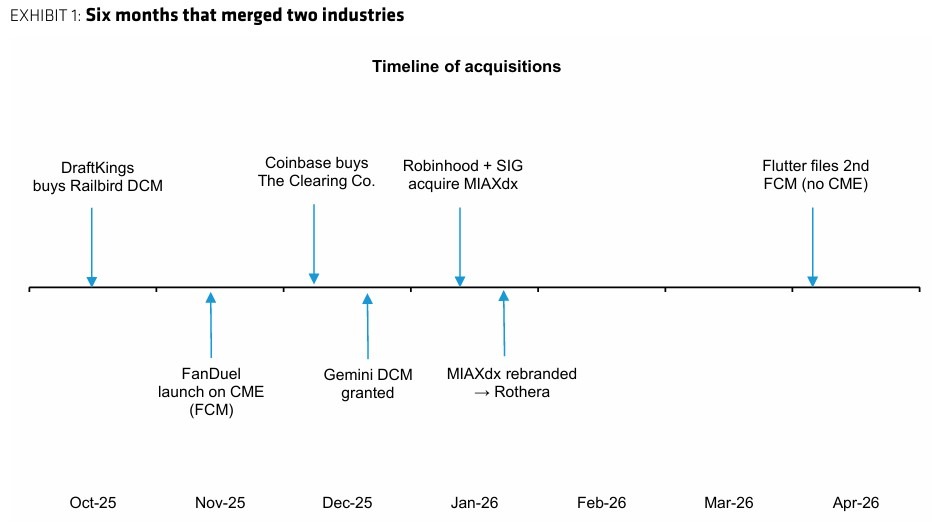
Acquisition timeline. Source: Bernstein
Regulatory conflicts may constrain integration
Bernstein said one of the main barriers to large-scale consolidation across the prediction markets sector remains regulatory oversight.
Bernstein said that while pairing crypto platforms with brokerages, sportsbooks and exchanges could improve profit margins and reduce dependence on external partners, such deals could invite antitrust scrutiny and deepen the debate over whether sporting event contracts should be regulated as financial derivatives or gambling products.
That could further intensify a jurisdictional dispute that is already unfolding across multiple states. Minnesota enacted what the Commodity Futures Trading Commission (CFTC) called the first outright ban on prediction markets, and Illinois adopted a bill that would require platforms to obtain a state license before offering contracts for sporting events.
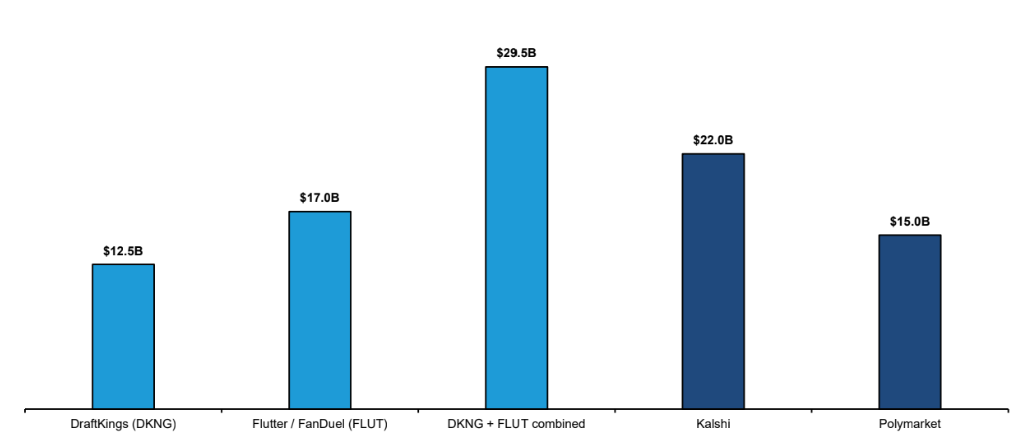
Online sportsbook valuations compared to major prediction markets.
Source: Bernstein.
Mr. Kalsi challenged both states’ regulations, arguing that federally regulated exchanges fall under the exclusive authority of the CFTC.
The growing resistance suggests that while consolidation may make commercial sense, implementation will remain difficult until regulators and courts reach a conclusion to end federal oversight of derivatives and begin state gaming powers.


