

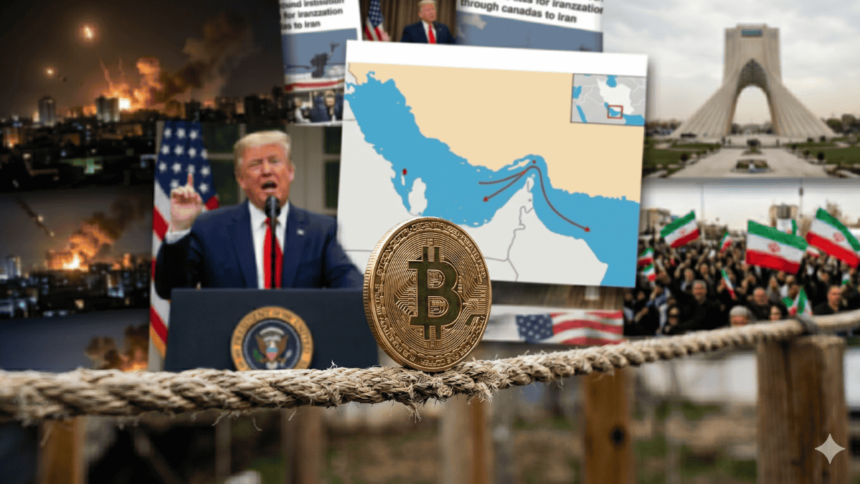
This Friday, April 24, 2026, Bitcoin (BTC) price is still in tense territory, trading around USD 77,000. Digital assets are entering a leveling phase, reflecting the uncertainty in the global market in the face of the Middle East conflict.
The following graph shows that Bitcoin price trends over the past 7 days:
The current Bitcoin price “paralysis” mainly corresponds to the following scenarios: diplomatic developments between Washington and Tehran, or developments that affect or benefit the flow of oil;may function as. This triggers wild fluctuations in the price of Bitcoin.both above and below.
Since February 28, when the US and Israeli attacks on Iranian territory began, Bitcoin has proven to be particularly sensitive to any events that occur in a war conflict. The main reason is that the Strait of Hormuz, the sea route through which 20% of the world’s oil production passes, has remained closed ever since.
As CriptoNoticias explained, this is probably Inflation could occur around the world, negatively impacting financial markets (including Bitcoin). If fuel prices remain high due to a shortage of oil refineries in Asia, which are running at their lowest levels in a decade, the Federal Reserve and other central banks could be forced to keep interest rates high, draining liquidity from digital asset markets.
Goldman Sachs said production could quickly recover once the Strait of Hormuz reopens, but transport logistics are severely compromised.
At the political level, US President Donald Trump says he is seeking the ‘best deal’ with Iranan agreement that aims to be “perpetual.” This “wait and see” attitude has injected a tense calm into Bitcoin charts. Meanwhile, the three-week extension of the ceasefire between Lebanon and Israel provides temporary respite. Meanwhile, the risk premium remains high as President Trump refuses to rush into negotiations with Iran.
Iranian Supreme Leader Mojtaba Khamenei’s reaction dismisses President Trump’s claims of alleged chaos in Iran’s leadership, suggesting the conflict could be prolonged.
Meanwhile, European Union (EU) leaders are meeting in Cyprus to coordinate energy security and defense strategies. EU diplomat Kaja Kalas has argued that negotiations with Iran need to include nuclear experts to avoid a weak deal. The possibility that the EU will invoke mutual assistance provisions in the face of uncertainty regarding US commitment to NATO adds further complexity to the Council.
For Bitcoin investors, the current panorama requires extreme caution. Digital currencies have become a thermometer to measure the stability of the world.
Bitcoin at $77,000 is not just an indicator of monetary value, but the possibility of a prolonged period of peace or war in one of the most important regions for the global economy. Without a clear definition regarding the Strait of Hormuz and the Iran war, the current Bitcoin price balance will remain fragile.


