


The virtual currency market has recorded a major change in leadership, breaking the negative trend of the past few days. Until this morning, retail investors in BlackRock’s Bitcoin ETF were aggressively dumping shares, causing the cryptocurrency’s price to fall.
However, the official news of the sale by the strategy triggered a strong market reaction, during which the fund sharply changed its tactics and turned to buying again.
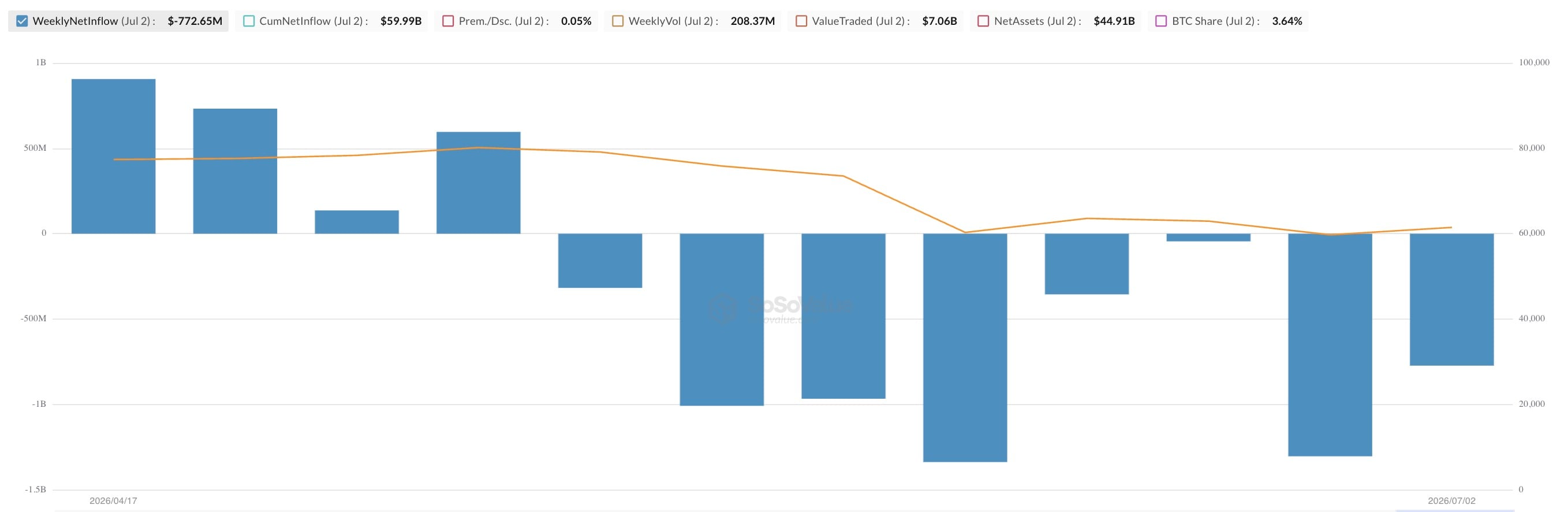
Due to the summer price decline, IBIT recorded net outflows of more than $772 million through early July, while the structure’s total net assets fell to $44 billion, according to SoSoValue. Against this backdrop, Bitcoin has plummeted from its spring highs to a low of around $59,000, and BlackRock now controls just over 3.5% of the world’s total supply of cryptocurrencies.
institutional tug of war for $BTC
The impetus for today’s U-turn by BlackRock, and more precisely its clients, appears to be an official report from Strategy Inc., which announced that Michael Saylor’s company sold about $216 million worth of Bitcoin last week to pay dividends on securities.
Following this morning’s news, the exchange’s price quickly fell and broke through the local support level at $62,641.
But it was precisely at this point that retail panic was met by institutional demand. BlackRock’s desk began absorbing sudden sales volume through Coinbase Prime.
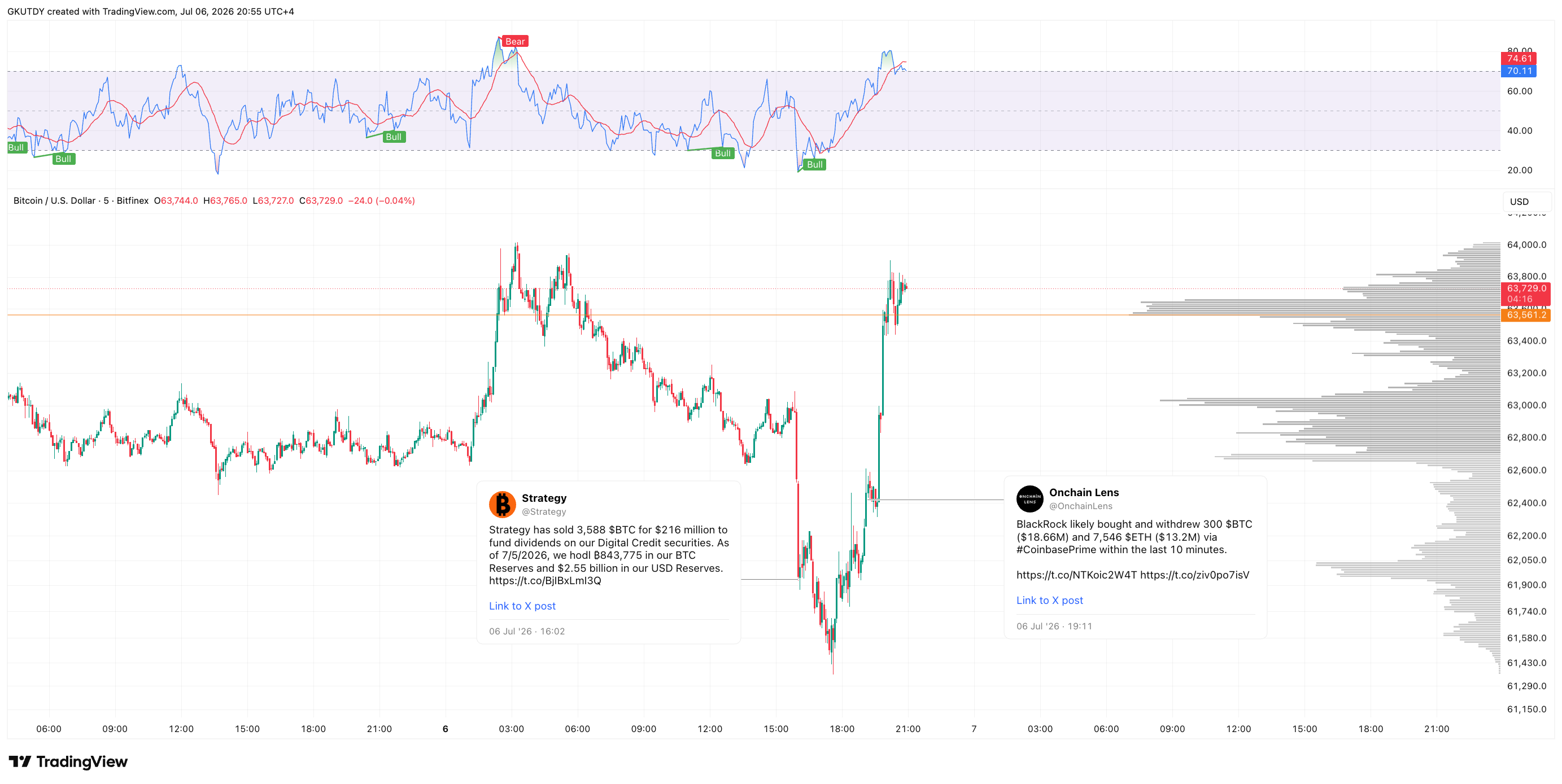
As seen in Arkham’s graph, the fund made a push buy through a series of targeted trades of exactly 300 Bitcoins each, and closed on a large final block of an additional 1,000 coins, spending a total of more than $80 million.
In the process, the fund also raised an additional 7,500 Ethereum for its second fund, ETHA.
This aggressive buying is consistent with other major whale actions, with a total of more than 270,000 captured over the past few days. $BTC From the bass. As a result, Bitfinex price quickly returned to $63,739 and the Relative Strength Index (RSI) jumped to 65 points, confirming the return of buyers.
The multi-day sell-off within the ETF ended in classic fashion. The morning’s emotional selling created a discount that BlackRock was quick to capitalize on to re-enter the asset with immediate profits.


