

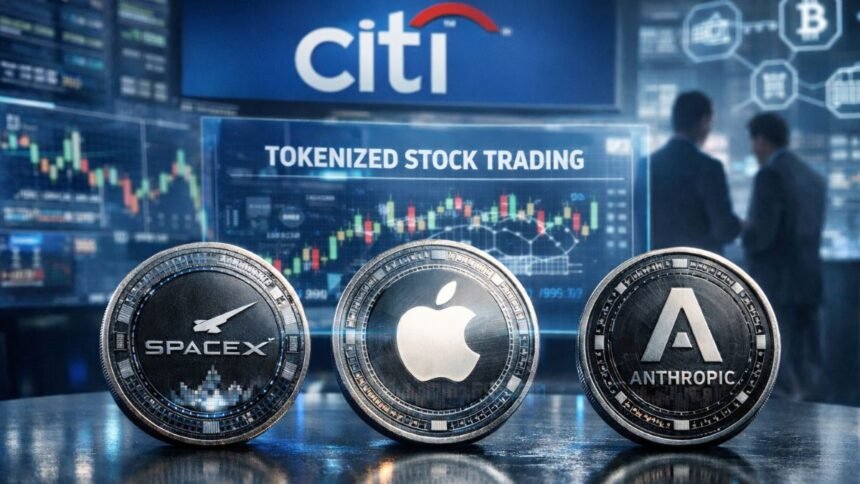
Citigroup, the third largest bank in the United States, today announced June 11, 2026, a platform based on a permissioned network that enables trading of tokenized shares of private companies prior to their IPO.
This new digital infrastructure will initially benefit foreign institutional investors (not available to Americans) and high-net-worth customers.
This system streamlines trading of tokenized stocks Through a maintenance and transaction fee systemreported the Wall Street Journal.
The initiative comes as a direct response to the long delays companies face when listing on traditional Wall Street stock exchanges. The result of this situation is that large companies such as SpaceX and Anthropic remain under private funding for long periods of time before going public. This trend Limiting the portfolios available to large equity fund managers.
To solve this problem, the system architecture issues tokenized deposit receipts that split ownership of securities held by banks. The private network supporting these financial operations operates under the control of Swiss-based provider SIX.
In relation to this advancement, Artem Korenyuk, Global Head of Digital Asset Business Coordination at Citi, explained this mechanism: This effectively puts these investments “next to Apple stock.”.
The company executed the first live transaction for the tokenization of Kaleido, a Citi-backed digital asset management and tokenization company.
To expand this effort, the banking institution is in talks with global companies to integrate its technology with other crypto networks. The bank expects other financial institutions to adopt the same platform to standardize private equity transactions.
Citi has a positive outlook on asset tokenization
In line with this vision of tokenization, Citigroup’s own research center predicts massive expansion in this space. According to a report by CriptoNoticias, the company’s analysts note that while private markets will change slowly, global growth in tokenization will be strongly concentrated in traditional public channels.
The bank’s study details the total amount of tokenized assets as follows: Growth from $17 billion to an average of $5.5 trillion Before the decade is out, they say, this progress will be largely concentrated in traditional liquid assets such as U.S. stocks and government bonds.
Ultimately, the implementation of this corporate digital channel will transform the way individual investors and global funds manage their venture capital financial portfolios. The system removes operational barriers to liquidating shares in advanced technology companies.
(Tag Translate) Banking and Insurance


