


Coinbase stock fell 4% to about $169 on July 22, as the probability of passage of the CLARITY Act in 2026 fell by 15 percentage points from the previous day’s high.
The bill has a 37% chance of being passed by the end of 2026, according to Polymarket data, down from 52% on July 21 after disagreements over how the proposed ethics restrictions should be enforced.
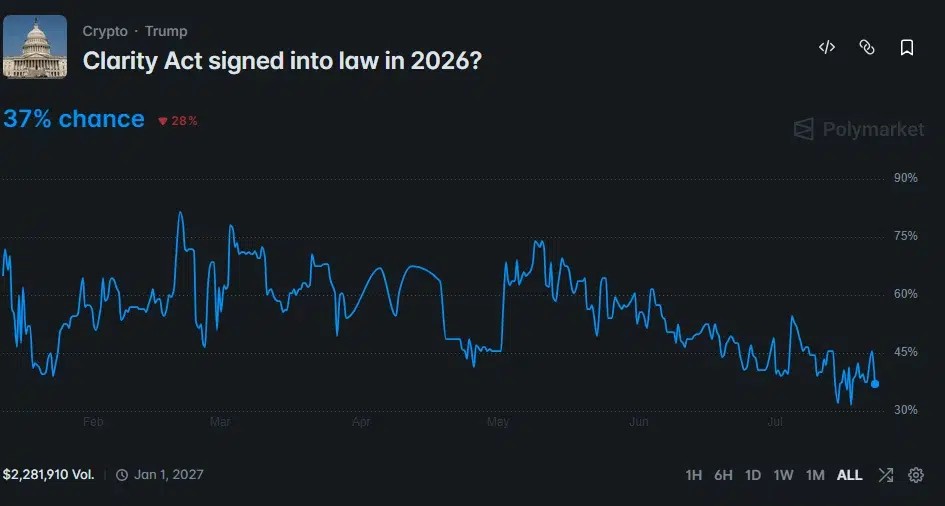
President Donald Trump has agreed to include ethics provisions in the market structure bill, leading to higher odds in the polymarket and COIN stock price rising 9% on July 21st. However, the compromise did not gain enough support as some Democratic senators objected to assigning enforcement responsibility to the U.S. Department of Justice rather than state attorneys general.
Sen. Angela Allsbrooks described the White House’s proposal as a “disgraceful proposal” and said senators would continue to work on language that would hold all parties accountable. Her comments dampened hopes that the latest concession would end the dispute with the bill on hold.
🚨New: @Sen_Alsobrooks tells me that the White House’s idea of having the Justice Department enforce the ethics provisions of the Transparency Act is a “disgraceful proposal” and says he won’t support the bill if that’s the only way to enforce it.
@berniemoreno Senator, so far… https://t.co/XLZ2Nsm9Pc
— Eleanor Terrett (@EleanorTerrett) July 21, 2026
Republican Sen. Thom Tillis also said the document was not ready for a procedural vote. Tillis said lawmakers still need to make amendments before senators will support moving the bill forward, and the bill’s timeline remains unclear even though negotiations have resumed.
One clue to Tillis’ opposition: Tillis said the bill’s “exceptions” may need to be revisited, but he did not mention WH.
Tillis. “The important thing is that I think the same kind of rules should apply to everyone. There can’t be exceptions based on job responsibilities.” https://t.co/a2mKjgkyQv
— Brendan Pedersen (@BrendanPedersen) July 21, 2026
COIN rebound interrupted due to decline in banknote odds
Monday’s policy optimism sent Coinbase shares closing above $170 for the first time since June 2, but the upward momentum faded as disagreements in Washington resurfaced. According to TradingView data, COIN started at $172.25 on July 22, reached $174.96, fell to $168.32, and then traded around $169.11.
On the daily chart, the recent rally has pushed COIN above the downtrend line drawn from the May high. Tuesday’s decline took the stock below the 61.8% Fibonacci retracement of $170.89, the first resistance level that buyers needed to rally to.
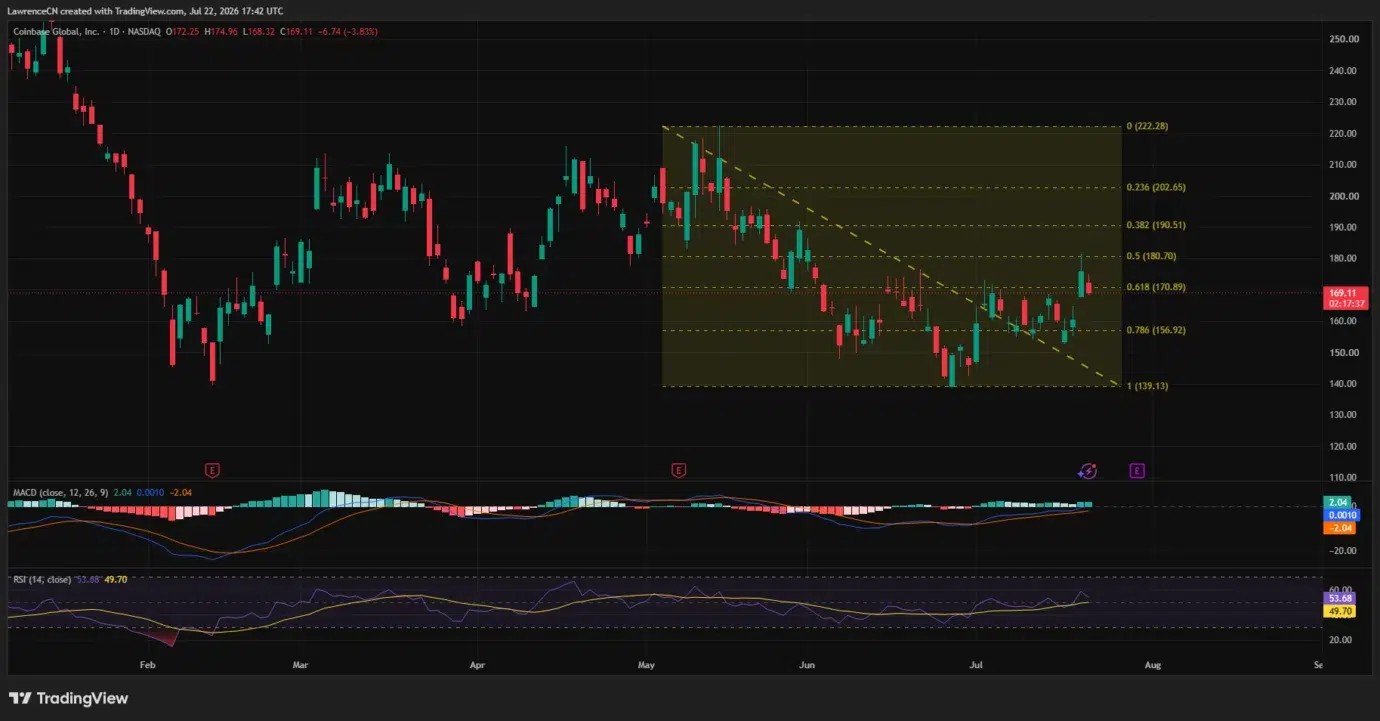
Momentum readings still show some support below the pullback. The moving average convergence divergence line on the chart has moved above the signal line and the histogram has turned positive. This is a combination that TradingView’s indicator readings suggest an improvement in bullish momentum.
COIN’s relative strength index is 53.68, above the moving average of 49.70 and well below overbought territory. According to the chart, this neutral-to-positive reading gives buyers room to extend the recovery if the stock returns to $170.89 and attracts follow-through demand.
Above this barrier, Fibonacci retracement identifies $180.70 as the next resistance level, followed by $190.51 and $202.65. A close above the $180.70 midpoint would increase the chances of a recovery and bring the psychological $200 area closer to the 23.6% retracement.
If $170.89 is not recovered, COIN will remain exposed to the 78.6% Fibonacci level of $156.92. The chart shows a full retracement at $139.13, but the July price structure also shows some recent lows around $150, which could provide support before the stock reaches the lower target.
Coinbase derives some of its revenue from cryptocurrency trading, so a recovery in Bitcoin to around $66,000 could provide further stimulus. However, Raymond James expects the company’s performance to be weighed down by weak market activity and has initiated coverage with a price target of $158, approximately 6.5% below COIN’s proposed level of around $169.
Oppenheimer previously lowered his Coinbase target to $209, citing soft spot volume during the crypto downturn. Despite his cautious stock forecast, Raymond James estimated that Coinbase’s expansion of its product range, including prediction markets, could ultimately lead to annual revenue of more than $100 million.
New product and SEC settlement support business case
Coinbase opens on July 22nd and adds another service $SUI Staking to eligible customers. According to the exchange, users can start with one $SUI You can earn an estimated 1.4% to 3.3% annual rewards while keeping your tokens in your Coinbase account, but availability varies by location.
Alongside the product rollout, Coinbase secured a $150,000 settlement from the U.S. Securities and Exchange Commission over missing communications from former chairman Gary Gensler. Coinbase Chief Legal Officer Paul Grewal disclosed the agreement on July 22nd, ending the exchange’s Freedom of Information Act lawsuit against regulators.
In the proposed settlement described by Grewal, the SEC will pay Coinbase and revise its record-keeping rules after Gensler’s text messages were lost for about 11 months. Grewal wrote that authorities blamed a process that “automatically erases” certain data, including communications requested by Coinbase during an investigation into how government officials approached crypto policy and enforcement.
Coinbase also sued the Federal Deposit Insurance Corporation in 2024 for records it believed could reveal efforts by U.S. regulators to limit crypto companies’ access to banking services. The SEC’s agreement resolves only related docket litigation, but it provides a legal victory for investors as they evaluate exchanges’ regulatory positions.
All eyes are currently on Coinbase’s second quarter financial results, scheduled for July 30th. Trading revenues, new services and management’s outlook will be key tests for COIN after a policy-driven rally, with analysts expecting a profit of $0.19 per share, compared to a loss of $1.49 per share in the first quarter.


