


Getting listed on a major cryptocurrency exchange used to feel like a big moment. But new data shows that for most tokens, it’s just the beginning of a tough journey. A recent industry report revealed that only about 32% of newly listed tokens actually increase in price immediately after launch on major exchanges. This means that most tokens are unable to bring profits even in their early stages.
Initial gain quickly fades out
Among the top exchanges, South Korea’s Upbit stands out, with approximately 67% of newly listed tokens still profitable after 30 days. However, the number of tokens listed is small compared to others. Platforms like Binance and OKX followed suit, with around 50% of their tokens going green during the same period.
But then things start to change. Between 30 and 60 days, only about 25% of your tokens will be profitable. Over time, that number will continue to decrease on all exchanges.
By the end of the year, less than 10% of the tokens are still above their listing price. Even Upbit, which got off to a strong start, has seen its token decline the fastest.
“Notably, Upbit’s listing, which had the best start, also falls the fastest, as all newly listed tokens go underwater within 300 to 329 days,” the report said.
One exception stands out
There is one interesting outlier as Coinbase shows a slightly different trend. Some of the tokens listed there tend to recover after a few months, with what analysts call a “second wind” occurring around six months.
But even with this recovery, long-term success remains rare.
Greater interaction, greater change
Although the token performance is struggling, the overall market is still growing. The total assets held by top crypto exchanges jumped from approximately $152 billion in 2024 to $225 billion in 2026, an increase of nearly 70%.
Binance is leading this growth, doubling its reserves in two years. At the same time, Coinbase holds the largest Bitcoin reserves with over 800,000 BTC, followed by Binance.
But changes are happening behind the scenes. While Coinbase is experiencing a large outflow of Bitcoin and Ethereum, smaller exchanges such as Bitget and MEXC are seeing reserves increase rapidly.
Retail traders drive activity
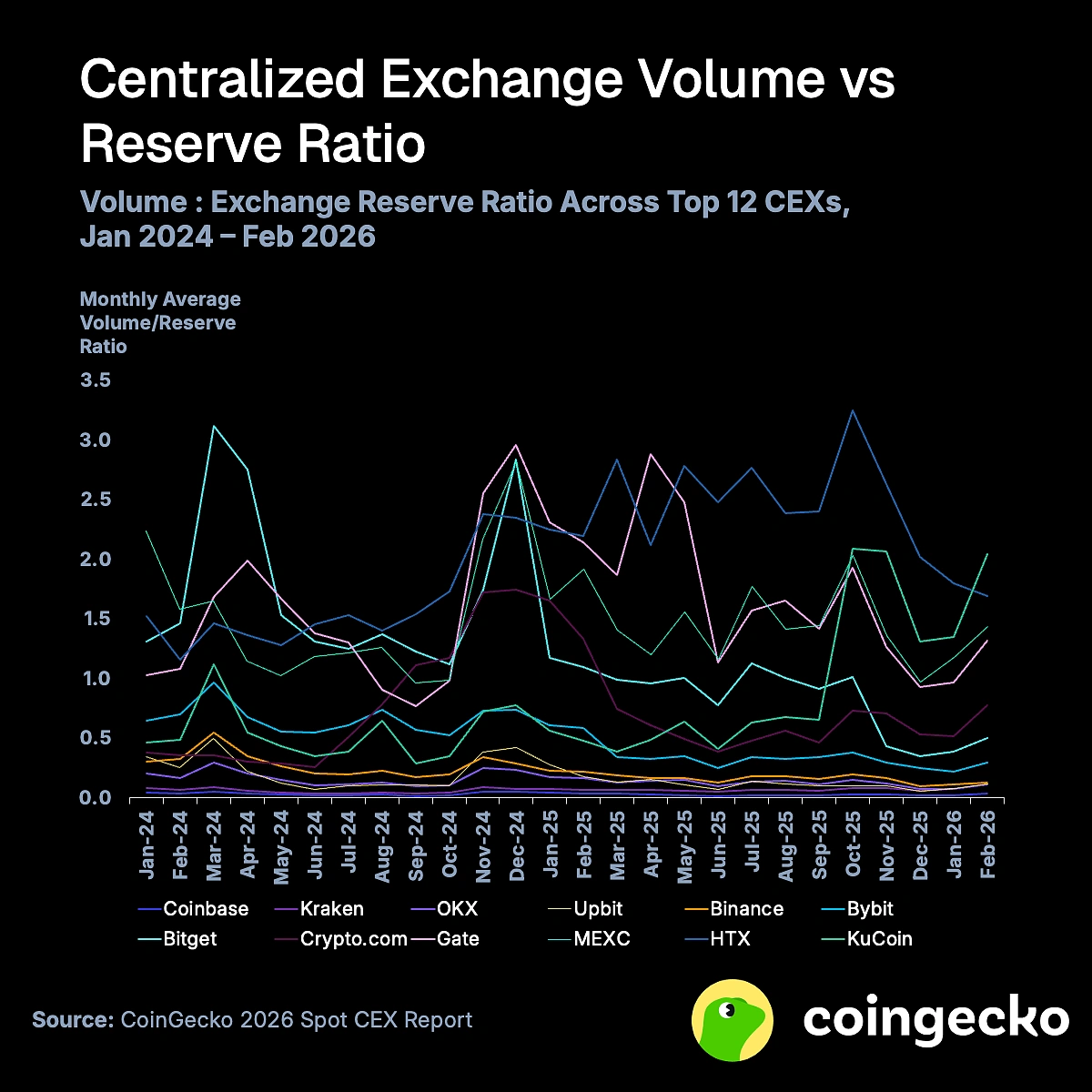
Larger, regulated platforms like Coinbase and Binance tend to have less trading activity compared to their reserves. This is because many institutional users store their assets there rather than trading frequently.
In contrast, smaller exchanges record significantly higher trading activity relative to their reserves. Platforms such as MEXC, HTX, and KuCoin have shown asset velocities ranging from 1.44 to 2.04, indicating users trading volumes that far exceed the exchange’s reserves.
Related: US community banks oppose approval of Coinbase Trust Charter


