


Ethereum is struggling to sustain the $2,250 level as selling pressure resumes. And the market is facing resistance that has suppressed all attempts at recovery in recent sessions. The correction after breaking above $2,450 is currently around 10%, and the mood among participants is becoming cautious. However, according to top analyst Dirkforst, price weakness will trigger a certain reaction in order flow data that will change the view of the current decline.
Today’s move below $2,300 went unnoticed. Within an hour of the level break, Binance taker buying volume soared to over $1 billion. This is an aggressive market order purchase that reflects participants making deliberate, high-confidence decisions quickly rather than cautiously waiting for confirmation. A similar reaction occurred at the same time for OKX, which recorded nearly $20 million in purchase flow over the same period.
The importance of that reaction is that it reveals who is on the other side of the sell, not the price level itself. If a $1 billion buy order enters the market within 60 minutes of an important support break, it does not mean the market has given up on that level. This describes a market where a certain category of participants decided that $2,300 was an opportunity worth acting aggressively on, regardless of the direction the price was moving when they pulled the trigger.
$1 billion was spent against the hawkish Fed. it’s not the noise
Dirkforst frames this buying surge in a context that makes it more important than the everyday push-buying reaction. Binance’s $1 billion taker buy volume was not achieved in a neutral macro environment. The policy was announced shortly after the Federal Reserve announced it would keep interest rates within a range of 3.5% to 3.75%, at the same time suggesting short-term inflation could rise again, in part due to rising energy prices.
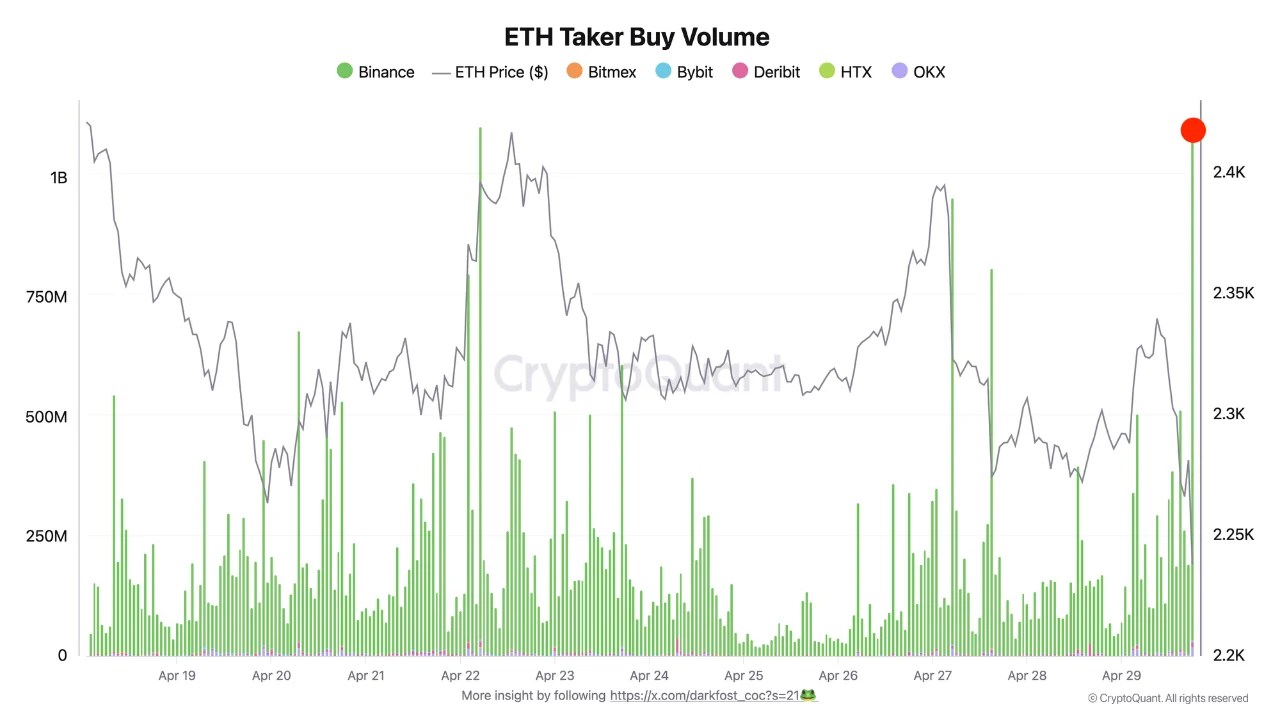
This is usually not a context that encourages aggressive risk deployment. The Fed’s ability to keep interest rates high while warning of a resurgence of inflationary pressures is the definition of hawkishness, a stance that has historically encouraged crypto participants to reduce their exposure rather than increase it. The participants who put in $1 billion within 60 minutes of the $2,300 break did so because the Fed’s message had already been heard in the room.
What the Darkforest has identified in its actions is a certain category of conviction. These are not buyers reacting to price momentum or chasing recoveries. These are the participants who saw a 10% correction, a hawkish Fed, and a broken support level and decided that the $2,300 risk-reward was worth taking aggressively.
Whether that belief proves correct depends on subsequent circumstances. However, the willingness to deploy institutional-sized capital against an unfavorable macro environment at a given price level is itself a signal, something that price charts alone will never reveal.
Ethereum stalls momentum below resistance, testing structure
Ethereum is trading near $2,260, a level that sits at the intersection of short-term support and undefined medium-term. After a sharp decline in early February, prices established a base around the $1,800-$2,000 zone and then began a gradual recovery. However, that recovery has now stalled below a clear resistance cluster between $2,350 and $2,450, with multiple cores of rejection confirming sustained pressure on the sell side.
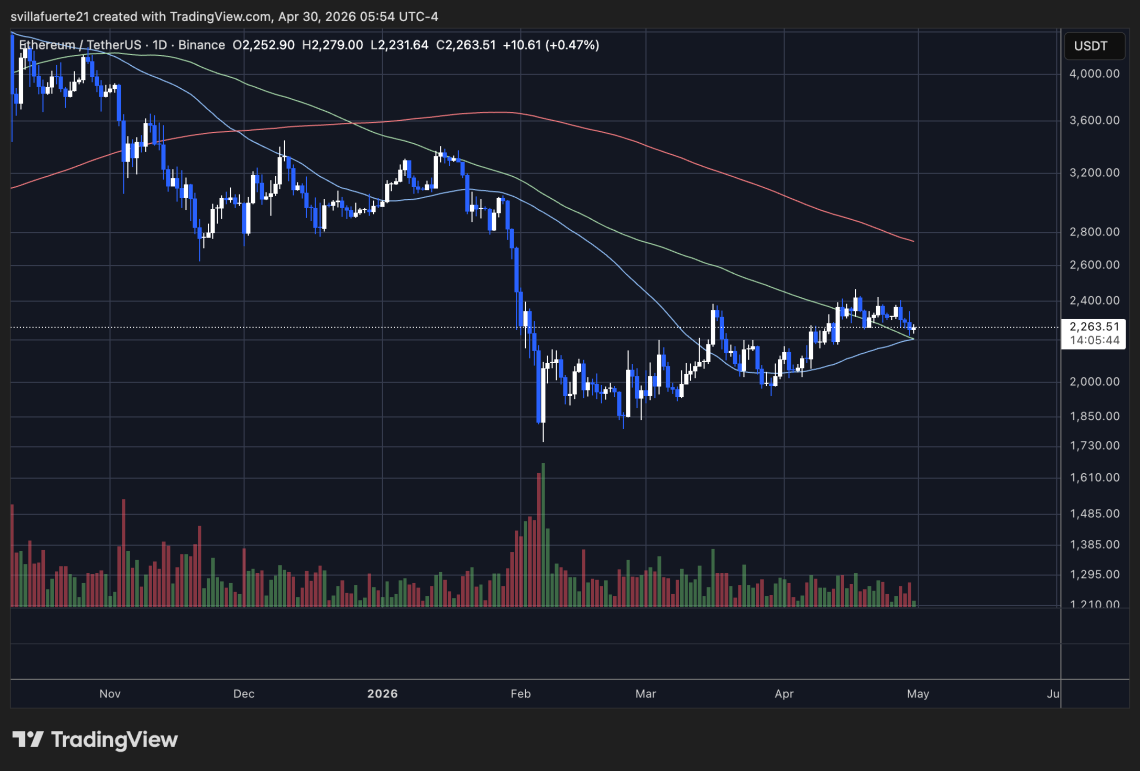
Moving averages reinforce this structure. $ETH is still below its 200-day moving average, continuing its downtrend and indicating that the broader trend has not yet shifted in a bullish direction. At the same time, prices are compressed between the 50-day and 100-day averages, reflecting a narrowing range where momentum is weakening and volatility is shrinking.
Volume behavior adds another layer. While the sharp rally during February’s selloff signaled a clear capitulation event, the subsequent recovery phase showed a decline in volume, suggesting that the rebound lacked strong conviction. Participation has been relatively modest in recent sessions, consistent with consolidation rather than accumulation.
Technically, Ethereum is winding up. A break below the $2,200-$2,250 support zone will once again expose the $2,000 level, but a return to $2,400 is needed to invalidate the current low-to-high structure and meaningfully shift momentum.
Featured image from ChatGPT, chart from TradingView.com


