

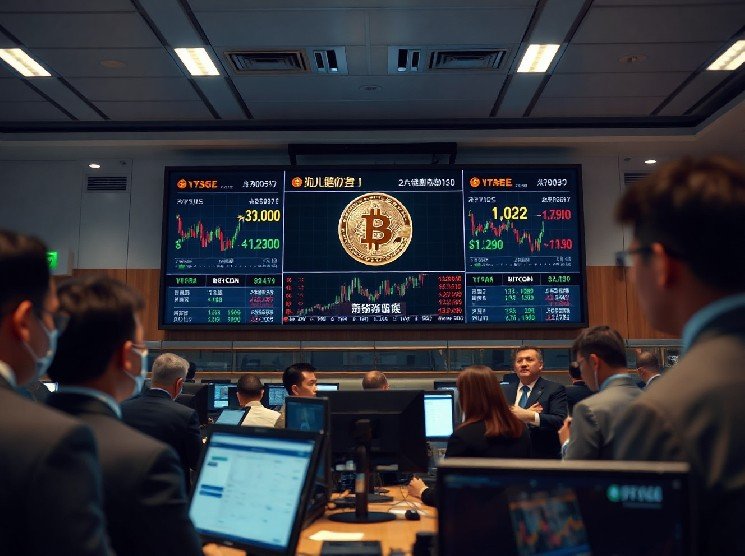
In a significant move for Japan’s digital asset landscape, Osaka Exchange, the core organization of Japan Exchange Group (JPX), announced plans to launch a Bitcoin futures market in 2028. The initiative is aimed at responding to the growing risk-hedging needs of institutional investors, particularly those who gain exposure to Bitcoin through exchange-traded funds (ETFs).
Crypto Futures Regulation Foundation
The exchange’s schedule directly aligns with broader regulatory reforms announced by Japan’s Financial Services Agency (FSA) in January 2025. The Financial Services Agency plans to revise the Investment Trust Law Enforcement Order by 2028, which will officially classify virtual currencies as a specific asset class for investment within regulated investment trusts. This legal reclassification is the basis on which the Osaka Exchange Bitcoin futures market will be built, providing a clear and compliant framework for institutional investors to participate.
This move puts Japan at the forefront of integrating digital assets into traditional financial infrastructure. Unlike some jurisdictions that have moved hastily, Japan’s approach is methodical, prioritizing investor protection and market stability. A target date of 2028 will allow enough time for market participants to adapt and for the Financial Services Agency to finalize the necessary legal changes.
Why this matters for institutional investors
The main driver of the Osaka Exchange Bitcoin futures market is the expected surge in institutional demand for Bitcoin ETFs. As global interest in Spot Bitcoin ETFs grows, institutional investors need sophisticated hedging tools to manage price fluctuations. Bitcoin futures listed on regulated and established exchanges like the Osaka Exchange provide a transparent and liquid vehicle for this purpose.
Main impact on the market
- Risk management: Futures contracts allow ETF issuers and large asset managers to hedge against adverse price movements and reduce portfolio risk.
- Price discovery: A regulated futures market could contribute to more efficient price discovery for Bitcoin and reduce the impact of unregulated offshore exchanges.
- Mainstream adoption: The move shows that Japan’s financial regulators and financial exchanges see Bitcoin as a legitimate long-term asset class worthy of institutional-grade infrastructure.
Evolving Japanese cryptography strategy
Historically, Japan has proactively, albeit cautiously, introduced virtual currency regulations. The Financial Services Agency’s decision to revise the Investment Trusts Act is a natural evolution of its policy, which has previously focused on exchange registration and anti-money laundering compliance. By explicitly allowing crypto assets as investment trust assets, Japan is creating a clear path forward for products such as Bitcoin ETFs and subsequent derivatives.
This regulatory clarity gives Osaka Exchange a competitive advantage, allowing it to attract global liquidity that might otherwise flow to other financial hubs. The 2028 start date gives exchanges time to develop robust risk management systems and work with the Financial Services Agency on final market rules.
conclusion
The Osaka Exchange’s plan to begin trading Bitcoin futures in 2028 is a carefully timed, regulation-driven development that underscores Japan’s commitment to integrating digital assets into the mainstream financial system. In line with the FSA’s legislative changes, the exchange is building the foundation for sustainable institutional-grade crypto derivatives trading. For investors, this is a concrete step towards a more mature and accessible digital asset market in one of the world’s largest economies.
FAQ
Q1: When will Osaka Exchange start trading Bitcoin futures?
A1: Osaka Exchange has announced plans to start trading Bitcoin futures in 2028, in line with the Japanese Financial Services Agency’s schedule for amending the Investment Trusts Act.
Q2: Why is the Financial Services Agency amending the Investment Trusts Act?
A2: The FSA is in the process of amending the law to formally classify cryptocurrencies as a specific asset class eligible for investment in regulated mutual funds and provide a legal framework for products such as Bitcoin ETFs and futures.
Q3: What impact does this have on Japanese institutional investors?
A3: The launch of Bitcoin futures trading on regulated exchanges will provide institutional investors with an essential risk hedging tool, allowing them to manage the volatility associated with Bitcoin ETF investing while operating within a clear legal framework.


